Systemhouse33 are a Metal band from India. This is their latest album.
Their previous release Depths of Despair was an enjoyable, albeit brief, romp through all things heavy and modern, and Regression continues the theme but ups the stakes.
At a slightly longer 30 minutes in length, the band have further refined their blend of modern Metal and Metalcore/Hardcore/Death Metal influences into a potent blend of muscular aggression.
The singer has a harsh snarl that fits well with the music and doesn’t allow for any compromise. He plainly means business and I like what he’s selling.
The songs chug, rumble and bludgeon their way through the playing time and there’s a decent amount of catchy riffs and heavy melodies involved.
Although I liked Depths of Despair this is an all-round more cohesive, focused and superior release; perfect for when you want some heavy, crushing, upbeat, groove-based music. Without too much extremity, but also without going the other way into commercial, sanitised waters, Systemhouse33 have hit the right spot and Regression is actually a positive move forward.
For fans of Lamb of God, Meshuggah, Whitechapel, Skinlab, Machine Head, Testament, Merauder, etc.
Artillery are a Thrash Metal band from Denmark. This is their eighth album.
These Metal veterans return with another 54 minutes of old-school Thrash Metal.
The vocalist’s melodic cleans are straight out of a different era, and in the context of 2016 sound flawless and delivered with a skill and passion lacking in most similar bands.
Savage riffs and sterling solos are moulded around classic song structures. The band obviously know exactly what they’re doing from the outset and this is a ridiculously strong collection of tracks. Catchy, memorable and charismatic, these songs are seriously good. They also awaken such a powerful sense of nostalgia in me that I honestly don’t know what to do with. I’ll just listen to more Thrash Metal I suppose.
Some of the riffs and melodies on this release get the hairs standing on end and the overall feeling is indescribable in some ways. Being exposed to this much authentic top-grade Thrash Metal in one go should come with a health warning.
Well, this really has made me sit up and take notice. I pretty much hate the vast majority of the retro-Thrash movement with its stupidity and moronic nonsense, so it’s great to hear a band that were forged in the original era when this kind of thing was first born produce something so strong and worthwhile. This should put all of the idiotic posers in their place and demonstrates what a force to be reckoned with Artillery still are.
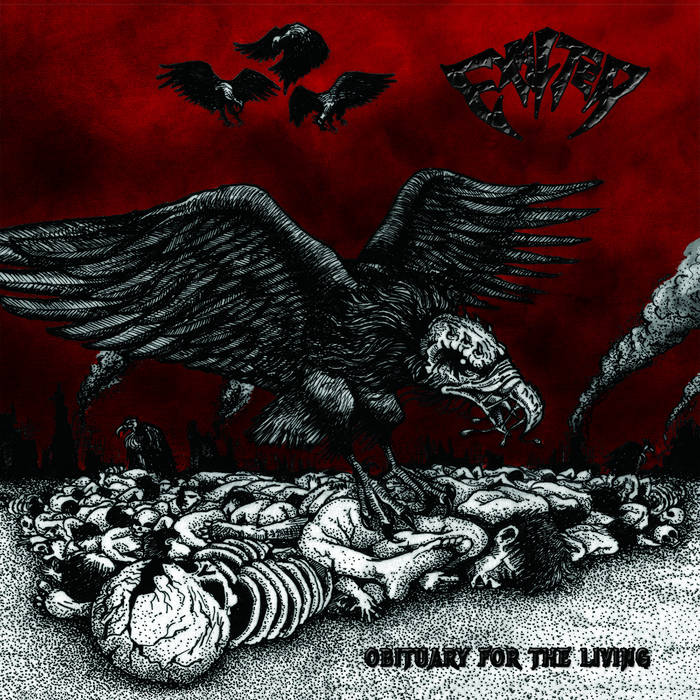
Taken with the recent release by Exumer, could 2016 be the year that reignites my love affair with Thrash Metal? It’s shaping up to be that way so far.
Israeli Metal band Ferium’s second album Behind the Black Eyes is chock full of professional brutality and streamlined aggression. Guitarist/vocalist Elram Boxer brought me up to speed with all things Ferium…
Give us a bit of background to Ferium
Ferium is a 5 piece Metal band from Israel, we have had the dream to be musicians ever since we were teenagers growing up watching the biggest bands on earth go around the world.
We come from a very demanding place when it comes to being a Metal band, although Israel has it’s amazing sides of community and brotherhood and a faithful following, living in a political & financial cesspool, distracts the people from the art that this place produces, we all have our day jobs to pay for getting out on at least 2 tours a year, our own recording studio & rehearsal room, and the motivation to create music, and lots of it, to put it in a definition, we are an Independent band.
What are your influences?
Mostly our day to day lives, our past experience and, basically, everything aggressive.
What are you listening to at the moment that you would like to recommend?
The Fading – ‘Til Live Do Us Part! A Swedish death metal from Israel! This band is RAD!
How do you feel that you fit into the wider Metal scene these days?
Lost… hehehe. We feel that Ferium will always be somewhat old school oriented… it seems that the metal music is going to a more technicality and skilled based music, (and Jesus there are some skilled players out there!). We write the music we write from the bottom of our souls, the creative minds behind Ferium have experienced deceit, unfaithfulness, heartbreak, betrayal, pain, loss, and all of these things create a sonic & lyrical portrayal of aggressiveness & frustration in an effort to solve all of life’s struggles, and to turn them into positive and empowering experiences.
Give us a bit of background to Behind the Black Eyes – any particular concepts or ideas you want to discuss?
“Behind The Black Eyes” conceptually picks up where “Reflections” left off. It brings the story of a man’s relationship – its ups and downs, the good and the bad, and the image being portrayed by gut-wrenching and goosebump-inducing lyrical work. This album is certainly an evolution to the band’s sound, where other bands today hold back on their aggression, we do the exact opposite and back up the album’s real approach to relationships with honest brutality.
How do you go about writing your songs?
We write a lot! mostly in our own studio. There is no specific way we write…sometimes it’s jamming in the studio while recording, sometimes its writing a song as a band, sometimes its just grabbing the guitar and groove it to oblivion! We do have a solid vision of what Ferium is and where Ferium is going (musically).
There seems to have been a cutting of fat and focusing of songs between your début and Between the Black Eyes. Was this a conscious effort?
We have sculpted ‘Behind The Black Eyes’ to be 110% to the point, which is the atmospheric aggression throughout the storyline from the good to the bad. The riffs are heavier, the groove is heavier, the bassline is heavier! So no FAT has been cut off from our point of view.
How did the recording process go?
Fortunately, we have our own studio so we can basically do whatever we want to and take the time with everything. The recording of the instrumentation on ‘Behind The Black Eyes’ was pretty flawless and quick! When we got to the recording of the vocals, we immediately knew that the attitude of the vocals needed to be changed so Tiran and I took about 2-3 months of refining and rehearsing the vocals into shape.
Tell us about the album artwork
The artwork was done by the one and only, Mr. Eliran Kantor (Hatebreed, Testament, Iced Earth to name a few). The album cover shows a man pierced by a Rhino, where in ‘Reflections’ the man was trying to tame the Rhino…so again, there’s a clear view of the relation between the two albums.
What’s your favourite song on the album and why?
This album, for me, is one continuous song… so it is kind of hard to point out one…
Sunwølf are a Scottish Post-Metal band and this is their fourth album.
Sunwølf play Post-Metal that takes elements of Doom, Stoner and Post-Hardcore into the mix.
This reminds me of UK Doomsters Palehorse if they were mixed in with Earth and wrapped up in the Post-Metal trappings of someone like Red Sparowes.
Slow, mournful guitar parts crawl along the frost-battered ruins of long-dead mountains while Post-Metal melodies effortlessly gleam resplendently under the uncaring sun.
These tracks paint pictures of dangerous-yet-beautiful landscapes that form a rich and textured release, laced with sorrow and despondency. The songs have a raw, emotive edge to them that’s hard to deny and even on just the first listen you find yourself getting drawn into them. Subsequent spins reveal additional features to catch the attention and the heart.
Vocals are sparse and uncommon; when they do appear they are used well, as required by the song. This includes screams that are tinged with anguish and pain, occasionally taking on a cleaner hue to give vent to a more plaintive side, as well as spoken word sections and chants that are almost buried under the music.
This is a very engaging release that has a lot of content to enjoy over the 51 minute playing time. This is an album that deserves a lot of exposure, although I doubt it will get it, which is criminal.
Uboa is a solo Doom artist from Australia and this is his latest release, which comprises one track that lasts almost 23 minutes.
Holy shit. Okay, that could be my entire review, really. Holy. Shit.
I suppose I should write a bit more though, here goes.
So, it starts off with a sample, some feedback and some slowly-added in noises. Immediately an unsettling atmosphere is created which is maintained throughout in one form or another. Shudder.
Then, all of a sudden, it’s as if all Hell’s daemons are unleashed, as twisted pain-filled screams and maniacal percussion are unleashed on you in a barrage of chaotic frenzy. It’s not pretty, but it certainly is engaging.
Coming across as a depraved mix of Atomsmasher, Khanate and Venowl, Uboa effectively spends these 23 minutes creating a horror-filled semi-organic nightmarescape that defies conventional music in favour of pure mood and feeling, seemingly dredged up from the abyss.
Birthed raw as a twisted combination of sparse Doom and eclectic noise, this is surprisingly enjoyable music, although I suppose I should point out that to most people neither the words enjoyable nor music would seem to apply here. Their loss. This wall of anguished sound hits the right spot with me, and that’s all that matters.
There’s a tense undercurrent to all of this that I find quite tasty; I always like music that uses tension well and on Coma Wall there’s no let up until the final dying sounds have disappeared into oblivion. During the latter part of the track the mayhem subsides, but the tension does not, and just when you think it’s settling slowly into a dying ambience, it gets heavy, sludgy and apocalyptic.
Phew! Very nice. Or nasty. Whatever. Either way, after 23 minutes I’m raring to go and listen to this again.
For true Doom/Noise connoisseurs only; check this one out if you dare.
This is the second album from Black Metal band Burial, who are from the UK.
Burial play raw Black Metal with speed and malice.
Pure venom seems to seep out of every corrupted pore as the band aggressively attack the material with the fervour of the fanatic. The guitars have a very pleasing tone and have that razor-like quality that suits Black Metal so well.
The songs don’t outstay their welcome, and the entire release blurs by in 31 minutes of dark, angry malevolence.
The brutality of the music is threaded through with bands of melody that add a bit of depth to the attack. Some Darkthrone-esque groove is introduced when the band slow the pace a little, and these parts are just as good a listen as their faster brethren.
Throughout the album it’s clear that Burial know how to shape and channel these kind of grim incantations, and the songs are a very enjoyable listen.
Vocally we get traditional blackened screaming which hits the spot nicely, but in addition to this there are also deep growls which are very satisfyingly performed, sounding, as they do, pitch black and evil.
I thoroughly enjoyed this. Have a listen and see if they do it for you.
This is the fourth album from these German Thrash Metal veterans.
With a crisp, punchy and professional sound, Exumer return with another album chock full of Thrash Metal anthems.
The songs are well-written and both catchy and memorable. The old-school Thrash vibe is present and correct, but the production and delivery is quite modern, resulting in an album that manages to tread different eras with ease, which is no mean feat.
The band sound focused and tight, intent on delivering a flurry of riffs and pounding drums strong enough to get even the most jaded of Metal fans moving.
I particularly enjoy the guitars on this release; Exumer have a talent for writing good riffs. I also like that the vast majority of these riffs sound energised and perfectly judged; a lot of old-school Thrash can easily sound stale and done-to-death, but Exumer seem to have the secret, (whatever that is), to producing songs that just hit the right spot.
Frequent solos accompany the cutting riffs and the singer’s vocals use good rhythms and pacing.
The Raging Tides is criminally enjoyable and I haven’t been this enthusiastic and excited by Thrash Metal for some time. For an album full of ripping Metal tunes you should look no further.
Bustum are a Croatian Black Metal band and this is their début album.
Bustum play their Black Metal raw and traditional, fuelled by the second wave and filled with Satanic might.
The vocals are harsh shrieks, performed in the classic style. The singer also uses deeper growls here and there, which is less expected and a welcome addition to the general violence and misanthropy on Demonolosophy.
The songs slice, cut and lacerate with frozen blades and seething malevolence. Dark, blackened melodies seem to writhe just below the surface and add depth to the band’s musical endeavours.
The songs are simple, underground hymns to dark forces that carry themselves well and provide for a quite enjoyable 33 minutes. It’s a well-written album and included in these tracks are some nice riffs with enough sections that show they’re capable of more than just hate-filled speed; they display a good grasp of pacing and compositional structure on these songs too.
I enjoyed this. If you like Black Metal then I’m sure you will too. Check it out.
This is the second album from this Italian Death Metal band.
This is USDM-style destruction, influenced by the Florida scene from back in the day. This 90s fixation serves them well and Speech of the Flame offers up 44 minutes of solid Death Metal.
Blasting drums and rhythmic beats are backed up by a nicely heavy and dark production that allows them to get the most from their chosen implements of assault; there’s no shortage of speed on this album and the band wield this like a weapon. It’s not all high-velocity though and the band lay off the accelerator enough so that although they’re almost always playing fast, it’s not all complete blasting mayhem.
The guitars have a nice tone to them and there’s some good solos and leads included. These are used to create little pockets of more emotive and atmospheric sections among the carnage of the rest of the music.
The singer’s voice is gruff and clipped just enough to make him sound quite aggressive, providing a decent performance and accompanying the music in a most satisfying manner.
The songs channel the likes of Deicide and Morbid Angel, paying homage to what came before and continuing the legacy of their spiritual predecessors.
If you have a yearning for the particular era of Death Metal history that Valgrind espouse then you’ll probably get along with Speech of the Flame very well indeed.
Krigsgrav’s fourth album Waves of Degradation has stuck out in my mind as one of the more memorable releases I’ve listened to of late. Its harrowing atmosphere of hopelessness and pain made an indelible mark on my psyche and I keep returning to it again and again. Thankfully, I was able to share some words with Justin from the band, who gave me some more background to Krigsgrav and their superlative new album…
For those who are unfamiliar with your band – introduce yourself!
My name is J. Coleman, I play guitar and provide vocals for the band Krigsgrav and Heimar.
Give us a bit of background to Krigsgrav
Krigsgrav was a solo project started by David Sikora in 2004 in Keller, Texas. I say solo project in the sense that he was the main person performing all the instruments, but he did use session vocalists until I came into the fold. He founded the band as an homage to the second wave of Norwegian/Swedish black metal, so the older material (‘As darkness falls above’ demo, ‘Arcana Imperil’ ep) sound more like Gorgoroth, Darkthrone and Carpathian Forest. He started to change the sound dynamic with the ‘Leviathan Crown’ (self released in 2010) and integrated more epic song lengths and sorrowful melodies. the next year with Lux Capta Est, he created an album that really came to be what I consider the foundation for the Krigsgrav sound.
David, Corey (guitars) and I played in a band prior to Krigsgrav, so we knew each other that way. As we were friends, we would share our musical ideas and projects with one another. David showed me LCE and I thought it was great. After hearing LCE I knew I wanted to be a part of Krigsgrav in some way. David, Corey and I had a few conversations about taking the ground work laid with LCE and making a fully functional band, which obviously happened. Initially the idea was to just rehearse and try the material out live and see what happens. Well, we kept coming up with new material at rehearsals, met Wes (bass) who fit right in, and we continued to fine tune ideas which became ‘The Carrion Fields’. After that album was released via Naturmacht Productions, we kept up momentum playing live, writing material and here we are today with another new album, ‘Waves of Degradation’, to be released April 1st via Bindrune.
What are your influences?
I can say nature, life and death are influences for all of us in the band. As cliché as it sounds, the band is heavily influenced by nature above all else, be it’s beauty or wrath and man kinds existence with in it. When I write lyrics they generally revolve around my perspective on existence and how fucked up we are as a species. Basically how we are plague to our planet. I’m not an ‘eco warrior’ in any regard, but that’s how I view the world, so to me that is more realistic than writing about religion, politics, occult, as those hold no bearing on my life. I live in the real world where gods don’t exist and men are the real beasts and life comes and goes. I find man’s constant need to find out ‘why’ and to know the divine truths boring. So I write about reality.
Musically, old ‘classic’ stuff, like Dissection, Woods of Ypres, Type O Negative, Bathory, Necrophobic, Mayhem, etc.
What are you listening to at the moment that you would like to recommend?
Nightfell. They are on 20 Buck Spin currently. I absolutely love their releases thus far, they combine elements of second generation black metal and old British doom metal (old Paradise Lost, My Dying Bride). Really good stuff.
How do you feel that you fit into the wider Extreme Metal scene?
I have no idea and I don’t care. When we play live usually we stick out because we don’t sound like too many bands, especially in the Southern U.S., so I couldn’t say know how we fit overall, but our sound fits more with black metal than anything else, but that’s not all Krigsgrav is as a band, it’s just one aspect since you have 4 unique personalities all in one band. We just create what we like and that will never change. Scene acceptance where and how we fit among the myriad of metal bands is something I don’t worry about.
Give us a bit of background to Waves of Degradation – any particular concepts or ideas you want to discuss?
The concept of the album is very direct – our eventual eradication as a species and the nature moving on with out us (humans). Basically, the dark path mankind is voluntarily taking today influenced me to write lyrics in this direction and then as a band we discussed creating a cohesive overall ‘darker’ mood for the music to fit the theme/lyrics of the subject matter. Some films like “The Road” (the sample at the beginning of “As Color Fades..”, the book is written by Cormac McCarthy) and writings by Hemingway, Hesse, Irvin Welsh, helped me to expand the aesthetic of the album as well. I feel like having a direction like this to work in help achieve a clearer end result. So we set to work with those ideas/themes and after a while came out with what you have as the finished album and we couldn’t be happier with its misery.
Tell us about the album artwork
The album cover art was created by Nate Burns, who had also designed art in the past for one of our shirts. He does great work at reasonable prices. Check out revolting worship.tumblr.com. The rest of the interior art work was pieced together by Marty of Bindrune and us working together, the nature pictures were taken by Dora Alvarez.
How do you go about writing your songs?
I live about 3 hours south of the other guys, who are located in North Texas, so for me I usually come up with ideas on my own and send the others my ideas via e-mail, text, etc. and we’ll just shoot files back and forth until a song is complete. Some times we’ll meet up at one of our homes and rehearse what we’ve completed or are working to see how it really sounds and works organically. For this album David, Corey, and Wes wrote a lot together and would send me their ideas and I would add my contributions and we would just go back and forth. We were very tough on making sure we kept the absolute best material for this album and many ideas were scrapped in the end. Luckily we’re adults and can give each other constructive criticism so the whole process is very democratic. We won’t finalize a song until we’re all pleased with it, same goes for the lyrics. We all stand behind every aspect of what we make with Krigsgrav.
How did the recording process go?
It was a somewhat lengthy process, but it worked out well. David recorded his drums first with our sound engineer, JT Longoria. He sent us the raw tracks which we rehearsed on our own time to, then we came up to David’s home where over the course of a month or so we recorded all guitars and bass. When it was time to record vocals, David brought his recording gear my my house and we completed the vocals, then we added all the extra bits like violins (performed by JT) and female vocals performed by Katrin of Awen, samples, and keyboards. I do want to note we were fortunate to have The Watcher from Fen contribute an excellent vocal performance to the end of “Under Trembling Stars”, so that was great as we are all big fans of Fen. After that it was all sent off to be mixed and mastered by David and JT. Since David does most of the recording we don’t really have too many time restrictions and were able to stretch recording it out over the last half of 2015. All in all it was as stress free as the recording process can go.
I like that the bass is audible and makes a good contribution. Was this a conscious decision or just something that occurred naturally?
It was totally conscious. Wes is probably the most talented musician of the band, and it would be a complete crime to let his bass lines go unnoticed. Also, I’m a huge fan of Simon Gallup from The Cure, so I wanted more moving bass lines like his, and Wes delivered. Glad you noticed!
What’s your favourite song on the album and why?
This changes depending on my mood. I think the album is best heard start to finish, and once I usually start playing it I’ll listen to the entire thing, but if I have to pick I’d say right now it’s “Son of the Stones”. I love the diversity of the music and how the song progresses, it has what I consider some of our best moments on this track, plus the last lyrics sum up the entire album perfectly in my opinion: ’graven silence, for a world of tombs’. We’re all dead in the end.
What does the future hold for Krigsgrav?
Our tour with Giant of the Mountain starts in April, so many shows in April and a few select shows to round out 2016, a vinyl release of Waves of Degradation and the writing of an acoustic release to be released in the future.