Deveikuth – 0.∅ (Review)

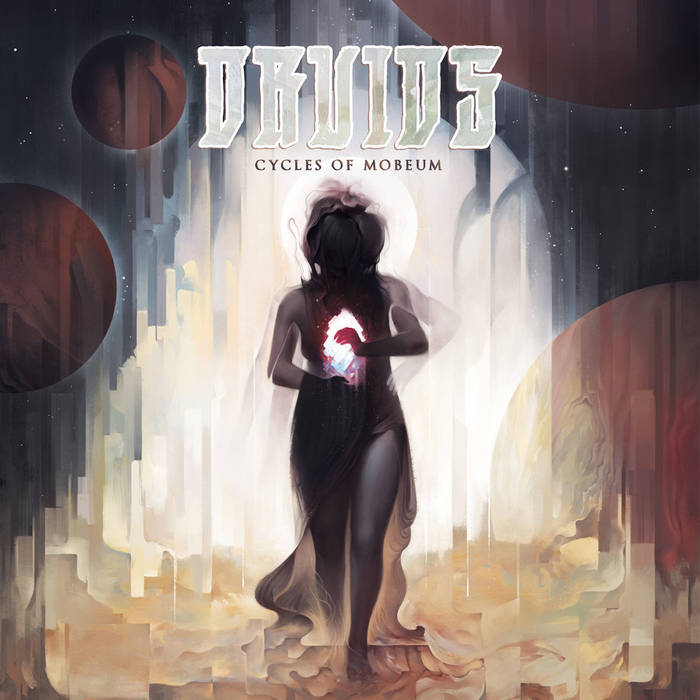
DeveikuthDeveikuth are a French Funeral Doom/Drone band and this is their latest release.

Now this is some heavy stuff.

The first track starts off with some sickeningly distorted bass that seems to overwhelm everything else as maniacal vocals scream obscenities into a bucket. A dirty bucket filled with filth.

The striking vocals overlay the constant feedback howling and murky distortion of the tracks. Said vocals are unhinged and sound quite disturbed. Juxtaposed against the slow, unhurried music it creates quite an impression over the 12 minute playing time.

Track two is more of an ambient, mood-interlude, albeit one that lasts for six minutes. Strange sounds and odd noises accompany some semi-excited drums like something esoteric stalking something playful. Apart from a kind of spoken word bit near the middle, it’s instrumental and a nice change of pace and mood after the disconcerting menace of the first song.

The final song is the longest here at almost 17 minutes and shows the band in more of a build-release mode, with some extra atmosphere included too. Shrieking, wailing vocals accompany equally turbulent music as Deveikuth pull you under the water and hold you there, enjoying your gurgling demise.

This is a release that reeks of pain, anguish and warped sensibilities. It’s not for the faint-hearted and not for people that like clean, easily digested music.

Check it out.

Dead Eyed Sleeper – Gomorrh (Review)

Dead Eyed SleeperThis is the fourth album from German Death Metallers Dead Eyed Sleeper.

This has a very tasty sound, thick and heavy without losing clarity or definition.

The singer’s expressive growls and screams are ably performed and have an energy to them that’s undeniable. Powering along with passionate aggression and meaty delivery, he leaves an impression.

The same could easily be said of the music, actually; energetic, passionate and aggressive. The band’s take on Death Metal is familiar enough to be instantly satisfying yet differentiated enough to sound interesting and fresher than most similar bands. Elements of brutality rub shoulders with more involved technical and progressive flourishes that leave the band standing separate from a lot of their peers, which in my mind is no bad thing at all, nor is it an easy thing to achieve.

These five tracks are expansive forays into Death Metal, making the most of what the base genre has to offer, but fleshing it out with extra influences and snatches of mournful and dirge-like melody. These Doom-influences serve the band well, providing ample opportunity for them to show off their emotive side. When this is combined with the technical and/or progressive aspects of their sound it’s a heady combination that marks the band out for great things as far as I’m concerned.

At the end of these 29 minutes the play button is pressed again. It’s a hallmark of good music that you immediately want to hear it a second time and you also want more than just what’s contained on this album.

Very impressive and very recommended.

Uboa – Coma Wall (Review)

UboaUboa is a solo Doom artist from Australia and this is his latest release, which comprises one track that lasts almost 23 minutes.

Holy shit. Okay, that could be my entire review, really. Holy. Shit.

I suppose I should write a bit more though, here goes.

So, it starts off with a sample, some feedback and some slowly-added in noises. Immediately an unsettling atmosphere is created which is maintained throughout in one form or another. Shudder.

Then, all of a sudden, it’s as if all Hell’s daemons are unleashed, as twisted pain-filled screams and maniacal percussion are unleashed on you in a barrage of chaotic frenzy. It’s not pretty, but it certainly is engaging.

Coming across as a depraved mix of Atomsmasher, Khanate and Venowl, Uboa effectively spends these 23 minutes creating a horror-filled semi-organic nightmarescape that defies conventional music in favour of pure mood and feeling, seemingly dredged up from the abyss.

Birthed raw as a twisted combination of sparse Doom and eclectic noise, this is surprisingly enjoyable music, although I suppose I should point out that to most people neither the words enjoyable nor music would seem to apply here. Their loss. This wall of anguished sound hits the right spot with me, and that’s all that matters.

There’s a tense undercurrent to all of this that I find quite tasty; I always like music that uses tension well and on Coma Wall there’s no let up until the final dying sounds have disappeared into oblivion. During the latter part of the track the mayhem subsides, but the tension does not, and just when you think it’s settling slowly into a dying ambience, it gets heavy, sludgy and apocalyptic.

Phew! Very nice. Or nasty. Whatever. Either way, after 23 minutes I’m raring to go and listen to this again.

For true Doom/Noise connoisseurs only; check this one out if you dare.

Abyssic – A Winter’s Tale (Review)

AbyssicThis is the début album from Norwegian Symphonic Doom/Death band Abyssic.

Well this is an absolute monster of an album. At 79 minutes in length and featuring just four tracks, Abyssic certainly know how to provide the listener with a lot to get their teeth into.

A decent stylistic reference point for Abyssic would initially be the old Peaceville roster, with bands like Anathema, My Dying Bride and Paradise Lost all providing an idea of what the base of the band is like. Only longer and more epic, of course. Once you have this in your mind’s eye, mix in some more modern, epic funeral Doom from the likes of Monolithe, as well as a sterling Classical influence, and you’ll have a good idea of what Abyssic are getting up to here.

The symphonic aspects of Abyssic’s sound are big, bold and unashamedly impressive. Abyssic don’t hold back, and nor should they. This is a band that manage to incorporate the symphonic and Classical elements into their sound in a holistic and complete way, rather than having them just added on at the end. The music easily takes on a cinematic legendary feel and each of these long songs feels like a story. Nay, a saga.

A Winter’s Tale benefits from a huge and lavish production that allows all of the different parts of their repertoire to sound clear and crushing. Thick guitars and textured keyboards merge together with the crushing drums to provide the listener with a very engaging and absorbing listen. The songs may be long, but if you have the time to spare for them then there is so much here to enjoy.

For the most part the vocals are deep, dark growls, of the kind that are pretty much standard for Death/Doom. That’s not to say they’re not effective or don’t do their job though.

Long they may be, but these songs justify their own existence by being so damn impressive and well-put together. The band know their stuff, that’s for sure. Amazingly, given the length, these tracks don’t get boring and the lavish, lush orchestration is a constant joy to listen to, especially when combined with the heaviness of the guitars.

This atmospheric album really nails the best parts of the Death/Doom style for me, and the overwrought symphonic elements are just candy to my ears, pulling the whole thing up to another level.

Very highly recommended.

Abstracter/Dark Circles – Split (Review)

Abstracter Dark CirclesAbstracter are a Sludge/Doom band from the US, and Dark Circles are a Hardcore band from Canada.

Both of Abstracter’s full length albums, (Tomb of Feathers and Wound Empire), feature regularly in my listening. And with good reason; their brand of heavy, blackened Sludge/Doom is expertly done. On this release they contribute 2 tracks, lasting almost 20 minutes in total.

Barathrum starts off showcasing the band’s blackened aspect, with dark, murky blast beats charging through a sea of tar. This rather quickly spends itself, leading into a slow, sludgy crawl through murkiest waters as Abstracter embrace their dirty Doom side. Occasional forays into speed and groovier territories comprise the remaining running time, with the singer’s thick growl accompanying you the entire way.

If you haven’t encountered Abstracter before then this song is as good an introduction as any into their harsh, underground Sludge Metal.

But we’re not done yet, as there’s a second track; Where All Pain Converges. This is a little longer than the first and generally a bit slower and more considered. If Barathrum showcased the band’s harsher side then this one showcases their more atmospheric. That’s not to say this isn’t harsh and heavy, (it is), but that it also has more of a blatant emotive quality to the guitars than the soul-crushing nihilism of the first. Mixing slower sections with some more upbeat parts, the overall mood is maintained throughout and Abstracter once again show why they’re so very good at what they do.

After this onslaught of despair and misery, we leave Abstracter to wallow in their pit of pain, and approach, timidly, Dark Circles. This band offer up a different form of gloom with their characterful brand of dark Hardcore. Being familiar with their previous work on MMXIV, it’s good to catch up with them again and here they give us 4 songs, lasting just under 13 minutes.

Ashen starts us off with a squeal of feedback before violently picking up the pace with the band’s dark blend of abrasive Hardcore. One of the things I like about Dark Circles is their ability to inject an emotive bleakness into their raging chaos, engaging the listener and prompting them to move closer, despite the inherent danger. The second track Void follows on in a similar theme, (but with added atmosphere), and both initial tracks blur by in a haze of anger and distorted malice.

After these typically short and nasty affairs both of the next tracks are much longer by comparison, relative to this split and to their work on MMXIV. Isolate starts immediately, all blackened teeth and bile. The longer playing time allows the band the opportunity to flesh out the more atmospheric side of their sound that briefly reared its head during Void. This shows itself to be an apocalyptic Sludge/Doom influence, heavy and foreboding, before the Hardcore energy picks up once more.

The final track is called Epilogue (Quietus) OP. 28 No. 4 and is a little different, as the name suggests; here the band give vent to a dark ambient side and swamp the listener with a slow-building tense piece of drone that creates a nicely unsettling and worrying atmosphere.

Both bands have contributed some very nice work to this split release, and although they do play different styles they also have more than enough overlap and similar themes to complement each other perfectly. As splits go, this works a treat and is definitely one you should check out.

Primitive Man/Sea Bastard – Split (Review)

Primitive ManThis is a split release between two of Doom’s darkest stars, Primitive Man from the US and Sea Bastard from the UK.

Both excel at what they do and having both of them on one release is quite an exciting prospect.

Primitive Man start us off with two tracks of the grimmest, most evil Sludge-fuelled Doom that there is. It’s 17 minutes of agonised pain and hatred. After many releases, (here, here and here, for example), I still can’t get enough of the horribly bleak noises that they make.

Colossally heavy and nihilistically bleak, Primitive Man always deliver the goods, and on this split it seems that the goods are well past their best-before-date and covered in filth and dirt.

The singer has hands-down one of the best pitch-black growls I’ve ever heard and when his voice first makes an appearance on Cold Resolve it’s like being floored by a truck. That’s if the slow, crushing guitars haven’t flattened you before then. The song proceeds to crawl across your broken corpse, all distorted malice and squealing feedback, slowly pressing you into the ground until there’s nothing left.

The second song of theirs is the shorter of the two, yet is no less nasty for it. Servant starts off with a feedback squeal and is typically crushing from then on in, once again showing off the kind of high-quality Doom that the band have become known for. Dripping with spite and rage-fuelled negativity, as the track unfolds things just get heavier and darker until the playing time is mercifully over.

But there’s no real breather, as we now have Sea Bastard’s colossal near-20 minute behemoth of a track, The Hermit, to deal with.

Like Primitive Man, Sea Bastard keep unleashing quality releases on the world, (here, for example), and this is no exception.

Sea Bastard’s Sludge Metal is less dripping with filth than Primitive Man’s, but no less effective for it. Previously I’ve described them as similar to Bongripper only with screams and growls, and that’s not a band starting point for initial reference.

Sea Bastard specialise in settling into a slow-burning crawling-groove, with a mesmerising heaviness drawing the listener in and repeating itself over and over, but never to the point of where the listener loses interest. This is enticing and hypnotic, and just when you can’t take it any more the band shift gears or change riffs and the suffocating Doom takes on a different edge, no less crushing than the last.

The screamed vocals are the perfect accompaniment to the music’s guitars, and the combination of the two produces a very satisfying feeling deep in the stomach where the bass seems to have set up home.

Picking up the pace a bit halfway through, the band show that it’s not just slow riffs that they can peel off with ease. This doesn’t last, of course, and once spent the juggernaut returns to a malevolent crawl as the song claws its way to conclusion.

The Hermit is just as good as anything the band have released, and combined with Primitive Man’s side of the split this is a pretty damn essential Doom release for anyone who’s into this kind of thing.

DOOM!

Boris/Merzbow – Gensho – Split (Review)

Boris with MerzbowThis is a split between two well-known, (in underground circles, at least), Japanese groups; Boris and Merzbow.

This is a mammoth release that contains almost two and a half hours of music, evenly split between both artists. This is an exact split too, as the two sides are designed to be played either separately or simultaneously; doing the latter provides yet a different experience as the music of the two syncs up to provide the listener with something greater than the sum of the individual parts.

Boris’ side features 9 songs that are all percussion-less versions of some of their existing tracks. This reinterpretation of their own work lends the songs a different quality to the originals, (some of which I’m familiar with and some of which I’m not), creating dreamy soundscapes and indulgent forays into emotive colour and feeling.

The band have picked tracks that demonstrate their emotive and Doom/Drone side well, resulting in an emotive and atmospheric release that easily stands up on its own even without its counterpart music from Merzbow.

As someone who’s a massive fan of all things drums, I’m pleased with how well the music holds up without percussion and this Boris side of the split is stronger and more effective than I expected.

Merzbow is a legendary noise-maker that I have been aware of for so long now that I can’t recall. However, apart from the odd collaboration or guest spot on someone else’s music, I have never actually heard anything by him. Due to my general antipathy towards most percussion-less noise, I’ve never felt the urge to particular seek out his music, so it’s taken this long to hear anything by him.

With that in mind, we turn our attention to these four colossal tracks that are designed, as with the Boris ones, to be played individually or in conjunction with those of his split-mates.

Unfortunately, as alluded to previously, most noise leaves me rather cold, and although I can appreciate that these Merzbow tracks have structure and do create harsh soundscapes with squeals, feedback and distorted crackles, etc., it’s ultimately not a style I can claim to love.

Having said that though, these tracks do have their moments, and due to the prolonged playing time I was very surprised to find myself eventually settling into it. Shocking! As I say; in general this is not a type of music that really does that much for me, so it’s testament to his skill as an artist that I can actually willingly listen to this and take something from it.

None were more surprised than I. It seems that Merzbow deserves his reputation after all.

So here we have it, a very long and surprisingly enjoyable release that certainly won’t be for everyone, but may be more to your liking than you might first think.

However, that’s not the end of it, and this is where the genius comes in; play the two artists together as is intended, and everything changes. All of sudden, the Merzbow contribution works wonders when taken alongside the Boris tracks. The resulting soundscapes combine the harsh frequencies and dreamy guitar-based drones to produce four long tracks that paint some really evocative musical pictures.

This, for me, is the ultimate way to enjoy this release. Taken in at the same time, the entire experience gets elevated and I wouldn’t really listen to it any other way now.

Some releases are a challenge to review and this one has been a marathon of exploration and expectation-destroying revelation. It has been worth every second though, and I can’t wait to hear what you think about this one.