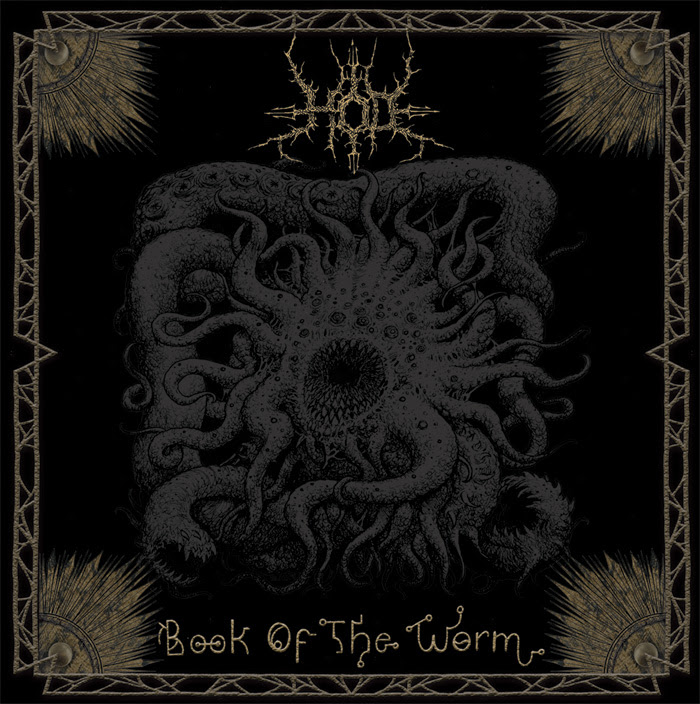
Hod specialise in rough Death Metal with no commercial shine or anything that could resemble nicety of delivery. This is raw, underground and reeks of evil.
There is a Blackened feel to much of what goes on in these songs, which only goes to enhance the darkness and nastiness that the band generally give off.
The riffs are largely fast and melodic in a sharp, Blackened, way. The majority of time efforts are spent creating music that’s dark, dirty and brutal, although they do throw in the odd solo to add a splash of colour here and there.
The guitars, and in extension the songs, have a lot of good ideas and Hod pursue their Blackened Death Metal art with clear enthusiasm for the kill.
References? Bits of Morbid Angel, Master, Arkhon Infaustus. Snippets of others.
There is no softness on this album, no moments of respite from the chaotic Blackness and brutal assault. This is not a band who want to be your friends or play nice. This is music purely designed to destroy and worship the foul Gods of the Metal underworld, wherever they dwell.
Maybe you should open up the Book of the Worm and read this hymn for yourself?
Phobiatic are from Germany and this is their second album of Technical Death Metal.
Phobiatic’s Death Metal is both technical and brutal and takes cues from the likes of Dying Fetus – huge brutal riffs combine with intricate, swirling leads to create a monster of a Death Metal assault.
The songs are largely short and sadistic affairs, averaging about 3 minutes each; every track makes a virtue of aggressive complexity juxtaposed with a simpler and more brutally direct attack.
The production sounds fine and the band know what they’re doing with their respective instruments.
The vocals are deep, guttural and in your face. A band like this, however, has no need for subtlety and the forthright approach goes hand in hand with the nature of the songs.
Fragments of Flagrancy is an enjoyable album that’s short enough to satisfy the urge for instant destruction and technical enough to satisfy the desire for a deeper chaos.
Give the album a listen and see what they do for you.
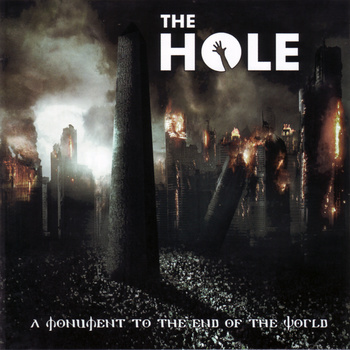
This is the début album from The Hole, who are a Spanish Death Metal band with Thrash leanings.
The Hole thunder nicely out of the speakers with a heavy sound and crushing presence. It’s riff-heavy music intent on causing as much destruction and devastation as possible.
I’m not sure why but based on the album cover I was expecting this to be more commercial than it is, and I’m pleased to be mistaken as this is pleasantly brutal and harsh.
I think I was maybe expecting the Thrash element of their sound to be the dominant partner, but no; although their Thrash influence has its place and keeps the album from sounding stale, it’s the harsher Death Metal sound that is the driving force here.
The Thrash edge lends the songs a more considered side than if it was pure Brutal Death Metal, but nonetheless this is raging and storming music for the most part. Some of the riffs and ideas are actually quite inventive and the band strive to keep the album as varied and interesting as possible, which is to be commended.
The heaviness is offset with occasional melodic moments and the band know their business. A good amount of solos are played too, which is always nice.
Blast beats and mid-paced double bass sections force the guitars to keep up, and the bass actually has a presence in the songs which is good to hear.
The vocals alternate between deep, evil sounding growls and higher rasps. Both sound good; both do the job. Good vocal rhythms and structures are used.
An enjoyable and solid release. Have a listen to this.
Having just released their impressive, diverse and very individual second album Moon Worship, I caught up with the band to find they’re only just getting started…
Give us a bit of background to Giant of the Mountain
Giant of the Mountain is a Dallas based metal band started by me and my wife Randi (the drummer) in 2008. We both started on guitar, went through member changes and Randi switched to drums. Since then, we’ve released a few recordings, and evolved into what we are today.
What are your influences?
I would say my main influences are Opeth, Emperor, and Death.
What are you listening to at the moment that you would like to recommend?
Right now, I’m listening to Mournful Congregation. I haven’t been able to put The June Frost and Concrescence of the Sophia down lately. They are incredible. I’ve also been jamming Laethora out quite a bit. They haven’t put anything new out recently, but it’s so dark, brutal, and a little crusty too. I also recommend the new Infestus, and the new Imogen Heap is really great too.
You have a wide range of styles in your sound – how would you describe your music?
Basically everything I write is me trying to make my own My Arms, Your Hearse (Opeth). We have a little death, a little black, and we also try to be progressive about it. We also welcome singing and acoustical passages. I guess I just have a song in my heart, and I can’t help but show it to the world, you know?
What did you want to achieve with your new album?
Well we are constantly growing and evolving as a band, and I wanted to fully capture our progression and growth on tape.
Are you happy with how it turned out?
Yes, most definitely. I think it’s the best thing we’ve done to date.
What lyrical themes/feelings have you covered on it?
Mostly it’s Lovecraftian lore. There are songs about Dagon, Yig, a Cthulhu/Shub-Niggurath spawn and one about the moons in The Elder Scrolls lore (Masser and Secunda).
What’s the meaning of the album title?
Mostly the songs are about the moon, and reverence to it. It’s about the moon calling its followers the depths to Dagon.
Your songs have a lot of variety and interest to them – how do you go about writing your songs?
It’s hard to say where exactly inspiration or that magical special riff that makes the song comes from. Once something that really strikes my fancy comes along I start building on that until I have a whole song. After that we start working on adding the drums and bass, and then I write the lyrics and working them into the songs. Then we practice them until we feel they are the best they can be.
How do you see your songs/direction developing in the future?
I definitely want more of everything. I want more complexity, brutality, and blackness. I want more acoustical passages and I want to top the vocal harmonies we did in moon worship. To me there is no limit, and we are at the beginning. I haven’t even begun to think of my best idea yet.
What can we expect from future releases?
Hopefully it’s something you wouldn’t expect. I want something to take you off guard and pull you in at the same time. Who knows what we’ll come up with!
What’s next for Giant of the Mountain?
Touring ! We want to play everywhere, and we want to meet more great people from around the world. Metal really does have the best fans. It seems like no matter where you go, and what city you’re in metal folks are always cool to be around.
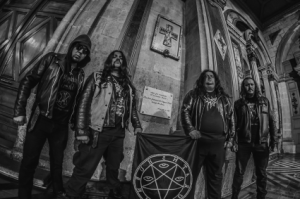
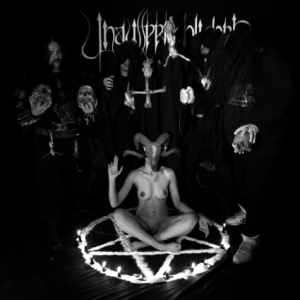
Unaussprechlichen Kulten have recently released their third album Baphomet Pan Shub-Niggurath and it’s a veritable feast of occult Death Metal. Between bouts of blasting it out at high volume I quizzed guitarist/vocalist Joseph Curwen about the album hoping he could shed some light on the dark depths within…
For those who are unfamiliar with your band – introduce yourself!
To the readers of Wonderbox! Of course all of you are unfamiliar with our band! We come from the end of the world: Chile, so the” third world” sends his curses to the “first world”!
Give us a bit of history to Unaussprechlichen Kulten
We start in early 2000 in Santiago, Chile with a couple of demos, inspired at Lovecraft’s “literary”. Our style: OCCULT DEATH METAL, taking inspiration from old and new metal.
Until now, we have 3 albums, some 7 inches and some splits, this year 2014 (September) we will do our second European tour.
What are your influences?
The “Olds Ones” are our spiritual influences! About Metal influences, you know from classics like SLAYER (old), MERCYFUL FATE, INFERNAL MAJESTY until INCANTATION, MORTEM (Peru), NECRODEATH, INCUBUS (USA), GORGUTS, SHUB NIGGURATH, IMMOLATION, PENTAGRAM (Chile), MORTA SKULD, DISMEMBER, NOCTURNUS and of course The Almighty SADISTIC INTENT.
We have a foot in Swedish/Finnish, and the other in American and South American DEATH METAL (80-90s) and a bit of influence (guitars) from some new bands like Deathspell Omega.
What are you listening to at the moment that you would like to recommend?
From Chile: GODLESS (maybe the best Chilean band!), DEMONIC RAGE, FORCE OF DARKNESS, MAGNANIMVS, ATOMICIDE, HADES ARCHER, DIABOLICAL MESSIAH, ANCIENT CRYPTS, SLAUGHTBBATH, INVICIBLE FORCE, HORRIFYING, ATHANATOS… Pure feeling!
Foreign: POISONUS, DAEMONIC, ATARXYS (Arrrg the last album rulezzz), VOIDS OF VOMIT, ZOMBIFICATION, SWALLOWED, TOMBSTONE (Italy), IMPOSER,ABYSS (Canada), ECTOVOID, BLESSED OFAL, INCARCERATION, NECROHOLOCAUST, EVOKED TERROR, HATESPAWN, LATERN, AFTER DEATH, MASADA, ORDO INFERNUS SKELETHAL, SULPHUR AEON, GOREPHILIA, HAEMOPHAGUS among many others.
Tell us about your new album
The concept background of this new Chapter it is a consolidation of mythology in relation with the “Goat Worship”, the Eliphas Levi´s Baphomet, the God Pan and Lovecraft´s Shub Niggurath, mixed with universal mythology and even Chilean legends.
Was recorded in one month at DM6 studio, at home, this year 2014. We have recorded all of our albums there and also our rehearsal room is there. The owner of this studio (Pablo Clares) knows how Death Metal must be recording.
The cover art was painted by Daniel Corcuera in a fuckin awesome way!
Are you happy with how it turned out?
I’m pretty satisfied, until now the album have good promotion from both labels: IRON BONEHEAD and DARK DESCENT. Talking about music, to me is our better work, but the best, will come in the future.
What can you tell us about the lyrics/themes of the songs?
As you may know, mainly the Lovecraft’s myths and their relation with the “Mysteries of Death” are the core of our lyrics. The deities of Lovecraft represent archetypes present in different cultures and every culture has something that we called “The Memory of the Blood”, that’s what creates “worships”, myths and religions in relation with “common” monsters like Hydras or Sea Serpents, so we take the Lovecraft terminology to explain with “his words” spiritual concepts that otherwise we would be forced to use “christians” or “common” terms.
How do you go about writing your songs?
About Metal, first I do the riffs, arrangements and disharmonies of guitars, in accordance to what lyrics need, like faster, slower or thicker parts, thinking in the “concept” under the lyrics all the time. After “a-melodic” line are ok, I show guitars to Butcher, drum is 100% his responsibility. Then we adjust the structure and cuts, together in the rehearsal room.
How do you see your songs/direction developing in the future?
The most twisted, morbid and creepy that our capabilities allow. Special techniques or sound??? Who cares?…..
What’s next for Unaussprechlichen Kulten?
In September of this year 2014 we will be in Europe in our second tour with INCARCERATION and ZOMBIFICATION in Italy, Czech Republic, Poland, Germany, Denmark, Norway, Sweden, Holland and Belgium, and finally with DECAPITATED CHRIST! In Spain, France and Portugal.
Torn the Fuck Apart are from the US. They play Death Metal and this is their second album.
Torn the Fuck Apart combine Brutal Slamming Death Metal with Technical Death Metal to sound like the bastard offspring of Dying Fetus and Cannibal Corpse.
Heavy riffs collide with widdly guitar leads to create that Dying Fetus-style mix of brutality and technicality that works so well for them. Torn the Fuck Apart then add into the mix a bit more Cannibal Corpse influenced riffs a well as elements from the Slam school of thought.
The songs are good, with heavy riffs flying around and leads slicing through the chaos like knives. There’s plenty to get caught up in and the double bass and blast beats flow freely.
The vocalist uses very deep, guttural growls; his is a very good voice for this kind of music.
Musically the album has a maturity that belies the image you might get of the band from their songtitles, etc. This is advanced-level Death Metal with lots to keep the listener hooked as the band bash you around the head with their aural assault.
Have a listen and I’m sure you’ll get drawn into their technically brutal world.
Vermin Womb are from the US and this is their début EP.
Made up of members with an impressive Extreme Metal pedigree, (Primitive Man, Clinging to the Trees of a Forest Fire), this releases takes that collective knowledge and experience and funnels it into a veritable natural disaster’s worth of extremity and violence given form.
This is a combination of Sludge, Grind, Death Metal and pissed off Hardcore. It’s not for the faint-hearted and sounds like the end of the world is coming. It’s brutal, nasty, and very, very heavy.
The songs here combine the ferocity and general disdain of Hardcore/Grindcore with the murky evil of Sludge and the brutality of Death Metal. There’s even a Blackened edge.
Take Eyehategod, Brutal Truth and Anaal Nathrakh, mash them all up, put the remains in a blender, force feed the resultant slop into a few hapless victims and the resulting screams of pain and agony will sound a bit like Vermin Womb.
The singer is probably one of these unfortunates as it sounds like he’s been gargling liquid nightmares and is now vomiting forth the worst of his experiences.
This is impressively ugly and it takes real determination and talent to create Metal this heavy and grotesque.
Absolutely horrible music that you can’t afford to miss out on.
Confrontation are from the Netherlands. This is their début EP and they play Death Metal.
This is Old-School Death Metal with a malignant Doom influence. Think Swedish Death Metal meets Incantation. The recording has a bit of that Swedish tone, an evil vibe and a very tasty drum sound.
The songs are lumbering, heavy behemoths of dark destructive energy and deep, inhuman growling.
There are only three tracks on this release but each song is relatively long with the whole EP clocking in at just under 20 minutes.
What I like about this band is that they take the Swedish/Old-School sound and really ramp up the Doom side of the equation. The end of the first track, for example, is a great combination of feedback drenched slow riffing, harrowing noise and deep growls.
The band know how slowness works and how to make the most of it; atmosphere, feeling – these are important to the band. The start of the second track reinforces this as we get an eerie guitar melody over a pitch-black Doom riff and slow, crawling drums. When the vocals kick in it sounds as if Bolt Thrower have slowed down more than normal and decided to take the evil route to Death Metal.
Highly enjoyable – a hidden gem of the Metal underground.
This is an impressive EP that should be listened to by fans of both Doom and Death Metal. Be sure to check them out.
This is the first demo by Dutch Death Metal band Miasmata.
It opens explosively with pignoise and blastbeats. A firm opening statement if ever there was one.
It may be just a demo but the sound is acceptable enough and showcases the band’s blend of chugging slam and blasting brutality. Solos and the odd flash of melodics appear in the songs as the band aren’t adverse to adding a bit of colour to the tracks.
I’d classify this short demo as a cross between Dying Fetus and Deicide. This songs are surprisingly enjoyable and overall I like this. This is no frills, no nonsense Death Metal that gets the job done nicely.
This demo is a good first release and if the band spend a bit more time honing their art then I think their eventual début album will go down a storm.
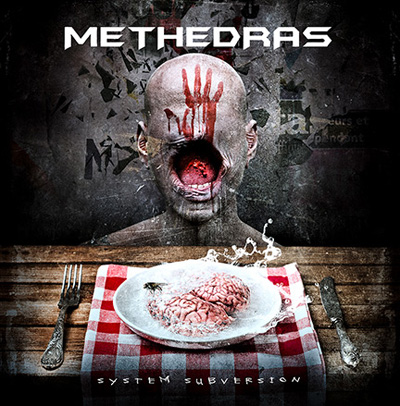
Methedras are from Italy and play Modern Thrash Metal. This is their fourth album.
A state-of-the-art heavy and crisp sound blares out of the speakers accompanied by a maniacal laugh and enough modern Thrash sensibilities to crush an elephant, (poor elephant). Methedras waste no time in preparing their mission statement and declaring it boldly.
This is Modern Thrash Metal and it’s ready to riot. Essentially the band mix elements of modern bands such as Lamb of God, Soilwork and Byzantine, Thrash bands like Annihilator and Testament and a touch of Death Metal to create an aggressively heavy album that pulls no punches. Think Testament’s Low updated for 2014.
The vocals are suitably extreme, combining screams and shouts with some deeper growling, as well as the odd melodic semi-cleaner chorus. The singer manages to achieve this with no small amount of charisma as well. Well done that man!
The songs are mature, well written and overall the album as a whole feels very comprehensive. The combination of aggressively Metal riffs and harsh vocals make for a good listening experience. With memorable choruses and hooks aplenty this is a fine collection of songs that I can imagine going down a storm live.
System Subversion is modern Metal without any of the commercial pandering or posturing that is so prevalent in today’s music. It’s modern with a heavier angle and a proper appreciation for Metal – it doesn’t let the side down.

 Hod are from the US and play Death Metal.


 What are your influences?
 Are you happy with how it turned out?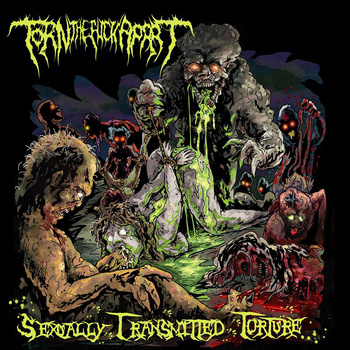
 Wonderbox Metal