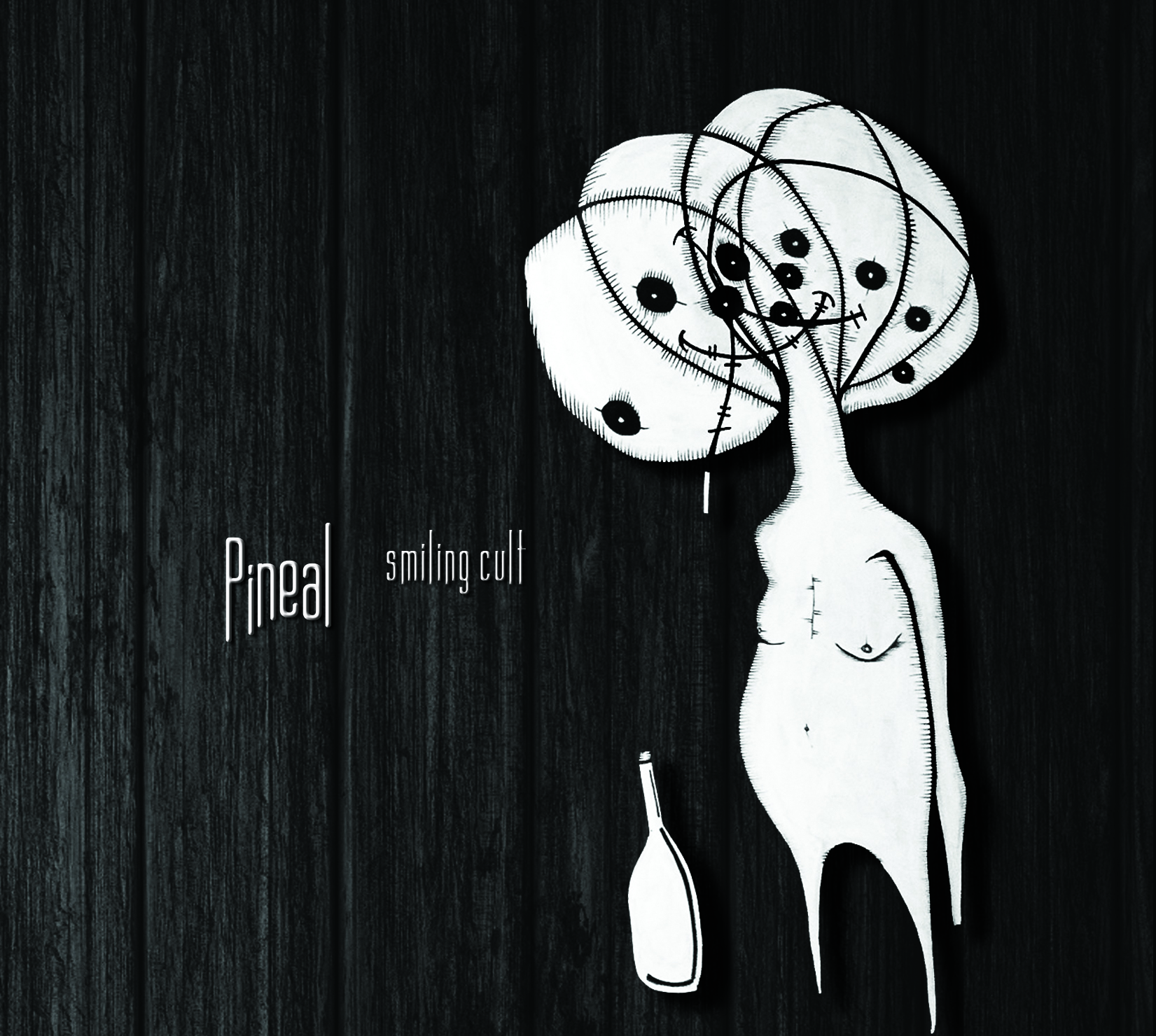
Pineal are from the UK and this is their début EP. They play Post-Metal.
Opening up with a clean, clear sound the band treat us to their take on the Post-Metal genre and like most things in Post-Metal it’s wonderfully individual.
As I’ve remarked on before, the one aspect of most Post-Metal bands which is relatively rare is clean vocals; most Post-Metal groups either go for harsh vocals of some description or no vocals at all, only a few have sung cleans. Pineal are one of the latter bands.
The cleans are initially unexpected but they do fit the music well. They sound very influenced by Alice in Chains and have the same kind of easy, laid-back power inherent in them.
The songs unhurriedly pass through their playing time with the band exploring the rich Post-Metal landscape and the singer producing plaintive, mournful tones on top of everything.
Smiling Cult is a skilful display of songcraft and shows a very adept band finding their sound and working out what feels best for them.
This largely eschews the normal Cult of Luna/Isis/Neurosis triumvirate in favour of a sound that condenses elements of Tool and Alice in Chains into this 25 minute EP.
Already in their short career Pineal show big promise. This EP is an enjoyable listen and if they continue to develop their sound even more then a full album from this band should herald great things.
Lavatory are a Death Metal band from Malaysia. This is their début album.
Just like the shambling, rotten monstrosity that graces the album cover, Lavatory’s brand of Death Metal is a putrid and corpse-ridden ode to that oh-so-satisfying of sub genres – Old-School Swedish Death Metal.
The album is aptly named as the band use all of the chainsaw-shaped tools available to them in their box of chainsaws to create Death Metal that’s heavy in both guitar tone and deathly dread.
If you know Swedish Death Metal, (and I know you do), then you know what to expect here; the chainsaw riffs, the haunting melodies, etc.
It’s all delivered by a band that sounds a little bit more unhinged than is the norm for the style though. It’s almost like the levels of rot have taken hold so much and so deep that they’re in danger of falling apart.
It’s like they’ve mixed Old-School Death Metal with an equally Old-School brand of Hardcore and taken the energy levels from the latter and messily transplanted them into the former. Well, the operation may have killed the patient but it’s been a success anyway.
The singer sounds like he’s going to rupture something and the guitars sound like the chainsaws haven’t had maintenance in a very long time.
The album reeks of the grave and sounds as ancient as a curse. The songs are primitive and stubbornly refuse to be anything other than what they are; there is no pretension here and the band are completely true to their decaying roots.
Check out Morbid terror; just make sure you bring clean underwear.
Earlier in the year Boddicker released their False Flag EP. It was like a kick to the face and really caught the attention of the authorities. I wanted to find out more so I contacted them via the underground and I’ve shared this communication below.
Since this EP they’ve released their début album Crime Upheaval, which is another short, sharp bout of violence that will surely raise their wanted status. Let’s find out what it’s all about…
Tell us a bit about the Boddicker concept – can you fly Bobby?
Clarence Boddicker is an uncompromising cold-blooded killer driven by profit and sadism. So are we.
What are your influences?
80’s UK grind and crust, old school death metal, New York, Scandinavian, and Japanese hardcore, Slap-a-ham era powerviolence, Eyehategod.
What are you listening to at the moment that you would like to recommend?
Nothing really new except for Water Torture, Teitanblood, and Vallenfyre. Right now the OCP office has been spinning 70’s Aerosmith, early At the Gates, Dark Angel, D-Clone, Machetazo, and God Macabre.
How do you feel the current Grind scene is holding up – healthy or not?
Hit or miss. There are a lot of great grind bands currently hustlin’ like Nak’ay, Archagathus, Water Torture, but at the end of the day we’d rather rob a liquor store while Repulsion’s ‘Horrified’ plays in my camaro.
You have an unusual Grind sound in that you also have a large Sludge influence. Is this something that’s intentional or did it just happen?
A little bit of both. Everyone has their own eclectic tastes, but one of the few bands we can all agree on is Eyehategod and Buzzov*en. It’s only natural that their influence made their way into our sound.
What did you want to achieve with False Flag?
We wanted to curate an intense, distinctive, aggressive and memorable release. Whether or not we did that is in the eye (or ear) of the beholder.
Are you happy with how it turned out?
Overall, yes. However, we’ll be a little generic and self-serving and say that we’re overall more satisfied with ‘Crime Upheaval’. Saying that, we all firmly believe that ‘False Flag’ is a ripper.
What are the lyrics all about then?
Crime, anarchy, and spitting in the face of all authority.
What’s the meaning of the EP title?
A false flag is a covert military operation designed to deceive in such a way that the operations appear as though they are being carried out by entities, groups or nations other than those who actually planned and executed them. Collectively, we’re all interested in operations perpetuated in this manner, and felt it was a fitting EP title.
How are your songs written?
Usually after a crack binge and getting down with our favourite Napalm Death, Celtic Frost, Carnivore, Cro-Mags and Black Flag records.
How do you see your sound/direction developing in the future?
Louder, faster, and more ignorant.
What can we expect from a future album?
Well, it’s technically already out since we took a ridiculously long time to answer these questions. Pretty much more of the same, but with more succinct sounds, and more comfortable and confident songwriting. You won’t get too many surprises from Boddicker. We’re very much one-track minded individuals.
What’s next for Boddicker?
More recording, more touring, more playing, more criminal activity, more crushing the false and weak, more money, more problems.
This is the third album from US band Rings of Saturn. They play Technical Deathcore.
This is hyper-technical and full of crazy time changes and enough complex riffery to send even hardened Metallers into hiding.
Rings of Saturn have an extreme Deathcore aspect to their sound that lends them that ultra-modern edge whilst retaining every single aspect of brutality that any form of Extreme Metal has. In this way they’re similar to the excellent Infant Annihilator; this is modern, complex and devastatingly heavy music.
Vaguely Electronica/Sci-fi-influenced melodies abound and stick out from the studied chaos like serrated knives ready to carve up the unwary. The band combine frenzy and precision like few others and these songs are exemplars of what happens when a clearly talented band combine Deathcore with Technical Death Metal and proto-Progressive tendencies.
The sheer mind-numbing extremity of this release is a joy to behold. Some may criticise the band for this and they may find certain aspects of the band’s sound distasteful or too fashionable, or whatever, (poor, much-maligned Deathcore), but it’s hard to care about such facile remarks when the music is this energetic and outright extreme.
My personal complaint with a lot of Deathcore, (and also Djent), is that it’s a style that lends itself to mediocrity too easily. Mediocrity is a word that could never be applied to Rings of Saturn though; love it or loathe it, Lugal Ki En is an album that is bright enough to transcend the mediocre and shine brightly with a thousand burning stars.
Lo-Pan are from the US and this is their fourth album of Stoner Rock.
Bursting straight out of the speakers with the kind of direct, fat riffing that lets you immediately know where their priorities lie, Lo-Pan make a noticeable entrance.
The lazy, melodic vocals recall the early 90’s where there was an embarrassment of lean, hungry vocalists filling the airwaves with choice melodies. Lo-Pan’s singer reminds me of these times and his voice is like liquid honey.
Like a joyous cross between Soundgarden and Torche; Lo-Pan give me a big happy smile and make me want to stomp around to their colossal riffs whilst grinning like a maniac.
The songs on Colossus are instant gratification and sound like they’re very much written with a live audience in mind. As such they’re high energy, catchy and have an easy rolling attitude about them.
Lo-Pan are surely the latest incarnation of the Stoner Rock gods, sent from on high to teach us lesser mortals to rock the fuck out.
Gust are from Sweden and play Hardcore. This is their second album.
This is violent and angry Hardcore that goes straight for the throat but isn’t afraid to do so in different ways.
There is a touch of the chaotic and dissonant about Gust. The band eschew the usual Hardcore clichés and generic guitar patterns and instead go for an atypical and the far more interesting take on hardcore.
As well as brutal and belligerent anger they also display a penchant for nuance in their riffing; it’s certainly not one-dimensional. There’s a creative flair at work here that makes Gust an absorbing listen.
Their riffs also have an apocalyptic feel to them and they’re almost tinged with a slight Black Metal feel as they drip with darkness and malevolent intent.
With largely short songs you’d be forgiven for thinking they were largely taken up with pure aggression; while they do have aggression in spades this is tempered by melodic walls of guitars and dynamic leads.
The end result is an album that mixes the creativity and energy of bands like Every Time I Die and Converge with the occasional slight nod to some of the extreme elements of bands like The Dillinger Escape Plan and Zao. Smother all of this in a Crusty, apocalyptic delivery and Gust are onto a winner.
At Dusk is a one-man Black Metal project from the US. This is his début album.
The album starts with an extended section of winds and Classical piano. After this it’s onto the roiling Blackness of Depressive Black Metal in full, morbid flow.
This album features 4 epic-length tracks that are full of lo-fi Black Metal with enhanced keyboard backdrops and expressive downbeat riffing. The melodies are miserably grim and the general aura is one of misanthropic darkness.
Anhedonia’s recording is distinctly underground and this fits the uncompromisingly negative nature of the music well. Fuzziness, distortion and raw Black Metal are layered with Depressive zeal to create works of near-suicidal art.
These songs are like waves of gloom on a twilight sea, ebbing and flowing with capricious vigour. They wear their bleak emotions on their sleeves and listening to At Dusk is like a constant barrage of negativity and woe. But in a good way.
Screams are buried under the blanketing cover of shadows and slash through into the light like serpentine predators.
At 1 hour in length this is a Blackened journey that leaves the listener raw, bruised and emotionally drained.
Listen to this at loud volume and with the lights turned off.
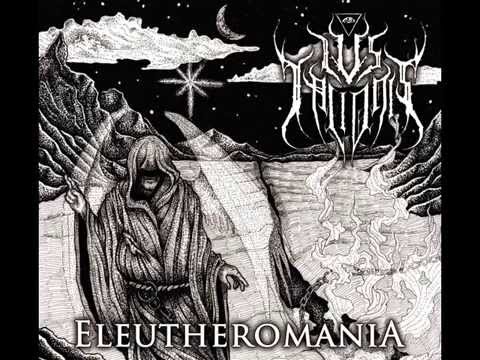
Ius Talionis are from Germany and this is their first release. They play Black Metal.
Although this is actually a demo release the quality of both sound and content belies this.
This is underground Black Metal with a raw-in-a-good-way sound that has a warmth and approachability to it despite the icy aura that the riffs themselves exude. The bass deserves special mention as not only is it audible but also adds tangible atmosphere and depth to the proceedings.
The songs lack ostentation and are atavistic beasts drawn from the dawn of Black Metal and harken back to the days when the likes of Burzum and Darkthrone were just dark amalgamations of potentiality and burgeoning threat.
This is Old-School Black Metal viewed and produced through the prism of history and hindsight. As such it perfectly captures the raw essence of Black Metal without ever falling into the trap of complacency, pointless hero-worship or any number of pitfalls that might befall the common Black Metal band.
These songs have a good deal of honesty about them and each one is truly enjoyable as an exemplar of the Blackened art of mood, pace and malevolent tribute.
Eleutheromania is a very impressive début release. With 4 songs in 36 minutes it could have easily passed as a début album. The fact that they haven’t done this and we still have this future début to come is a very exciting prospect indeed.
Ius Talionis are a band to watch that’s for sure. If they can keep the quality levels up then I predict a great album from them at some point.
Promethean Horde are from the US and play Black Metal. This is their début album.
This is epic Black Metal that blasts out of the speakers with vitality and passion. Immediately a few things are clear – they have a good sound, the bass has a good presence and it’s fast and furious.
The band have a healthy melodic streak to their sound with a good amount of leads and solos rearing their heads amidst the Blackened landscape.
Mainly screamed vocals are used, although deeper growls and cleans also appear. All are performed well.
Ashes of the Empyrean boasts fast and aggressive Melodic Black Metal that’s dark and sharp. These are Blackened melodies in use here not the joyous, pseudo-Pop of their more commercial cousins. This is hateful, spiteful and lives to cut lives short.
Some of the compositions also feature a bit more of a Progressive influence to them, as if the band are just beginning to tentatively experiment with Post-Black Metal/Folk elements. It’s not a large part of their sound for sure, but it’s an additional touch that keeps things interesting.
All throughout the album the band treat us to thick guitars and scathing vocals that lay the foundation for this enjoyable release. Reminding of old Dimmu Borgir without the keyboard ostentation, this is a pleasing album that is easy to like. The Blackened riffs wash over you like a welcome flagellation and the subtle Death Metal touches give their attack an added edge.
Sons of Crom have recently birthed their stunning début album Riddle of Steel. Once my jaw had picked itself back up off the floor I simply had to know more about this band that seemingly appeared from nowhere and produced such an unexpectedly epic album. Let’s delve right in…
For those who are unfamiliar with your band – introduce yourself!
Janne: We are Sons of Crom, and we play epic heavy metal. The band is composed of me, Janne Posti (vocals, guitars, bass, keyboards), and my cousin Iiro Sarkki (vocals, drums). We are both Finns, though I live in Sweden. Our vision is to create music that evokes the primordial feelings of pride, honour and strength through epic storytelling and a grandiose aura. Our music has many layers to it; we want our songs to be catchy yet atmospheric, and we use a wide dynamic spectrum. The basis of our sound lies in some kind of cineastic metal, but genre boundaries are something we cross several times in most of our songs, so we’re not bothered with limiting our expression to one dimension.
Give us a bit of history to Sons of Crom
Iiro: Well there are two answers to this. The history of us as cousins and the history of us as Sons of Crom. Of course they are somewhat intertwined but for obvious reasons the latter is a lot shorter – or is it? Though we have been making music under the Sons of Crom name for less than a year, the personal history between us goes back forever and in a way I think Sons of Crom have always been there, maturing, growing – only now we have revealed our intentions to the world.
Janne: In January, we were in the studio recording, and decided to improvise a song – a long, slow and epic song. We ended up composing “Victory” on the spot, and knew that something of significant value had just emerged. From there on the music just kept coming and coming…it seemed like nothing could stop the flow. We made song after song during the coming weeks/months and soon the album was finished. Debemur Morti Productions was interested in releasing it so it was a no-brainer to engage in co-operation with them. Now, “Riddle of Steel” is here, and Crom is smiling. Haha.
What are your influences?
Janne: Movies, literature and music on one hand, and philosophy, history, cultural heritage and spirituality on the other. The magniloquence of movies such as Conan the Barbarian, or the proud verses of the Poetic Edda, are big inspirations for us. The way of scripting a story and augmenting the saga to something wondrous and larger than life is something we try to incorporate in our own music, to further elevate the lyrical themes and messages. Musically, we are huge suckers for movie soundtracks and all kinds of metal, though both of us have very wide stylistic tastes in music. I can hear bits and pieces of just about everything in our music, from classical music (Bach, Rachmaninoff) to jazz (Brad Mehldau, Esbjörn Svensson) or 70’s hard rock (Uriah Heep, Deep Purple) to black metal (Marduk, Limbonic Art) and beyond. Of course, Bathory is an obvious band to namedrop, and certainly the mighty Quorthon has left a huge influence on us.
What are you listening to at the moment that you would like to recommend?
Iiro: As I write this I am actually listening to the new album by Freak Kitchen, which is not their best opus but I guess I would recommend giving it a spin at least. There are of course albums that I am always listening to that I could recommend. For example Cultes des Ghoules’ “Henbane” is a masterpiece of raw crushing power with occult imagery. Also a new finding for me was an artist called Megadrive. Megadrive makes this cyberpunk/80’s movie soundtrack -style instrumental music with retro sounds bordering on cheesy – but awesome nonetheless. They have catchy songs and nice atmosphere, if you like 80’s action flicks and their awesome music, you should have no trouble liking Megadrive.
Janne: I’ve been spinning a lot of 90’s Marduk lately, “Heaven Shall Burn…” and “Those of the Unlight” being my favourites. Harsh and brutal yet melodic and catchy, I simply can’t get enough of these black treats. Another recent re-discovery is old Gehenna, particularly “First Spell” and “Seen Through the Veils of Darkness”. It’s been years since I played these superb records, and I’m baffled at how little notice they get when people talk about Norwegian black metal. The keyboard-heavy atmosphere, passionate vocals and catchy riffs and melodies really give Gehenna a sound of their own, and they deserve more attention!
What did you set out to achieve with your new album?
Janne: We have no material or monetary objectives, the only thing we want is to reach as many as possible with our thoughts and message. Our goal is to tell a compelling story with philosophical overtones and provide an enticing soundtrack to match its different chapters. We want to reach out to the listener through our music and take him/her through an action-filled journey of war, blood and tragedy, and hopefully inspire him or her to seek answers to the questions older than time itself: “Who am I? What is my destiny? What is the meaning of life? How will I prevail in battle against overwhelming adversity? Where can I find the strength needed to be able to carry on when all is lost?” We hold no answers, though there are hints in the lyrics as to what our subjective thoughts on the matter are. Through our expression, the listener’s impression, interpretation, introspection and, finally, projection, the circle is complete.
Iiro: World domination – of course.
Are you happy with how it turned out?
Iiro: Extremely. Although I was 100% confident on our creation from the start, it still manages to surprise and inspire with each listen and each review I read. This has been one of the most rewarding things in my life.
Janne: The impressive artwork provided by Helgorth of Babalon Graphics really capped it off, and we are more than proud to call the Debemur Morti roster our home.
For a band who are just releasing their first album, how did you manage to write such a mature and complex record?
Janne: We have both composed lots of music during a couple of decades now, so it’s not like these are the first songs we ever wrote, haha. Practice makes perfect and, for my part, all those years of studying music theory, arranging and composing are paying off. Us being cousins helps the process as well; we have an uncanny, almost telepathic, connection sometimes, when our minds just seem to align and we think and create as one, finishing each other’s ideas and birthing new ones all at once. When we discovered this path of creation in January, we quickly realized that we had stumbled upon a gold mine of sorts – the music and lyrics just poured out, almost as if it had a mind of its own. Maybe Crom finally decided to lend a helping hand to his sons…haha! The complex arrangements and structures are a result of us simply not relenting until the songs were taken as far as possible in terms of epicness and magnification of the story. Hard work pays dividends.
Tell us a bit more about the vocals. They’re hugely impressive and multi-textured – how did you decide how they should sound in the different parts of the different songs?
Iiro: We just did what sounded best, basically. We both have our strengths regarding vocal styles and we utilize them in any way to reach the best possible outcome. We never (and probably never will) agree on specific “jobs” such as which one will be the lead singer or backup singer etc. Instead, we try it out and choose the option that fits a specific part the best. So, in a way, every song is sang as a duet.
What can you tell us about the lyrics?
Janne: The lyrics tell the tragic tale of a lone warrior’s quest for peace of mind, taking him through a violent path of death and destruction, supernatural horrors and other planes of existence, searching for the elusive spiritual rest of an ascended individual. As Dag Hammarskjöld wrote, “The longest journey is the journey inwards.” This is the main theme of “Riddle of Steel”. The different chapters of the story have their own treks and their own sets of metaphors, and they are all seminal to the whole of the album.
1Give us a bit of information on the songwriting process.
Iiro: It’s a rather naturally flowing process for us. There is no one way to explain it so I’ll give some examples. One thing we did (with ‘Victory’, as Janne mentioned earlier) is that first we just jammed some improvised drums and guitar and ended up recording the session. Afterwards we kept the drum track for the song and used most of the impro guitar riffs as well. Naturally the guitar riffs and melodies were re-recorded and maybe somewhat polished but in a way the song really almost made itself. On some occasions one has made a whole song as an individual and the other has just given some ideas for arrangement/lyrics/atmosphere. Sometimes we both have some nice sounding riffs and/or melodies and we just sew them together. What I want to emphasize though, is the actual role and importance of the process of songwriting – this is where the magic happens and we give it the time it deserves.
How do you see your songs/direction developing in the future?
Janne: We have already written some songs for the next album, and what I can reveal is that the stylistic leaps are probably even bigger than on “Riddle of Steel”. The primordial atmosphere and epic scope are of course intact, being important parts of our vision, but so is our principle of staying true to the story and not letting genre-specific constraints affect its possibilities, so expect the unexpected! The lyrical concept will be connected to “Riddle of Steel”, and you might even get to hear another language besides English…
What’s next for Sons of Crom?
Iiro: Well at the moment we are dealing with the aftermath of ‘Riddle of Steel’ and getting some merchandise out but after the dust settles, we concentrate on the next album and on the possibility of playing live in the future.
Janne: Promoting “Riddle of Steel” is the top priority for the time being, of course, and doing some gigs would certainly be awesome. Expect a very active future from Sons of Crom!

 Pineal are from the UK and this is their début EP. They play Post-Metal.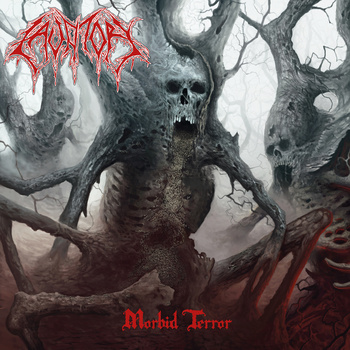

 What did you want to achieve with False Flag?


 What did you set out to achieve with your new album?
 Wonderbox Metal