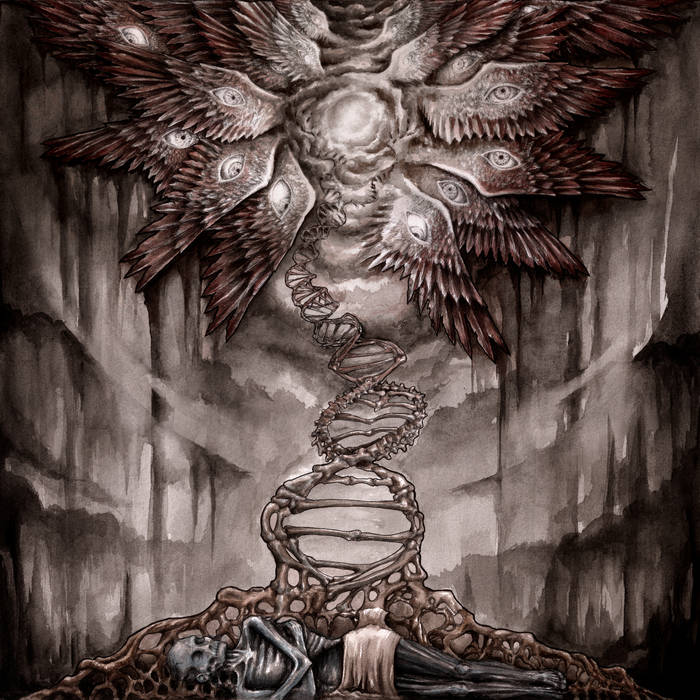
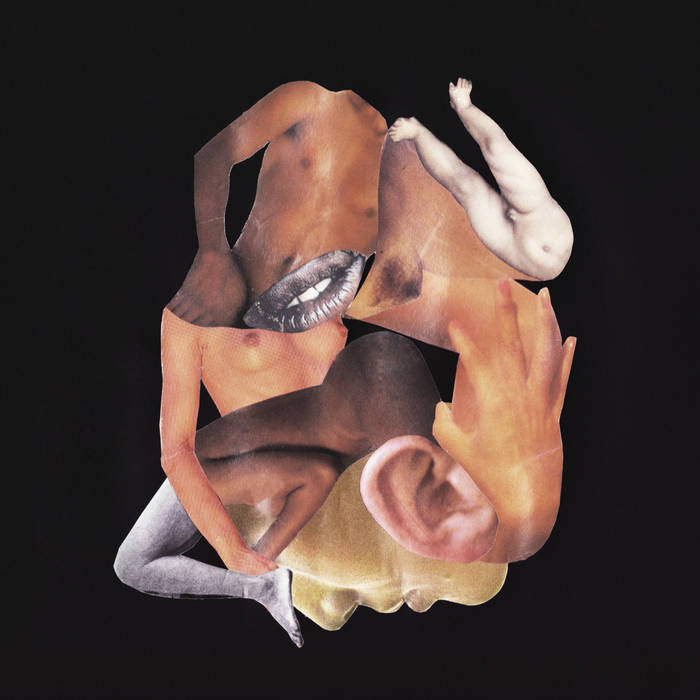
This is the third album from US one-man Black Metal project Palace of Worms.
Here we have Black Metal that manages to retain a raw and nasty demeanour while simultaneously offering enough melodic aspects to be enticingly emotive. It’s not overly melodic, but there’s enough colour and texture through the sinister melodies to add another dimension.
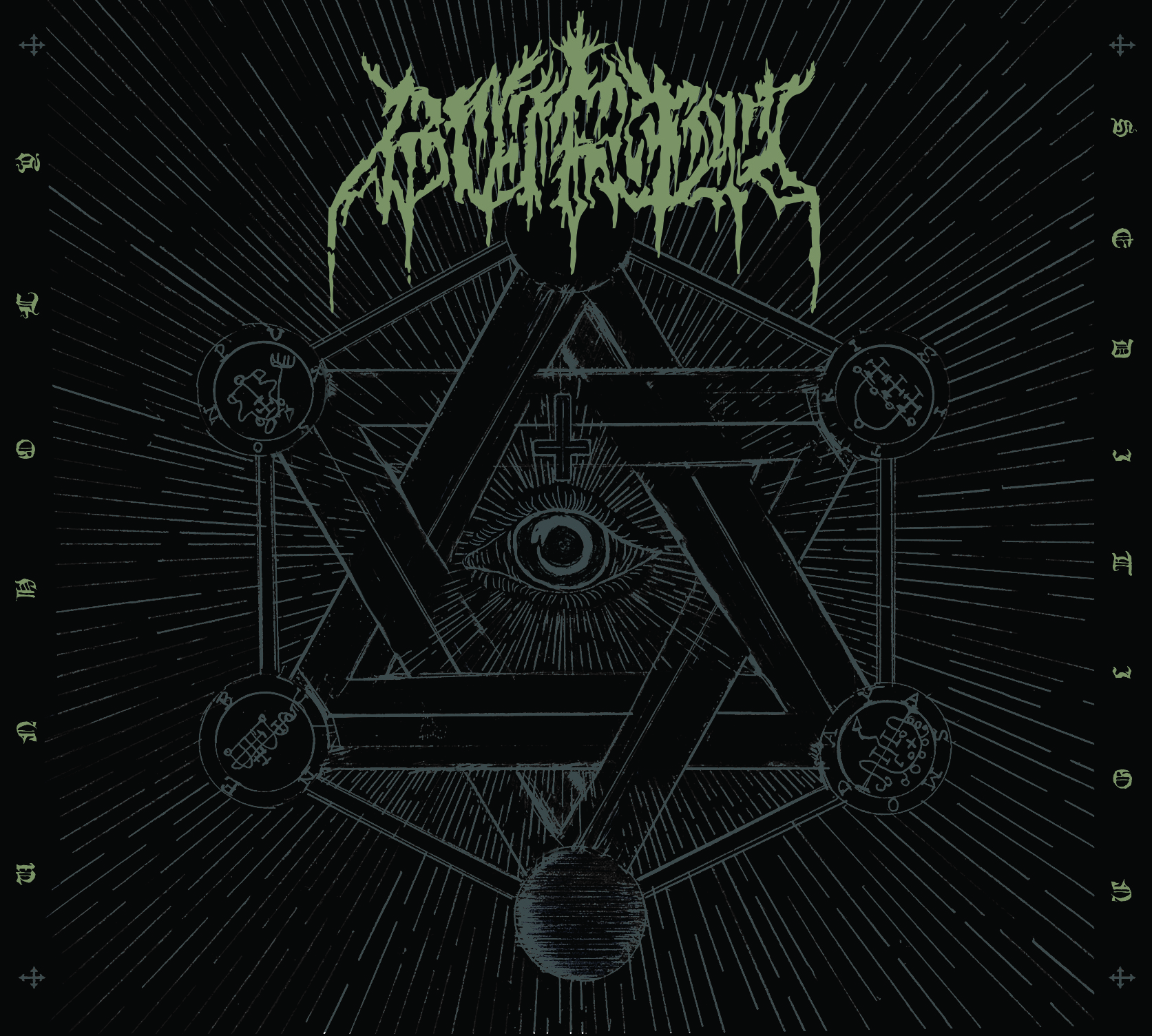
Ordem Satânica are a Portuguese Black Metal band and this is their latest release.
Well, if this isn’t just one of the rawest, grimmest, most foul-smelling, decayed corpses of stinkingly evil Black Metal that I’ve stumbled across in a while. This should be approached with extreme caution by everyone save the hardest of hardened Black Metal fans. It’s not for the meek.
Ordem Satânica offer up 35 minutes of blasting bile and blackened atmosphere, sounding utterly lethal as they do it. Ventos de Ódio seems to have found a way to strike back to the heart of second-wave Black Metal, torturing its soul until it gives up its infernal secrets.
The interesting thing is that although I’ve probably painted this as a pretty one-dimensional release so far, it isn’t. Amidst all of the blackened chaos and cutting, frosted riffs, there’s a surprising amount of variety here; not so much that it would stray too far from the original template, but enough to keep the listener hypnotised and slaved to its dark will. Snatches of melody, reflective introspection and frozen atmospherics all get a look in, especially during the near-17 minute final track O Negro e Eterno Vácuo.
The crackling, icy production is judged just right. It’s primitive and ugly, yet somehow manages to use this to lend power to the band, rather than leech it away as some low-quality recordings can do. This is probably due to the fact that Ordem Satânica channel the pure essence of the original Black Metal style so very well that everything just fits perfectly.
If you like your Black Metal grim, necrotic and filled to the brim with raw, underground hatred, then I heartily recommend this release.
This is the latest EP from US Post-Black Metal band Tombs.
Tombs continue to be one of the better and more interesting bands in Metal today. Here we have 34 minutes of new music, in equal parts heavy, atmospheric, grand and intimidating, as only Tombs do so well.
Blending Metal, Sludge, Black Metal and Hardcore into a potent brew, their last release Savage Gold is a firm favourite of mine and it seems that All Empires Fall is going the same way, albeit for a few different reasons; Tombs have progressed and changed in some ways since their last release, and the Black Metal component of their sound is much further to the front now, along with added keyboards.
The World Is Made of Fire is a short intro track that essentially sets the scene and sounds quite imposing and epic in scope.
Second song Obsidian showcases the band’s Black Metal side to great effect, with scything screeched vocals and cutting, frozen riffs. Blasting aggression, energetic atmosphere and blackened Hardcore thuggery combine with some deft melody to create a really enjoyable darkened exploration.
After this we get Last Days of Sunlight, which is quite different. Featuring some exotically alluring clean croons, the song stalks along like a hungry predator, all menace and lethal intent. It’s a highly atmospheric slow-burner that showcases a different side of Tombs and once again demonstrates their multi-talented skills.
Deceiver is up next. It’s heavy, memorable and has a catchy, punky, blackened sheen that would do Wolvhammer proud.
The final track is the longest and simply named V. Here we get a mixture of pretty much everything that has come before it, including cleans, blackened riffs, melodic sharpness and catchy delivery.
Like the mighty Rorcal, Tombs are at the top of their game when it comes to modern Post-Black Metal that seethes with power, recognises the past and combines non-blackened genres into its stylistic package.
Plebeian Grandstand are a Black Metal/blackened Hardcore band from France and this is their third album.
If you haven’t encountered Plebeian Grandstand before, then strap yourself in and prepare for violence. The band are a veritable explosion of grim aggression and antagonistic intensity.
Twisted riffs and dark melodies are encased in a solid black approach that merges the band’s Hardcore nature with a blackened corruption that seems to seep into every part of the guitars. The blasting drums are intent on nothing but causing harm and the bass is a malevolent rumble that underpins everything else.
The singer’s deranged screams form an integral part of the blasting mayhem and his is an intense performance.
The songs combine Black Metal and Hardcore into a dissonant, maniacal amalgamation that is pure viciousness embodied. As time goes on it seems that Plebeian Grandstand are embracing their Black Metal side more and more, to the point now on this album, (as well as their previous one), where it’s actually quite hard to describe them as a Hardcore band as has been done in the past.
Either way, this is another top-drawer release from a band that just keeps getting better and better with every release.
Unru are a Black Metal band from Germany and this is their début album.
This is a 36 minute trip into the harrowing world of Unru, taking in nightmarish soundscapes and dark, evil worlds.
Unru play Black Metal that’s the stuff of horror. Chaotic, discordant and destructive, the music on this release is more like the sounds of the abyss as channelled by the possessed.
I’ve enjoyed Unru’s work thus far, (such as their split with Paramnesia), and Als Tier ist der Mensch Nichts shows the band moving into even murkier and more aggressive territories, although they can still create a heavy atmosphere when they want to.
Although harsh and bleak, there are hints of melody and shade beneath the pitch black hatred and barely-contained rage that constitutes these songs. Alongside the blasting Crust-fuelled bile that the band regularly spew forth, dark atmospheres are explored and developed, with these deviations in particular sounding keenly emotive. Doom-workouts and murky noise-assaults add yet another layer to their sound and Unru basically spend their time on this release impressing the Hell out of me.
The vocals are howling screams, utterly deranged and full of so much loathing and contempt that it’s possible the singer is no longer sane or even human. Like something unnatural wailing into the void, his performance is first-rate and sounds near-physical in its impact. When this is also joined with deep growls it’s enough to get all of the hair on your body rigid and standing to attention.
Unru have not disappointed with their first album, and I’d highly recommend this to all fans of blackened darkness.
This is the second album from Black Metal band Burial, who are from the UK.
Burial play raw Black Metal with speed and malice.
Pure venom seems to seep out of every corrupted pore as the band aggressively attack the material with the fervour of the fanatic. The guitars have a very pleasing tone and have that razor-like quality that suits Black Metal so well.
The songs don’t outstay their welcome, and the entire release blurs by in 31 minutes of dark, angry malevolence.
The brutality of the music is threaded through with bands of melody that add a bit of depth to the attack. Some Darkthrone-esque groove is introduced when the band slow the pace a little, and these parts are just as good a listen as their faster brethren.
Throughout the album it’s clear that Burial know how to shape and channel these kind of grim incantations, and the songs are a very enjoyable listen.
Vocally we get traditional blackened screaming which hits the spot nicely, but in addition to this there are also deep growls which are very satisfyingly performed, sounding, as they do, pitch black and evil.
I thoroughly enjoyed this. Have a listen and see if they do it for you.
Bustum are a Croatian Black Metal band and this is their début album.
Bustum play their Black Metal raw and traditional, fuelled by the second wave and filled with Satanic might.
The vocals are harsh shrieks, performed in the classic style. The singer also uses deeper growls here and there, which is less expected and a welcome addition to the general violence and misanthropy on Demonolosophy.
The songs slice, cut and lacerate with frozen blades and seething malevolence. Dark, blackened melodies seem to writhe just below the surface and add depth to the band’s musical endeavours.
The songs are simple, underground hymns to dark forces that carry themselves well and provide for a quite enjoyable 33 minutes. It’s a well-written album and included in these tracks are some nice riffs with enough sections that show they’re capable of more than just hate-filled speed; they display a good grasp of pacing and compositional structure on these songs too.
I enjoyed this. If you like Black Metal then I’m sure you will too. Check it out.
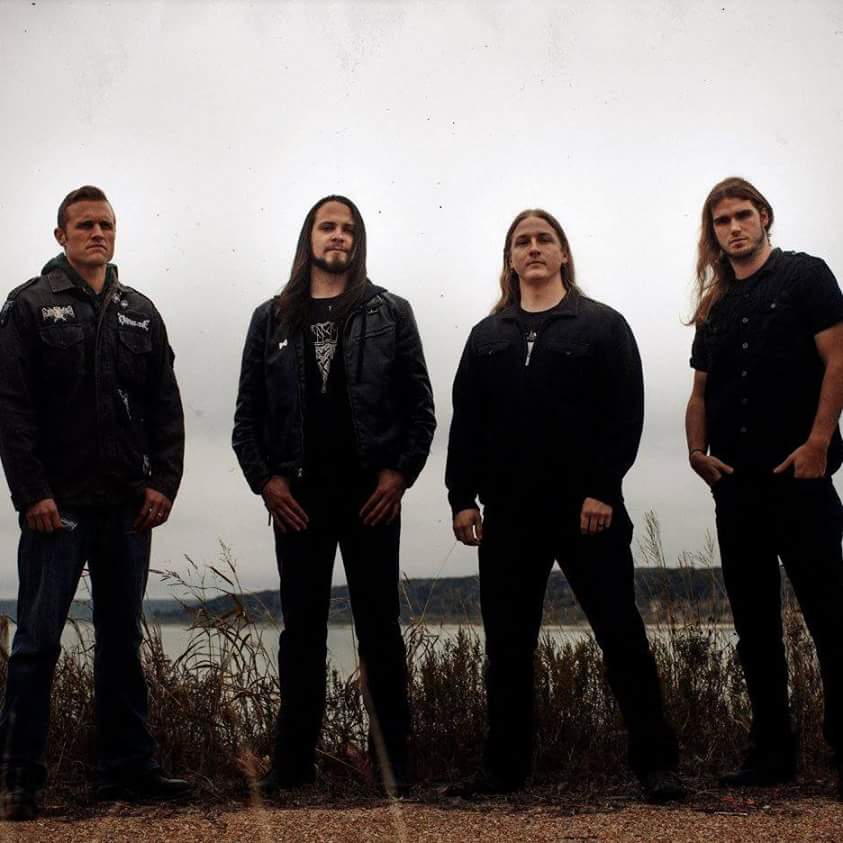
Krigsgrav’s fourth album Waves of Degradation has stuck out in my mind as one of the more memorable releases I’ve listened to of late. Its harrowing atmosphere of hopelessness and pain made an indelible mark on my psyche and I keep returning to it again and again. Thankfully, I was able to share some words with Justin from the band, who gave me some more background to Krigsgrav and their superlative new album…
For those who are unfamiliar with your band – introduce yourself!
My name is J. Coleman, I play guitar and provide vocals for the band Krigsgrav and Heimar.
Give us a bit of background to Krigsgrav
Krigsgrav was a solo project started by David Sikora in 2004 in Keller, Texas. I say solo project in the sense that he was the main person performing all the instruments, but he did use session vocalists until I came into the fold. He founded the band as an homage to the second wave of Norwegian/Swedish black metal, so the older material (‘As darkness falls above’ demo, ‘Arcana Imperil’ ep) sound more like Gorgoroth, Darkthrone and Carpathian Forest. He started to change the sound dynamic with the ‘Leviathan Crown’ (self released in 2010) and integrated more epic song lengths and sorrowful melodies. the next year with Lux Capta Est, he created an album that really came to be what I consider the foundation for the Krigsgrav sound.
David, Corey (guitars) and I played in a band prior to Krigsgrav, so we knew each other that way. As we were friends, we would share our musical ideas and projects with one another. David showed me LCE and I thought it was great. After hearing LCE I knew I wanted to be a part of Krigsgrav in some way. David, Corey and I had a few conversations about taking the ground work laid with LCE and making a fully functional band, which obviously happened. Initially the idea was to just rehearse and try the material out live and see what happens. Well, we kept coming up with new material at rehearsals, met Wes (bass) who fit right in, and we continued to fine tune ideas which became ‘The Carrion Fields’. After that album was released via Naturmacht Productions, we kept up momentum playing live, writing material and here we are today with another new album, ‘Waves of Degradation’, to be released April 1st via Bindrune.
What are your influences?
I can say nature, life and death are influences for all of us in the band. As cliché as it sounds, the band is heavily influenced by nature above all else, be it’s beauty or wrath and man kinds existence with in it. When I write lyrics they generally revolve around my perspective on existence and how fucked up we are as a species. Basically how we are plague to our planet. I’m not an ‘eco warrior’ in any regard, but that’s how I view the world, so to me that is more realistic than writing about religion, politics, occult, as those hold no bearing on my life. I live in the real world where gods don’t exist and men are the real beasts and life comes and goes. I find man’s constant need to find out ‘why’ and to know the divine truths boring. So I write about reality.
Musically, old ‘classic’ stuff, like Dissection, Woods of Ypres, Type O Negative, Bathory, Necrophobic, Mayhem, etc.
What are you listening to at the moment that you would like to recommend?
Nightfell. They are on 20 Buck Spin currently. I absolutely love their releases thus far, they combine elements of second generation black metal and old British doom metal (old Paradise Lost, My Dying Bride). Really good stuff.
How do you feel that you fit into the wider Extreme Metal scene?
I have no idea and I don’t care. When we play live usually we stick out because we don’t sound like too many bands, especially in the Southern U.S., so I couldn’t say know how we fit overall, but our sound fits more with black metal than anything else, but that’s not all Krigsgrav is as a band, it’s just one aspect since you have 4 unique personalities all in one band. We just create what we like and that will never change. Scene acceptance where and how we fit among the myriad of metal bands is something I don’t worry about.
Give us a bit of background to Waves of Degradation – any particular concepts or ideas you want to discuss?
The concept of the album is very direct – our eventual eradication as a species and the nature moving on with out us (humans). Basically, the dark path mankind is voluntarily taking today influenced me to write lyrics in this direction and then as a band we discussed creating a cohesive overall ‘darker’ mood for the music to fit the theme/lyrics of the subject matter. Some films like “The Road” (the sample at the beginning of “As Color Fades..”, the book is written by Cormac McCarthy) and writings by Hemingway, Hesse, Irvin Welsh, helped me to expand the aesthetic of the album as well. I feel like having a direction like this to work in help achieve a clearer end result. So we set to work with those ideas/themes and after a while came out with what you have as the finished album and we couldn’t be happier with its misery.
Tell us about the album artwork
The album cover art was created by Nate Burns, who had also designed art in the past for one of our shirts. He does great work at reasonable prices. Check out revolting worship.tumblr.com. The rest of the interior art work was pieced together by Marty of Bindrune and us working together, the nature pictures were taken by Dora Alvarez.
How do you go about writing your songs?
I live about 3 hours south of the other guys, who are located in North Texas, so for me I usually come up with ideas on my own and send the others my ideas via e-mail, text, etc. and we’ll just shoot files back and forth until a song is complete. Some times we’ll meet up at one of our homes and rehearse what we’ve completed or are working to see how it really sounds and works organically. For this album David, Corey, and Wes wrote a lot together and would send me their ideas and I would add my contributions and we would just go back and forth. We were very tough on making sure we kept the absolute best material for this album and many ideas were scrapped in the end. Luckily we’re adults and can give each other constructive criticism so the whole process is very democratic. We won’t finalize a song until we’re all pleased with it, same goes for the lyrics. We all stand behind every aspect of what we make with Krigsgrav.
How did the recording process go?
It was a somewhat lengthy process, but it worked out well. David recorded his drums first with our sound engineer, JT Longoria. He sent us the raw tracks which we rehearsed on our own time to, then we came up to David’s home where over the course of a month or so we recorded all guitars and bass. When it was time to record vocals, David brought his recording gear my my house and we completed the vocals, then we added all the extra bits like violins (performed by JT) and female vocals performed by Katrin of Awen, samples, and keyboards. I do want to note we were fortunate to have The Watcher from Fen contribute an excellent vocal performance to the end of “Under Trembling Stars”, so that was great as we are all big fans of Fen. After that it was all sent off to be mixed and mastered by David and JT. Since David does most of the recording we don’t really have too many time restrictions and were able to stretch recording it out over the last half of 2015. All in all it was as stress free as the recording process can go.
I like that the bass is audible and makes a good contribution. Was this a conscious decision or just something that occurred naturally?
It was totally conscious. Wes is probably the most talented musician of the band, and it would be a complete crime to let his bass lines go unnoticed. Also, I’m a huge fan of Simon Gallup from The Cure, so I wanted more moving bass lines like his, and Wes delivered. Glad you noticed!
What’s your favourite song on the album and why?
This changes depending on my mood. I think the album is best heard start to finish, and once I usually start playing it I’ll listen to the entire thing, but if I have to pick I’d say right now it’s “Son of the Stones”. I love the diversity of the music and how the song progresses, it has what I consider some of our best moments on this track, plus the last lyrics sum up the entire album perfectly in my opinion: ’graven silence, for a world of tombs’. We’re all dead in the end.
What does the future hold for Krigsgrav?
Our tour with Giant of the Mountain starts in April, so many shows in April and a few select shows to round out 2016, a vinyl release of Waves of Degradation and the writing of an acoustic release to be released in the future.
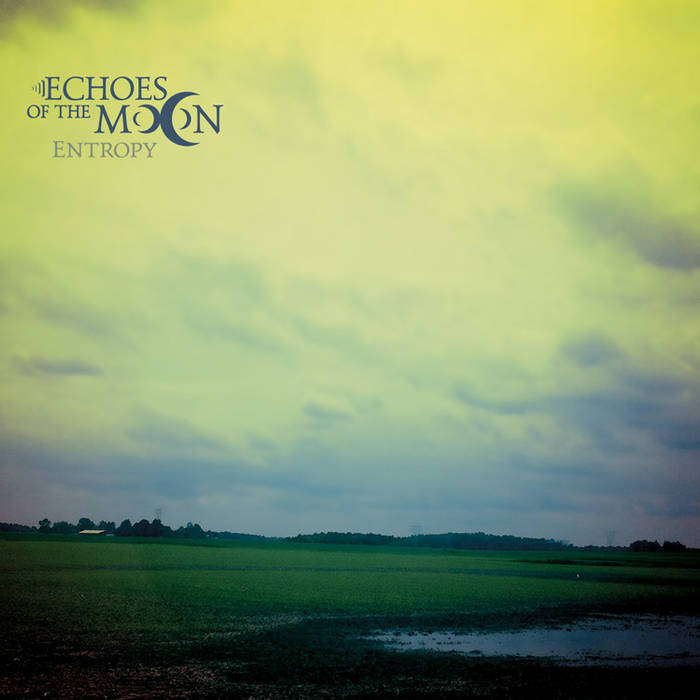
This is the second album from this one-man US atmospheric Post-Black Metal band.
This has a rich, warm sound, making it clear very early on that Entropy is all about the emotive content and taking the listener on a journey.
High-pitched near-static screams are employed to provide a focal point for the colourful music. I favour this brand of ultra-shrieked screams for this kind of extremely atmospheric Black Metal, so was not disappointed to hear them when they first appeared. Deep growls also appear here and there; these are unexpected but work well alongside the mellifluous music.
These songs have a good grasp of mood and feeling, effortlessly played out across long tracks and glorious soundscapes. This can be essentially seen as one 72 minute piece of music broken up into smaller slices, but however you look at it it’s an extremely effective work.
Featuring elements of psychedelic, progressive and depressive Black Metal, this is very atmospheric and richly textured. Resplendent melodies, extended guitar solos and understated synths all enhance the flavour of the emotive riffs and Entropy is an album to be savoured and enjoyed in its entirety.
I’m very impressed by this, and it’s criminal that this will effectively get no real exposure other than a few lucky people that stumble upon it; it really is that good.
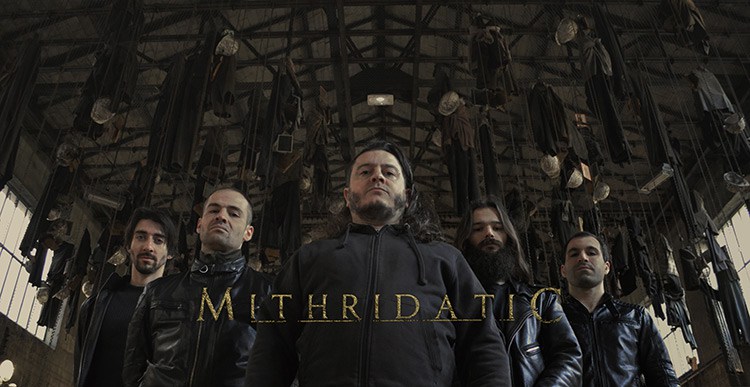
Blackened Death Metal can sometimes be a bit hit or miss, but with the début album Miserable Miracle from French band Mithridatic, it’s a definite hit. It’s a very strong album in more ways than one, and I was curious to find out more, so I caught up with their guitarist Romain Sanchez to find out what makes a miserable miracle…
For those who are unfamiliar with your band – introduce yourself!
Hi! Firstly Mithridatic is just a band in the middle of a plethora of bands, created in 2007 in Saint Etienne France. Our inspiration is in old school death metal with some modern touches. We try to make an uncomfortable feeling, and to give much violence and power to the auditor. We pass by diverse styles of extreme metal such as doom, or fast as death brutal and using dark atmospheres of black metal.
Give us a bit of background to Mithridatic
Mithridatic is formed by 5 musicians all from the same region in France.
The drummer Kevin Paradis joined the band for the release of our demo “Hunt Is On”. Since Kevin’s entrance to the band we brought our style to a faster way, more extreme music, more hostile and oppressive. We are musicians with a lot of different influences. It allows us to pass by various styles of rhythms and various feelings. By the opportunity to have in the team musicians with a lot of technique, we want to achieve our goal: to give extreme music and to accomplish ourselves with our skills.
What are your influences?
We all have different influences, but I am going to begin my influences: the groups which marked me the most for making our song tracks are Morbid angel, Slayer, Arkhon Infaustus, Mayhem, Immolation, Angelcorpse etc. Mithridatic is a mix of an heavy atmosphere with ultra fast beats!
What are you listening to at the moment that you would like to recommend?
At the moment I would like to recommend Dead Congregation, Portal, Lvcifyre, Conan.… and I know Guitou is into Kerasphorus, Abhomine and Peter Helmkamp’s other works these days…
How do you feel that you fit into the wider Extreme Metal scene?
We still have a long way….But we are very enthusiastic to expose our music in various situations, we just want to play more and more!
Give us a bit of background to Miserable Miracle – any particular concepts or ideas you want to discuss?
The main idea of this album is to overcome different kinds of harmful situations… we describe nocebo effects, social anxiety, precarious existences…lyrics are inspired by some writings from French authors like Antonin Artaud, Henri Michaux etc. and some strange movies…Guitou had a kind of surrealist approach for its works for this album. We tried to create a ‘bardo’ state and to give a transcription of our anxiety and sickness…and this is also the way for the next album. Miserable Miracle is an important album for us because it’s our first “official” album for almost 10 years of activity. We hope the first one of many others! It also marks our entry into the French label Kaotoxin and Miserable Miracle has a better exposition than our old productions very underground. We also changed our habits of production by recording in two professional studio “DLM Studio” and “Sainte Marthe Studio”. We are all satisfied by results and by the sound of this album between old school and modern stuff. Kevin our drummer decided to record in a most natural possible way to get a sound close to our live performance. We wanted an organic and human sound.
Tell us about the album artwork
Damien Guerras’s illustration gives a free interpretation….I’m going to speak to you about mine: it represents the Adam and Eve tree in our world and society! The perversion of humankind have exceeded all the limits, the tree decomposes. The poison of perversion intoxicates our nervous system….This is a pessimistic picture of our miserable human condition.
How do you go about writing your songs?
I lock myself at home with my guitar for several days to record many riffs. It’s long process and sometimes inspiration doesn’t comes. I need time to get into a negative state of mind. Sometimes it can go very fast for example riffs of “Dispense the Adulterated ” and “Oxydized Trigger Sabotage” were written in the same week…Once riffs are recorded I send it to Kevin. It helps for structures of tracks and he makes his personal drum parts. Then we discusses of our ways to develop harmful songs…In rehearsal Alex and Remolow also composes with the material for bass parts and leads guitars. To finish Guitou places his vocals…The lyrics process is a quite difficult to describe because it’s an everyday process…. Miserable Miracle is a team work and everyone gives its personal style or feeling to get the riffs richer. Everyone is involved in an extreme vision of life and music.
How did the recording process go?
We recorded all the songs in the DLM Studio in Saint-Etienne and the mix/master was made by the Sainte-Marthe Studio in Paris. We decided to make the mix/master in Sainte-Marthe Studio with Francis Caste because we like his works on Svart Crown, Arkhon Infaustus, Kickback or Cowards for example. Francis Caste is a great professional, very fast, and an effective worker. Dupont Ludovic of the DLM Studio allowed us to record without stress at 20 minutes from home with a very good analogue equipment. Everything is very well.
What’s your favourite song on the album and why?
My favourite song of the record is surely Oxydized Trigger Sabotage…I like the particular atmosphere of this track. Doom and tortured. The vocal performance by Guitou is awesome!
What does the future hold for Mithridatic?
The maximum of gigs to defend our music on stage. We hope to build and to acquire a solid place in extreme metal! We will work on new material as soon as possible! We have a lot of motivation to make a second album and to make good shows!! See you on stage!! Thanks for your interest!

 This is the third album from US one-man Black Metal project Palace of Worms.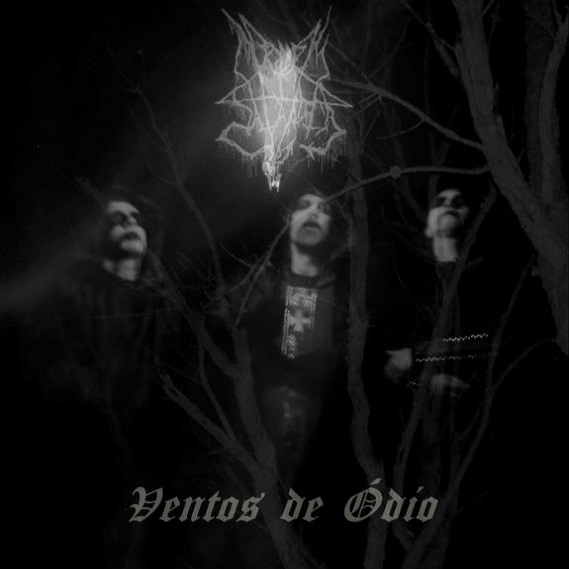

 Wonderbox Metal