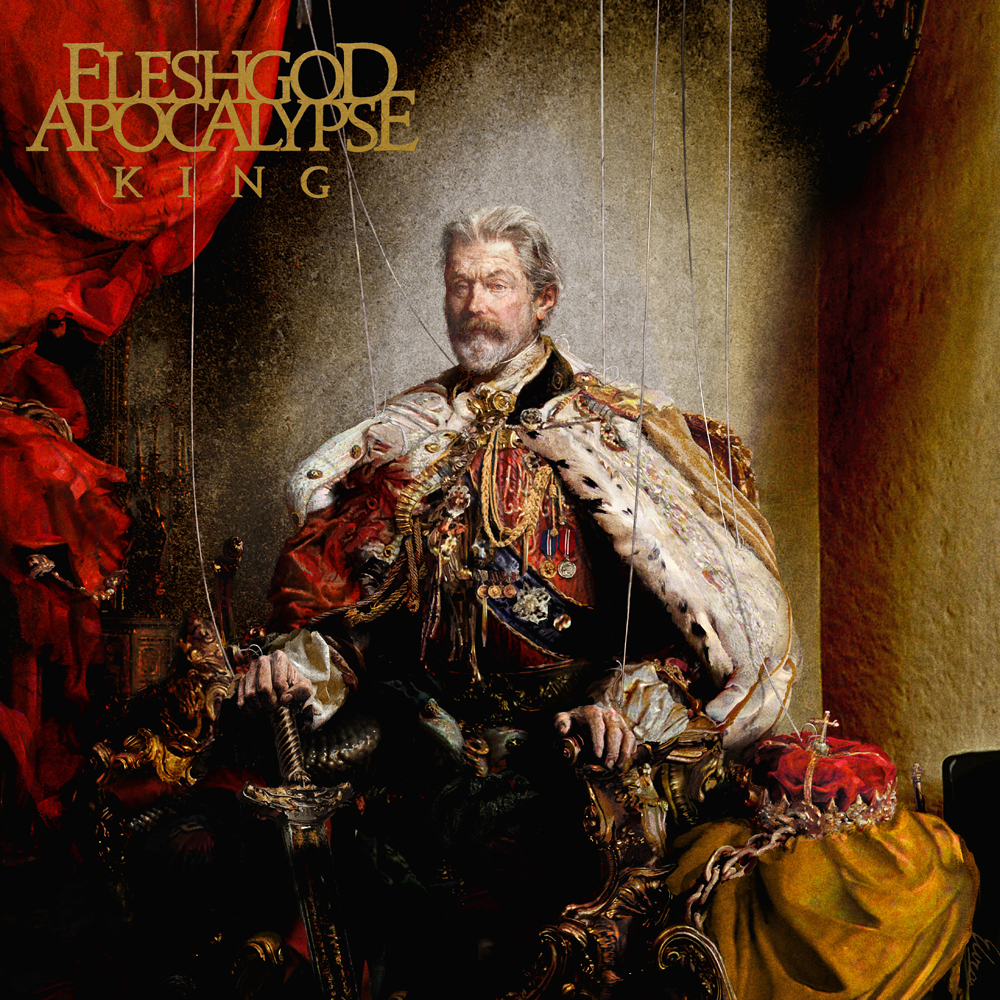
Fleshgod Apocalypse – King (Review)

Fleshgod ApocalypseThis is the fourth album from this Italian Death Metal juggernaut.

If you haven’t encountered Fleshgod Apocalypse before, apart from having an extremely striking band name, they play an exciting and intriguing blend of symphonic and brutal Death Metal that has few peers and really does get the juices flowing.

There’s a lot of content on this release, lasting almost an hour in total. Now fully embracing their Classical influences, the songs on King merge both symphonic and Extreme Metal worlds in ways that very few bands could pull off. Septic Flesh, Therion and a handful of others are in the same league, but for outright speed and brutality combined with Classical influences, none really come close to Fleshgod Apocalypse, none that I’ve heard at any rate.

This is high operatic art, as applied to the realm of Extreme Metal. With a bombastic production the band’s compositions are nuanced and subtle, all hiding behind a ostentatious veneer of brutal Metal. Strength and power are exemplified on these tracks.

The deep growling vocals keep the aggressive elements at the forefront of their sound, while the soaring cleans make for uplifting and powerful additions. These clean vocals masterfully avoid the commercially-tinged climes of bands that usually incorporate them into an Extreme Metal framework and instead allow them to enhance and merge with the busy, complex music. Operative female cleans also appear in places, further impressing.

The symphonic elements are ubiquitous and relentless, providing an epic backdrop onto which the Metal is writ large. This is more than just one style being added to the other though, as the merging appears to take place at the cellular level, with both styles embracing each other. In places this even verges on the kind of symphonic territory that certain strains of Heavy/Power Metal have occupied so well over the years.

All of this on its own would be impressive enough, but the real test of longevity is the quality of the songs. After all, if it was all flashy style and no substance, then sure it would sound impressive on first listen, but it would soon get old. All of this is, I suppose, a rather long-winded way of saying that the songs are well-written in addition to everything else, and it is this more than anything else that will allow King to pass the test of time and multiple listens. These songs work, and work very well.

King demonstrates a band at the peak of their creative powers in many ways, and it will be interesting to see what paths they tread in the future. I personally hope they take the Classical/operatic angle even further and become even more epic in scope. We’ll see. For now though, King is a suitably majestic release for something that bears such an appellation, one that I insist you listen to as soon as you can.

Essential.
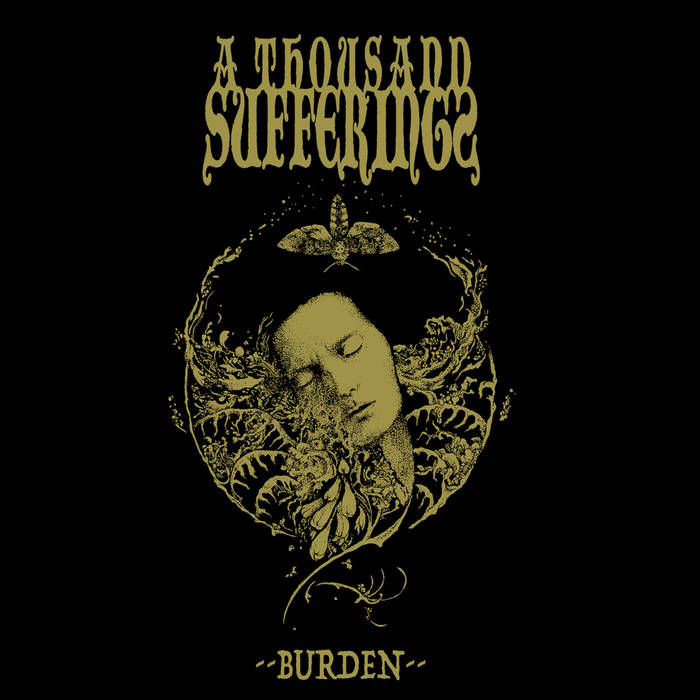
A Thousand Sufferings – Burden (Review)

A Thousand SufferingsThis is the début album from Belgian Doom Metal band A Thousand Sufferings.

This is semi-blackened Doom with dark screaming shouts. The band succeed in creating sombre, down-beat moods that snare the listener in their barbed grasp.

The band have a similar feel and mood to that of Triptykon; like an updated Celtic Frost with added Doom and Black Metal atmospheres.

The riffs pile on top of each other, almost reaching wall-of-guitars proportions but offering more nuance than that style usually does. There’s some quite inventive and emotive ones on here too, adding to the overall dark feelings that they espouse.

A Thousand Sufferings understand the nature of this kind of music all too well, with negativity seeping out of the speakers in an occult way, seeming to feast on the souls of those drawn into this grim web of mystical invocations.

A very enjoyable slab of Doom Metal for fans of the darker side of life.

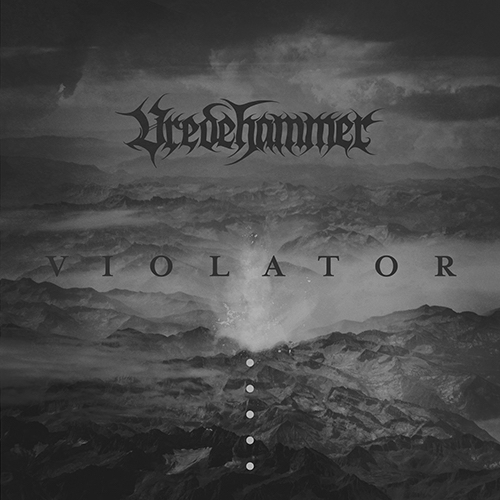
Vredehammer – Violator (Review)

VredehammerThis is Vredehammer’s second album. They play Black Metal and are from Norway.

Vredehammer play aggressive Black Metal that keeps the core of the genre alive and well, while merging it with a state-of-the-art blackness that bands like Satyricon, Keep of Kalessin and Temple of Baal do so well. Add a bit of Death Metal in the form of something like Behemoth and even a touch of Aura Noir-esque Thrash and you have a good overview of Vredehammer’s style. Tracks like Ursus even have a bit of the Amon Amarth about them, to my ears.

The vocals consist of dark outbursts that strike a fine balance between legibility and outright harshness. Sitting somewhere between the styles of Black and Death Metal, they work well to provide a focal point for the music without dominating it.

Powerful rhythm guitars form the bedrock of the tracks and these punish and damage for all they’re worth. Interestingly though, the band build on these strong foundations to provide a more well-rounded listening experience than you might expect; Violator is not a one-dimensional album.

Twisted melodics and bright, ethereal leads occasionally add colour and texture to the band’s blackened rhythms, allowing them to explore wider pastures that their brutal tendencies might otherwise preclude them from. This adds a lot to the album and raises it to another level, quality-wise. This is all wrapped around their inherent malevolent nastiness though, which is never too far from proceedings.

Boasting a strong production to round things off, Violator is a very enjoyable album, and at 35 minutes in length it’s easy to get your fill of their blackened aggression.

Recommended.

Communal Grave – Solace in Violencia (Review)

Communal GraveCommunal Grave are a Death/Thrash Metal band from Pakistan. This is their début album.

The singer has a pretty impressively scary deep growl that’s as dark as night and reeks of a huge black pit that you could easily fall into. It’s the kind of cavernous growl that makes an immediate impression and for a few moments it’s easy to forget the music that’s backing it up.

Phew.

As for the music – this is Melodic Death Metal that’s merged with Thrash Metal to produce an exact and precise rendition of both styles, mixed in together and spiced with some nice melodic tendencies throughout the songs.

The band sound like they have a tight rein on the music, playing everything with precision and care, focusing on the end result of the song and considering every part down to the last riff. This is in stark contrast to the feral vocals that sound completely unbound and unfettered, savagely growling their way over the melodic riffs and mellifluous leads. The contrast between the rough growls and precision-cut music is jarring, but somehow works nonetheless.

The longer-than-average nature of some of the tracks allows the band explore various melodic climes and these 45 minutes pass by easily, with the listener concurrently being buoyed up by the melodic assault and tore down by the deep, malevolent growls.

Ha! No matter how many times I listen to this, the best word I can think of to describe the singer’s vocals is “terrifying”. Oh, you’ll probably listen to them and think they’re deep growls and nothing more, but for me, for some unnameable reason, they hit a raw nerve that chills me to my very core. What’s that all about then? Best not to dig too deep I suspect.

At any rate, it all adds to the experience and Solace in Violencia is an engaging and enjoyable listen.

Now, excuse me while I go and select some new underwear…

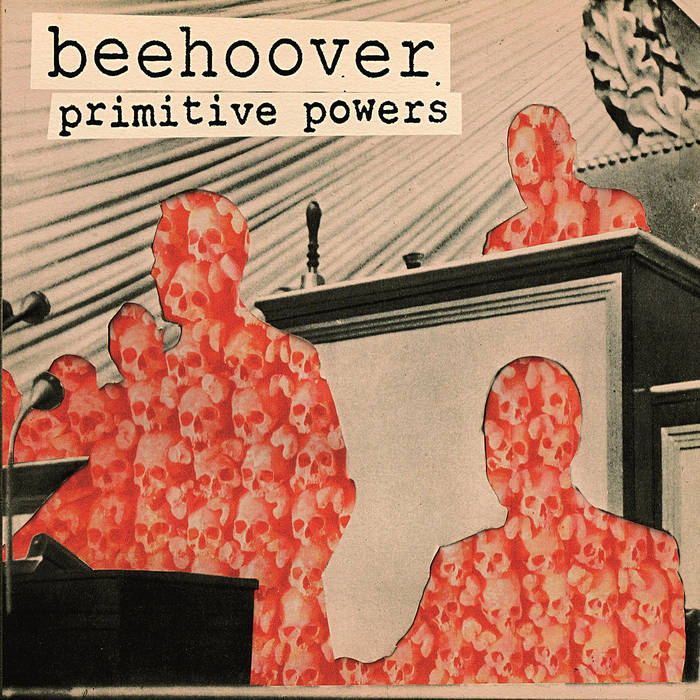
Beehoover – Primitive Powers (Review)

BeehooverBeehoover are from Germany and play Stoner Doom. This is their latest album.

About their previous album The Devil and His Footmen I said “This is an uncommon band who provide an uncommon listening experience” and I stand by that statement for this newest one.

The band remain a two-piece drum/bass combo that provide the listener with a quirky and characterful interpretation of Stoner/Sludge/Doom that mixes elements of artists like Mike Patton, Tool, Primus and Melvins into its enjoyable and personable style of music.

Considering the makeup of the band there is a lot of content to enjoy on Primitive Powers and the songs are quite infectious. The band are adept at adding real atmosphere into their sound, with the bass seemingly capable of expanding to fill all of the areas that the guitars normally inhabit with other bands, and then some.

The drumming is complex, yet easy to get on board with; along with the music’s warm and intimate production it makes for a very satisfying sound.

Maybe I’m misremembering, but the songs on this album seem stronger and more concise than that of The Devil and His Footmen, and also seem to have a greater abundance of atmosphere and progressive tendencies too.

Either way, Beehoover’s latest release is a left-field success and I heartily recommend it for something a little different. Your ears will thank me.


Perihelion Ship – A Rare Thunderstorm in Spring (Review)

Perihelion ShipThis is the début album from Finnish Progressive Metal band Perihelion Ship.

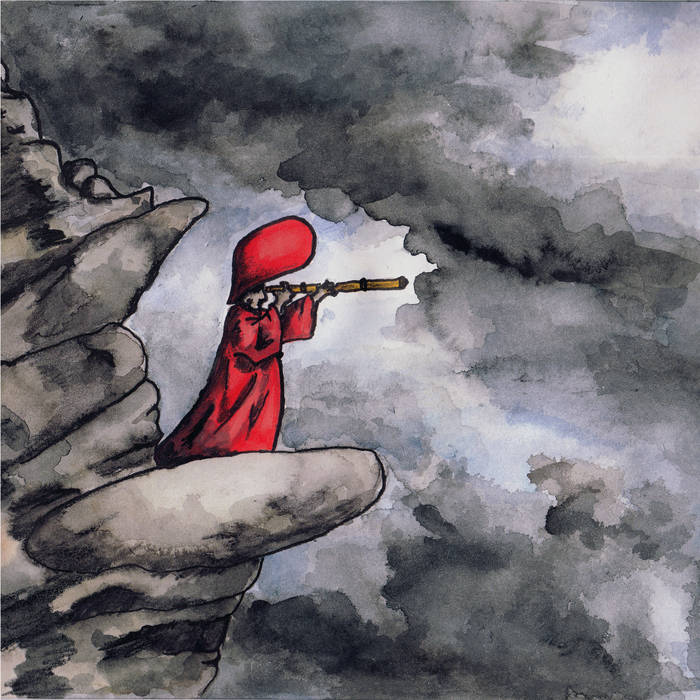
I like a good bit of Progressive Metal and was intrigued by this release in particular due to the striking cover art.

Featuring Hammond organ and mellotron, Perihelion Ship have captured the essence of 70s Progressive Rock and combined it with a more modern Metal influence à la Opeth and the like to produce a very enjoyable album that mixes both eras well.

The vocals alternate between cleans, screams and growls, depending on the needs of the song. As mentioned previously, Opeth are a clear influence here, but this is only a starting point for Perihelion Ship and they have enough of their own personality and style to make A Rare Thunderstorm in Spring their own. It’s also quite interesting that as the album progresses the band seem to almost come into their own more and more, with the Opeth influence receding further and further into the background. Intentional? Who knows.

The tracks are atmosphere-heavy and full of light and shade, with the music reflecting the different vocal styles in many ways. There’s good depth here and it’s easy to return to this release for further listenings.

The album is crowned by the final song, the title track, which is a 21 minute epic that rounds the album off in impressive fashion.

A recommended listen.

Sarke – Bogefod (Review)

SarkeThis is the fourth album from Norwegian Black Metallers Sarke.

With band members from such esteemed groups as Darkthrone, Satyricon and Khold, this band features a high pedigree and a wealth of experience, all channelled into these 35 minutes.

The familiar darkened twinge of sinister and mysterious Black Metal riffs is joined by less-familiar leads and solos and a Thrash Metal influence in some of the heavier riffs. It’s a predominantly Black Metal work, but there are enough Metal and Thrash elements to make Bogefod more than just a pure Black Metal release, even though it’s all smothered with dark atmospheres and blackened aesthetics.

The songs are well-written with lots of juicy guitars, both of the Blackened Thrash and more traditionally Black Metal variety. The songs keep their pace nicely without going too far either way and there’s lots of memorable moments.

I like that the band don’t play it safe and repeat the same type of song over and over. There’s a decent amount of variety on this release, with the various influences of the band members showing up in different places; each song has an identifiable personality of its own. I particularly enjoyed Barrow of Torolv‘s Doom-infused atmospheric darkness, as well as the female vocal-led Dawning. Very nice.

The screamed vocals with an edge of attitude should be familiar to most, (all?), Black Metal fans and it’s always a pleasure to hear the singer’s voice. His performance is right where it needs to be on these songs and he contributes quite a bit to the catchiness of some of the tracks.

Keyboards are included and these are subtle enough to not overpower the rest of the music, but prominent enough to really add another layer of depth to the songs.

I really enjoyed this album. It has enough going on to keep and hold the interest, but is short enough to not overstay its welcome. Repeated listens bear this out, and Bogefod just gets better the more you listen to it.

Check it out.

Teething/Feastem – Split (Review)

Feastem TeethingFeastem are from Finland and Teething are from Spain. Both play Grindcore and they have come together to unleash this savage split on the world.

Teething start things off and offer up three tracks lasting four minutes in total.

Their music is fast, furious and full of aggression, just the way we like our Grindcore. They slow things down here and there and offer up some mid-paced groove with a Punk edge that adds to things quite nicely.

For the most part the vocals are halfway between shouts and growls, finding that sweet spot between the two that sounds harsh as Hell.

It’s a brief few songs, but enjoyable. Their blend of extremity and energetic Punk know-how makes them the epitome of Grind in many ways and if you like the style it’s hard to find fault with them.

Feastem are up next and also offer three songs, lasting a slightly longer five minutes in total.

Compared to Teething, Feastem have less of a Punk influence and offer streamlined, sharp Grindcore that has a more modern edge than their Spanish counterparts.

The tracks are full of blasting mayhem, not happy unless they’re doing their best to damage the listener’s ears by any means necessary. There’s a decent Extreme Metal influence to the guitars, although you can still hear the Punk/Hardcore influence too.

Scathing screams are the main mode of delivery for the singer, although deep growls do join in on occasion.

Another top quality Grind split between two bands that represent different points on the Grind spectrum in some ways. Which you prefer will depend on your personal preferences, and for me it’s hard to say – occasionally Teething’s more traditional approach wins the day, whereas at other times I love the blasting speed and modern delivery of Feastem. Either way, this is short enough to enjoy again and again and packs a punch regardless.

Highly recommended.

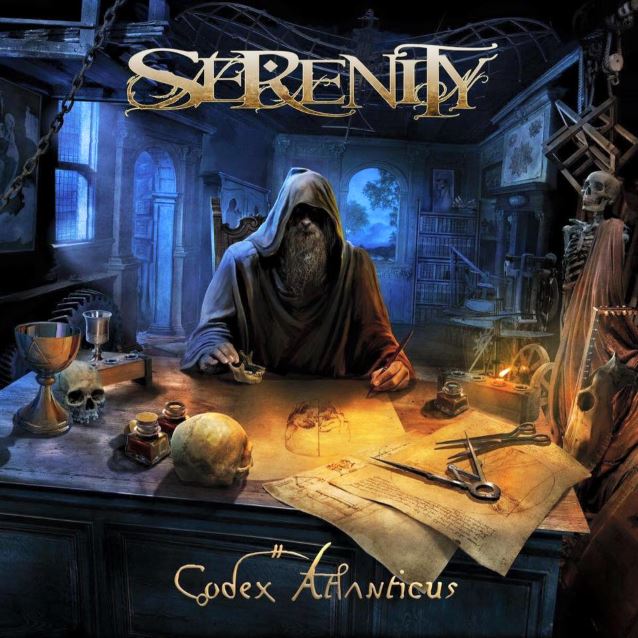
Serenity – Codex Atlanticus (Review)

SerenityThis is the fifth album from Austrian Symphonic Power Metallers Serenity.

This is a bombastic, larger-than-life album that boasts impressive orchestration and bucketfuls of sugary melodies.

Bands like this can so easily lose track of the Metal component of their sound, but Serenity remember this and include plenty of tasty riffs alongside the symphonic feast that they serve up so well.

The songs are enjoyable and well-written, making the most of the European style. Featuring all kinds of catchy and memorable hooks, melodies and harmonies, it’s an easy-to-like album, as long as you’re a fan of the genre, of course.

The singer has a strong voice that carries the tunes well. I like that he has a personable, charismatic side that is almost at odds with the flashy nature of the music in some ways. It has an earthy quality to it, even when he’s belting things out in true Power Metal style.

Production-wise, an album like this can really suffer without a suitably huge and ostentatious sound, but it’s clear that Serenity have spared no expense in this department. Everything sounds bright and shiny, polished and professional.

I really enjoyed this. In a genre that is well past its saturation point, Codex Atlanticus has enough personality and character to hold interest and is performed well enough to keep it.

Highly recommended.