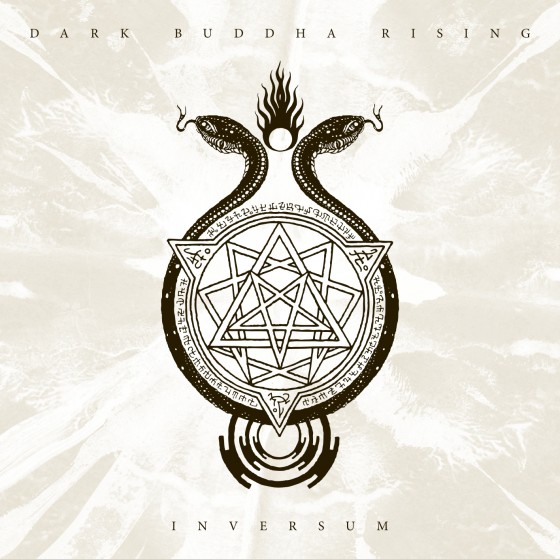
Dark Buddha Rising – Inversum (Review)

Dark Buddha RisingThis is the sixth album from Finnish Doom band Dark Buddha Rising.

Dark Buddha Rising are purveyors of Psychedelic Doom/Drone. It’s a minimalistic-yet-shaded affair, with all varieties of dark catered for. It’s also bleak in a comforting, warm sort of ceremonial way.

There are only two tracks here, but these amount to 47 minutes of music. This is a slow-burning release, steeped in a lazy insistence; it will absolutely get to where it’s going, but it will not be hurried at all. Acting like the relentless tide of glacial marching, the band proceed to build and build until you almost can’t take it any longer.

There’s a definite Old-School, almost 70s vibe to parts of the music, although this is darker and heavier than anything from that era. The vocals are both hypnotic cleans and screeching wails; both add value to the musical onslaught and both provide a different emphasis for the listener as they work their way through the tracks.

Understated-yet-atmospheric keyboards add spice to the warm recording and the heavy bass sound provides enough low frequencies to crack glass.

This isn’t ultra-slow music; it’s on the slow-side of course, but it picks up the pace a bit here and there, although not enough to be described as fast.

The band this reminds me of most is Drone/Doom legends 5ive, although Inversum is more ritualistic in a way. Dark Buddha Rising are not a million miles away from this and it’s safe to say that if you’re a fan of 5ive then you’re likely to enjoy what Dark Buddha Rising do too.

Tune in and drone out.

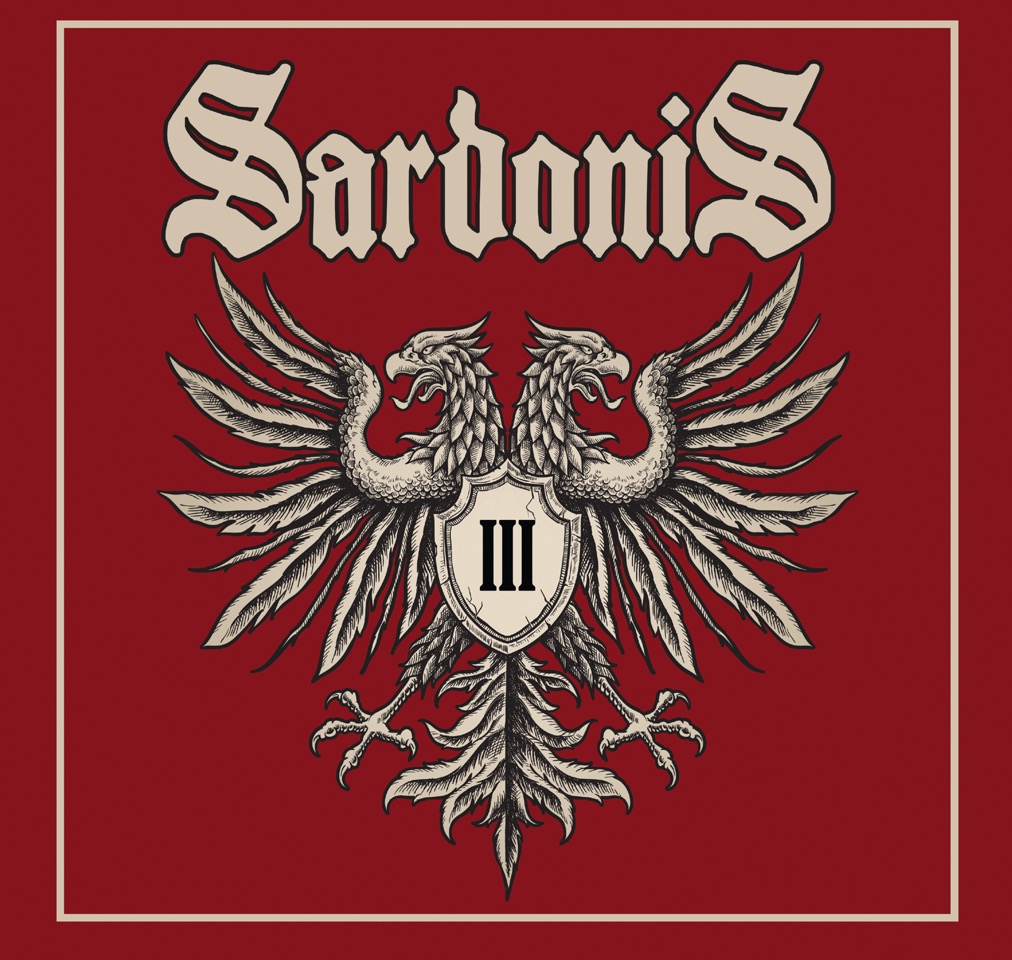
Sardonis – III (Doom)

SardonisAs the name suggests, this is the third album from Sardonis, who are an instrumental Stoner Doom band from Belgium.

Sardonis combine elements of Stoner Metal, Doom and Sludge into their songs. There’s no vocals, so the emphasis is purely on the music itself.

The album has more variation on it than you might think too. It avoids being a one-dimensional Stoner-fest by adding in elements of these other genres so that the band take you to many different places throughout the journey. The band are obviously equally comfortable playing at all kinds of speeds, and this is another reason that they keep things interesting.

The album has an incredibly warm and textured recording, benefiting their sound by focusing the listener’s attention on what matters.

Huge riffs are a big part of their repertoire, as befitting an instrumental band of this nature. This is not all they’re capable of though, as they also know how to build atmosphere and mood across these 39 minutes.

Occasionally I have mixed feelings about bands that are entirely instrumental; sometimes I think vocals would enhance the music and other times I know it would merely detract from what they have created. With Sardonis I think it’s a mixture of the two, although favouring the latter. Maybe a few added vocals on one or two tracks in a couple of places, leaving the bulk of it instrumental? Regardless, III is a massively enjoyable release and the lack of vocals doesn’t hold it back at all.

Recommended for fans of Karma to Burn, High on Fire, Judd Madden, Lord Dying, Pelican, etc.

Favourite Track: Forward to the Abyss. Because who doesn’t love a 12-minute Pelican-esque Doomathon with a hint of Earth to the guitars?

Eye of Solitude/Faal – Split

Eye of Solitude FaalEye of Solitude are from the UK and Faal are from the Netherlands. They have teamed up to produce this dark, malevolent split where each band contributes one track.

Eye of Solitude are a particular favourite of mine, with a slew of quality releases, (Sui Caedere, Canto III, Dear Insanity), to their name. Here they contribute a 12 minute song – Obsequies.

The track starts off with an exotic flavour; Middle Eastern-inspired music that shortly is replaced with heavy guitars in the mournful, Doom/Death style. Eye of Solitude are very good at combining the stark heaviness of Doom with the rich melodic streaks of Doom/Death.

The vocals continue to be the pitch-black growls that we know and love so much. If anything the singer’s voice seems to be getting deeper as time passes, and his performance on Obsequies is quite monolithic. Combined with the slow pace of the accompanying funeral dirge each growl becomes akin to the passing of aeons.

The middle section of the song is comprised of a piano and violin section, amiably breaking up the crushing misery of the main composition with a textured, emotive exploration of grief.

After this, the song crawls to a natural close, all emotion spent, all energy drained.

After Eye of Solitude comes the contribution from Faal. This is a track called Shattered Hope that lasts over 13 minutes. I have not heard Faal before this, but they quickly draw me in with their atmospheric Funeral Doom.

Accompanied by subtle synths, their music is bleak and suicidal, reminding of some of the older, slower material from Forgotten Tomb, only with less Black Metal and more Doom/Death; maybe kind of Forgotten Tomb mixed with Esoteric?

Dark growling vocals appear to swim in and out of the music, adding highlights to it rather than being the main focal point. Although the band have a heavy side, Shattered Hope is more about mood and substance than heaviness for the sake of it. It’s slow, miserable and easy to become absorbed in. Before you know it, the long running time is over with and you’re left with an unsubstantiated feeling of having lost something important.

A quality split of slow, mournful Doom. Press play and lose all track of time.

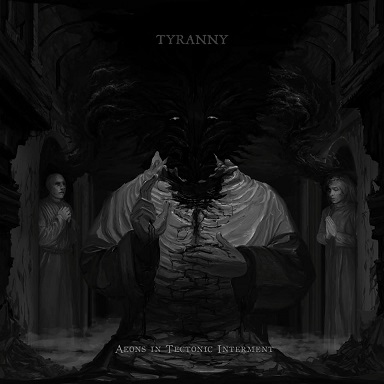
Tyranny – Aeons in Tectonic Interment (Review)

TyrannyTyranny are a Finnish Funeral Doom band and this is their second album.

Now this is the stuff! Agonisingly slow Funeral Doom, crawling out of a long-forgotten crypt to infect the living with its venomous being.

It’s instantly enjoyable, how could it not be?

Dark atmospherics are provided through a combination of slow-warped guitar melodics and keyboard enhancements. They work together to bring the songs to a crippled, disturbed and miserable life. Bands like this are all about the atmosphere and mood, and Tyranny have bucketloads of the stuff.

There’s an almost tangible emotive veneer to the songs here. It’s like you can reach out and touch the misery. The music is so coated and soaked in despair and lost causes that it makes you wonder how the band members ever function in what we laughingly call real life at all.

The vocals are as deep and as dark as the music, with each growl seeming to stretch back in time over aeons. Perfectly matched to the music, the vocals are just another instrument, drawing out the depressive moods with cold, uncaring growls or eerie chants.

Aeons in Tectonic Interment is an exemplar of the style. Colossally crushing and hypnotically bleak, it does exactly what Funeral Doom should do; completely absorb the listener in the music and transport them to a dark, lonely place of torment and woe. Because, you know, that’s what we want from this kind of music. Oddly. But it’s true; this is an album it’s easy to lose yourself in, and I imagine that their live rituals are amazing.

This is one of the best Funeral Doom albums I’ve heard in quite a while. They know the sub-genre inside out and everything on this release is perfectly designed to attain the desired end results.

So close the doors, turn off the lights, put the music on and turn it up; Tyranny are your soundtrack to anguish, and we love it.

Witchsorrow – No Light, Only Fire (Review)

WitchsorrowThis is the third album from UK Doom Metal band Witchsorrow.

Witchsorrow are a Traditional Doom Metal band and No Light, Only Fire has all of the requisite ingredients that you would expect from this particular sub-genre. What sets it apart is a feeling of real darkness that infuses the songs, and the fact that the songs themselves are pretty damn good.

It’s well-recorded and packs a punch; none of this retro-worship, fake-authentic throwback sound for Witchsorrow. That’s not to say that No Light, Only Fire is over-produced or hyper-polished; it isn’t, it just has a very strong sound that allows the band to land with a thump.

The songs are, (largely), slow-to-mid-paced affairs that play the long game and really go in for some atmospheric occult misery, as well they should. The main exception to this rule is the first track There Is No Light Only Fire, which is more upbeat and traditionally Heavy Metal in its approach, before the more crushing Doom of the next song The Martyr kicks in.

The songs have character and charisma, and come across as prime Black Sabbath-esque songs, unearthed from a secret stash and recorded fresh in the present day. Witchsorrow appear to have gone to the Doom Metal source and made secret pacts with the same dark figures that gave Black Sabbath their powers.

So what if you’ve heard it all before? This is a damn good way to spend 64 minutes and Witchsorrow have made a firm fan out of me. What say you?

Doomed – Wrath Monolith (Review)

DoomedDoomed is a solo project from Germany and this is his fourth album playing Doom/Death Metal.

Doomed’s third album Our Ruin Silhouettes was a good example of quality Doom/Death that ticked all of the right boxes for the genre. Curiously, this new release has a song on it called Our Ruin Silhouettes yet the actual album named this did not.

So how has Doomed progressed on this new release? Well, it’s still the familiar Doom/Death style that lovers of the sub-genre will be so familiar with, (how could it not be?), although on this latest album this seems a bit more riff-hungry in places, with a little more of the Death Metal side of the Doom/Death equation coming to the fore.

The Funeral Doom marches and depressive moods are still present and correct. Doom/Death is a very specific sub-genre, and once you move too far away from the core of this style you’re not playing it any more. The guy behind Doomed knows exactly what he’s doing though and these compositions milk the most from the emotional misery while at the same time allowing for sufficient variation in writing and pacing so that these 51 minutes don’t feel as agonisingly slow as the music can be.

Guest vocalists add further interest to the songs, and these compliment the main Deathgrowls which are as deep and as enjoyable as they previously were.

Due to the ramping up of the Death Metal influence, the guitars have a bit more energy to them in places and as it’s all wrapped up in a crushing production. The riffs seem to jump out of the speakers like eager puppies. Although admittedly, these are dark, misery-drenched puppies determined to drown you in woe.

Hmmm. Misery puppies?

What the Hell, let’s go with it.

Strong leads, melodies and solos abound. As one of the cornerstones of the style, the forlorn melodies are carried out really well. The songs do a laudable job of manifesting the negativity that sits at the core of the music.

The album showcases the Atmospheric side of the band in addition to the depressive. Synths and keyboards add extra layers to parts of the songs and there’s even a hint of a Progressive Metal slant on some parts of this release. If this is further developed even more on future releases then this would be a valuable addition to the Doomed sound, as it already seems to be becoming.

Wrath Monolith is a very impressive album that’s pretty much at the top of its game. I find Doom/Death to be a sub-genre that can easily become a little stale, so I’m pleased to report that this is not the case here. The music holds the attention easily and this is an album that has a lot to offer. As stated, there’s a surprising amount of variety and interest to be had here and it seems that Doomed’s songwriting is just getting better and better.

Very highly recommended.

IIVII – Colony (Review)

IIVIIIIVII is a solo Ambient project from the US. This is his début album.

This is an album of expressive, minimalist soundscapes; Electronica fused with a cinematic, Sci-Fi quality that seeps from the tracks like a foreboding aura.

Stylistically this is the moody spiritual sibling of Celestite by Wolves in the Throne Room. The feeling is that with Celestite you’re gazing up at the heavens, marvelling at the vastness of the universe, while with Colony you’re surrounded by space in the cold, empty embrace of the cosmos.

You really do feel like you’re on a derelict space station orbiting Saturn, with the crushing enormousness of the galaxy weighing down on you. You’re watching, waiting, feeling.

Colony is oddly moving, with each song acting as its own narrative while still remaining part of a larger story-arc. The music shapes the listener’s emotions as it progresses, drawing you in, ever closer, until you feel like you’re right in the midst of the darkness. With pretty much everything designed to give the impression of cosmic wonder and isolation, Colony succeeds on every level.

The cover art is somewhat of a perfect visual representation of the music in many ways. In fact, IIVII is crying out for a visual aspect to accompany the music. It’s not that the music isn’t enough on its own, (it is), it’s more that it has an entire other level to offer the listener; a visual medium to enhance the soundtrack.

This is expertly judged, with each track really giving the impression of a far-flung, lonely colony, adrift in the endless night. It’s the perfect soundtrack for its science fiction-theme.

Perfect for lonely, dark nights.