Interview with Agiel

Agiel Logo

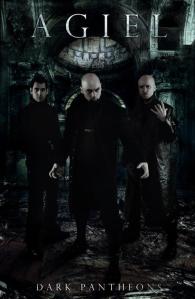
Not so long ago Agiel released their latest EP Dark Pantheons, which is an exciting and inspired merging of Death Metal and classical orchestration. We caught up with Agiel vocalist and founding member James Taylor to see what makes the band tick…

For those that are unfamiliar with your band – introduce yourself

Great to speak to you! We are AGIEL, a blackened-death metal four piece band from the US. Our music integrates the brutality of death metal, raw intensity of black metal and significant orchestral arrangements to produce an intensely unsettling yet enigmatic style.

The band name comes from western astrology and symbolizes the intelligence of Saturn; a planet that represents agelessness and occult power. In the European astrological system each planet has a baleful and baneful influence; a positive and negative aspect that is. Because of its role as the intelligence and wisdom that is gain from knowledge of the occult, AGIEL is generally seen as the constructive aspect of Saturn’s influence on mankind. The focal subject matter of our music explores many aspects of the occult, theosophy, mythology and the limits of our spiritual potential as human beings.

Give us a bit of background to AGIEL

Time passes so quickly and it’s hard to believe that I started AGIEL over 15 years ago. Our origins go back to about 1997. That’s when we started making serious strides towards the creation of our own sound and style. To be honest I wish that I was a better chronologist because I’ve lost troves of AGIEL material over the years. I’ve gotten better at it, my erratic nature tempered perhaps by maturity, but the broad strokes of our history are intact at least.

We released our first full length CD The Works of War in 1999. The title was a bit of a play on the Christian concept of the works of peace (clothe the naked, feed the hungry, etc). I think we were 18 or 19 years old when that album was written, so there’s more than a small dose of blasphemy in that material. We moved past all that kind of thing really quickly once we began to study the Occult in a more serious way. Our experiences with that are what inspired us to begin writing music and continues to provide a source of inspiration to this day.

In 2000 or 2001 we started working on a demo titled Hymnos ex Maledicus Gemini, which would later become the 2002 release Dark Pantheons Again Will Reign. That album began a kind of tradition for AGIEL in that we would try and break out of our musical comfort zones and reinvent ourselves with each new release. One of the aspects of this band that I love most is that desire to constantly change and evolve, to never stagnate or stay with what’s safe. Musically we moved from a black metal sound to something that was much more like brutal death metal.

From then until about 2007 we continued that evolution and experimented with many different permutations of death metal. Like I said earlier, I wish that I had kept better track of that period because we were quite prolific with the amount of material that was written. Some of it is still available and we’ve made an effort to preserve it. There was a 10 – 12 song album titled Kuthula which was a big technical achievement for us. The songs in that collection were very intricate and extremely challenging to perform. I’m glad to say that we still have those. Next was another full length which we called Aeon and I’m sad to say that all of that material has been lost to the ages. And finally, we published a shorter work called Vessatu of which only 3 songs remain in our collection.

In 2007, for a variety of reasons, we decided to let AGIEL rest and it wasn’t until December of 2012 that we picked up its mantel once again. An improbable, but perfect convergence of opportunities brought us back together to create music once again. That brings us to this year’s release of Dark Pantheons.

What are your influences?

We draw from pretty varied sources and I think that is a reflection of the diversity of interests between the guys in the band. Jesse, our guitarist, has a lot of influence from classic melodic metal bands like Iron Maiden. Kevin, AGIEL’s drummer, is into more black-end death metal types such as Flesh God Apocalypse. Rich is into a lot of brutal death metal. I’m into a lot of different musical styles, but my listening habits tend to lean towards black metal bands like Emperor and Dark Fortress. I’m also pretty obsessed with modern orchestral music from composers like Mahler. He’s one of my favourites.

Then of course there is the music that we grew up on which was the second wave of European black metal bands like Emperor, Satyricon, Cradle of Filth, Dissection, etc . In terms of literal musical style we might not share too much in common with these bands, but that black metal attitude is engrained in our consciousness.
Agiel 1What are you listening to at the moment that you want to recommend?

My current listening obsession is Mahler’s sixth symphony. It’s a devastating, powerful and downright brutal composition. At over 80 minutes it is pretty lengthy in comparison to most of the music that I listen to, but totally worth the effort. We’re gearing up right now to write a new full length album and I throw this piece on whenever I need inspiration. I think a lot of people that are into death metal would really like this particular symphony.

There is so much great music out there today and it is so much more accessible than it has ever been. It can be overwhelming really. One of my favorite ways to unwind is to just throw YouTube up on my laptop and start into a random playlist. I do that a lot actually. There’s always something filling up the background while I work on various projects.

You blend Death Metal and cinematic orchestration in a seamless way that’s effective and sounds unforced. Is this really the case or was it a challenge getting the two genres to fuse together?

I’m glad that you’re into that aspect of our sound. I spent too many hours to keep track of on getting the orchestral compositions to work in concert with the songs. It was a unique challenge in that we wanted it to sound as if the orchestra was integrated into the band on a really deep level and not just a layer that goes on top of a metal song. We took our time to get the interplay between the classical and modern instrumentation to a point that we were happy with. I also tried to write arrangements for each of the different sections in the orchestra and not rely on layered sounds. So for each of the songs I wrote up to sixteen separate parts that got layered up to create the final sound.

What does the writing process involve for you?

For me, everything starts with what I call a seed idea. This could be almost anything; a short melody that came to me randomly, a particular word that resonated with an emotion, maybe one of two bars from a song heard in passing or maybe a piece of visual art that was particularly inspiring. From there I let that seed grow in my subconscious mind until ideas start breaking through to my conscious thoughts. At that point I’ll start writing things down as they occur to me. It annoys the hell out of people though. I’ll stop mid-sentence, frantically look for something to write on and then scribble down a line of lyric or a tonal progression. It doesn’t matter what’s going on. Everything stops for me until that ideas is down on paper.

In truth, a lot of my notes make absolutely no sense when I look at them later on, but a few will actually stick with me and those are the ones that make it into a song. I consider it a vetting process and don’t panic if I can’t remember something. If it is not memorable then it probably wasn’t that great of an idea anyways.

Give us some background on how the lyrics came about.

The overarching message in AGIEL’s lyrics is a call to throw off all constraint and to embrace absolute freedom for the mind, body and spirit. I firmly believe that ridding yourself of external influence until the genesis of all action comes from your own true will is crucial to reaching our potential as spiritual beings. The lyrics that I’ve written attempt to convey both my own struggle toward that potential and the multitude of ways in which that potential has incarnated itself throughout the historical human experience. My personal experience tends to be represented abstractly as the emotional context that the lyrical narrative plays out in. The broader human experience is usually represented through the mythology of many different cultures.

AgielHow do you feel you fit into the wider Death Metal scene, and is this important to you?

I suppose that this would depend on what you mean by that. If we are talking about style and influence then I’d honestly say that this isn’t something that we’re terribly concerned about. There are so many talented bands out right now that are doing some really amazing things. I’m really inspired by the level of talent that’s in the metal scene right now. I just think that it’s more important to us as a band to concentrate on contributing something unique to the genre.

In terms of our message, what we’re about, I’d like to think that we stand apart in this respect. AGIEL’s music can be a dark, unsettling and difficult experience, but that simply reflect the reality of most occult experiences. They can be troubling, even dangerous in some respects, but beyond the chasm of the abyss lies a liberating truth. We’re not just looking at the horrific violence that fills the world or how fucked up this or that aspect of our society is. I suppose that’s why I see ourselves as a beneficial influence on the world.

Are you happy with how the release came about? Would you do anything differently?

Overall we are extremely proud of this release. We went at this with an energy level bordering on frenzy and I hope that comes across in the recording. Sure there are lots of things that I’d do differently, but that’s all part of the artistic process. You have to see it through until the end in order to gain insight into the future. Now that we are on the other side of Dark Pantheons I can look back and see where we have opportunities to create an even more intense album.

What’s next for AGIEL?

Our primary focus right now is on writing new material for our next album which will be a full length release that we hope to have ready for early 2015. That’s turned into an all-consuming pursuit at this point! We are trying a lot of different methods to break out of old, tired thought patters so that we can offer something truly new and unique to the metal scene. It’s been a lot of fun to push the boundaries of our musical comfort and attempt something really ambitious. So in the upcoming year we’ll be working extremely hard on achieving that.

But in the short term we do have a couple of projects in the works that will bring new AGIEL material to light. This includes live performances of the Pantheons material as well as a few brand new tracks. That’s in production now and I hope to have everything wrapped up later this year. It’s an exciting time for the band and we feel intensely privileged to share our music with the world.

We look forward to it.
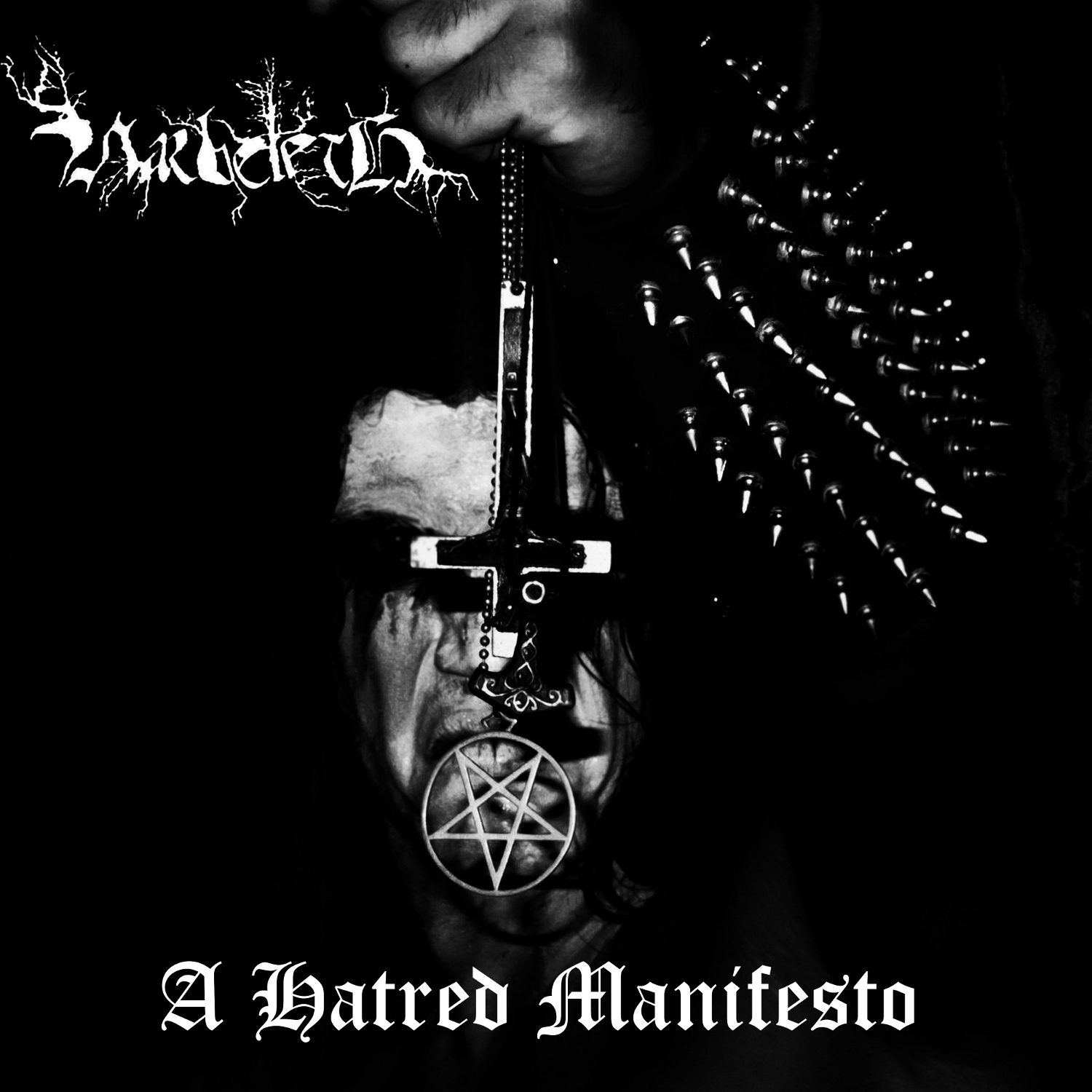
 

Narbeleth – A Hatred Manifesto (Review)

NarbelethThis is the second album from Cuban Black Metal band Narbeleth.

This is the real deal – proper underground Black Metal come to terrorize and destroy all you hold dear.

At just over 30 minutes in length it doesn’t mess around; 7 original hymns and a Urgehal cover.

A glance at the song titles and you know what you’re getting. There’s not much mistaking a band with a song called Posercorpse.

But what about the music? It’s Blacker than Black with a better recording than you might expect, which lends the songs an air of freedom to breathe in their skins. A satisfying snare sound and a cold but vital guitar tone seals the deal.

The band play plenty of blast beats but also slow down when necessary to foster an icy, unholy air with twisting melodics; Land of the Heathen being a good example, especially as it unexpectedly features clean vocals. But then Narbeleth likes to throw in the odd unexpected move here and there; such as the guitar solo in Nihilistic Propaganda.

This is exactly what you want from Black Metal.

https://www.facebook.com/pages/Narbeleth/369227176434482

Wrong – Pessimistic Outcomes (Review)

WrongWrong are a Black Metal band from Spain and this is their second album.

Created by two people; one from a Thrash Metal background and one from a Technical Death Metal background. From these unlikely roots an album has grown which is surprising in that it is both the epitome of what is meant to be but also pleasingly fresh and full of morbid life.

Wrong play creepy, fragile, melancholic Black Metal with a depressive/nihilistic edge akin to some of the work by Xasthur and Leviathan only not quite as minimalistic and with more of a Paradise Lost/Katatonia/etc. influence to some of the Doomier riffs; think Forgotten Tomb for some of the parts in fact.

The songs are long compositions and have many different facets to their delivery, from fast and sharp to slow and misery-laden. It’s an approach that serves them well.

The sound is suitably fuzzy and Blackened but it has a solid backbone of precise, focused drumming that grounds the band no matter what they’re playing.

Wrong take you on a Blackened nihilistic journey through the underworld, tastefully underscored by some subtle riffing and even subtler effects that hide underneath the torrent of darkness and the pounding drums.

Pessimistic Outcomes takes me back to prime-time 00’s underground Black Metal and all the associated feelings it has for me. This is a great album full of bleak melodics and nuanced moments propelled forwards by some powerful drumming, expressive riffing and scathing, slicing vocal emanations.

If you only have a choice of one album full of emotive Black Metal this month then make it Wrong.

Interview with Dead in the Manger

Dead in the Manger Logo

The mysterious collective that is Dead in the Manger have unleashed something special on the world with Transience. We tried to pierce the veil of secrecy…

Tell us a bit about Dead in the Manger

DITM is a collaboration of people who aim to create a feeling of unease, aggression and sadness through various elements of sound.

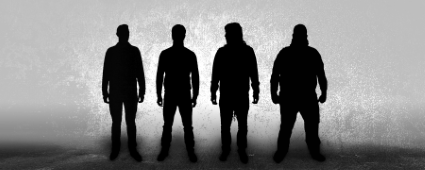
I understand you anonymity is important to you as individuals – discuss

Who we are or anything else we are associated with is not important. We just want the music to speak for itself.

Dead in the Manger 1What are your influences?

Sadness, depression, suicide.

You have an unusual juxtaposition of Funeral/Depressive Black Metal and Blackened Grindcore – how intentional was this or was it more of a natural occurrence?

We are just writing what comes natural. We want to portray how we actually feel, in an aggressive manner.

We didn’t intend on necessarily fitting in with any particular genre.

Will you continue to develop your songs in this style in the future or do foresee something different for Dead in the Manger?

I don’t believe it would truly be DITM without these elements. We are writing these songs out of pure negative emotion, so without that, there would be no DITM.

Where do Dead in the Manger go from here?

It’s hard to say what the future holds, but as long as the negative creativity is there, we will continue writing music.

There *might* be even the possibility of some select live shows if the offer and setting is right, but I can’t make any guarantees.

Dead in the Manger 2

0 – Simplifying a Demon (Review)

00 is a Greek one-man experimental Black/Doom Metal project. The aim is to see “how far one man with one voice and a four string bass can go”.

So what do we get? There are 7 tracks and just under 35 minutes of music on this release. As is expected it’s ultra-minimalistic stuff, but surprisingly there actually is more going on here than you might be expecting.

An obvious reference point would be the minimalistic bleak Doom landscapes created by Khanate. 0 don’t have anywhere near the same length in songs though, and if anything 0 are even more minimal as Khanate employed a full band of musicians with various other instruments and sounds rearing their ugly heads in their work. It’s a good starting point for what 0 sound like however, and obviously there’s more of a Black Metal feel to the tracks here as well.

The Blackened Drone displayed on Simplifying a Demon is really well done; at first it may be slightly jarring listening to just bass and shrieking, but you very soon get into the zone and slowly the atmosphere overtakes you and you just start sinking into the riffs and the dirge.

The vocals are a revelation in some ways – unexpectedly rhythmic and, almost, catchy. The pronounced accent to the words works strange wonders with the measured incantations and they seem to pulse with an inner malevolence that has an innate feel for timing and pace.

As time goes on I find this more and more endearing and enjoyable. It really is the very definition of a record that grows on you. Of course I’m aware that it will also be somewhat of an acquired taste for most people, but I enjoy this more than I thought I would so maybe you will to?

Give 0 a listen – you may surprise yourself.

The Lustmord – Trapped in Purgatory (Review)

The LustmordThis is the latest EP from US Death Metal band The Lustmord.

The Lustmord have a nice line in rumbling, bouncy Death Metal with throat-shredding vocals. The singer rasps and growls his way through the tracks like his life depends on it, (maybe it does), while the rest of the band bring the Metal.

They’re billed as Blackened Death Metal, but in all honesty I don’t hear any Black Metal on this EP. Instead they play a mixed brand of Death Metal that incorporates everything from elements of Deathcore to the galloping riffs of Classic Metal.

There is bass! Believe it or not The Lustmord are a band that actually use their bass player in an audible and useful way. Bonus marks for that.

The band are quite proficient at adopting a few different styles from within the Death Metal pantheon and vary between brutality, mid-paced crunch and Melodic Death Metal with apparent ease. They mainly stay in the mid-to-a-bit-faster speed range for the most part and have plenty of riffs that make you want to jump up and down and smash things before speeding up the tempo with some faster drums and a bit of double-bass.

In addition to all of this they also toy with some interesting ideas on occasion; unexpected atmosphere appears in Zombie Disease with subtle effects playing in the background that enhance how catchy the song is and create a suitably spooky atmosphere. It sounds akin to something Six Feet Under might experiment with.

The final song In One-Hundred Years has a playful Incantation-Doom-esque feel in addition to some Classic Metal licks and even a bit of orchestration. It comes off a bit Godgory in practice and it’s nice to hear.

It’s good that The Lustmord feel free to experiment and this should only be encouraged.

A very interesting EP that sees the band playing it safe for the first three songs and then becoming increasingly bold and inventive as the EP progresses.

Recommended.

http://www.lustmord.us/

Interview with The Drip

The Drip1

Having just released their devastatingly brutal brand of state-of-the-art Grind onto the world with their latest EP A Presentation of Gruesome Poetics, US Grinders The Drip are poised for big things. Bobby Mansfield answered some short questions with some short answers. Grindcore style…

Give us a bit of background to The Drip

We formed in 2007, we’ve toured extensively in the northwest, Recorded 2 previous EP’s before our Relapse debut.

What are your influences?

Heavily influenced by Nasum, and Rotten Sound, we also take inspiration from other bands such as Napalm Death, Nails and many others.

What are you listening to at the moment that you would like to recommend?

Currently been spinning Afgrund’s Corporatacracy, and Fuck The Facts’ Misery. Stoked to get ahold of the New Misery Index as well.

The Drip 3What are your opinions on the current state of the Grindcore genre?

Grindcore is an ever growing genre, boundaries are broken, rules are rewritten.  Grindcore will always be the most abrasive form of extreme music.  Bands just keep getting better.

What did you want to achieve with your new release?

Establish ourselves as a Modern Grindcore band, It’s really awesome exposure being part of RELAPSE.

Are you happy with how it turned out?

Yes, we are, it came together very well for being recorded in 1 day, production is awesome, record sounds aggressive.

Talk to us about the lyrics

Angry, pissed off. That’s what we go for.

What’s the meaning of the EP title?

It can have many meanings, my personal take is that its meant as glimpse into our music.

The Drip2How do you go about writing your songs?

We write individually and as a group. We aim to make better songs each time we start a new one.

How do you see your songs/direction developing in the future?

Heavier, Faster, sicker.  Already writing for a full length.

What can we expect from a future album?

A continuation of the material from APOGP.  Songs will be aggressive and pummeling.

What’s next for The Drip?

Summer West Coast tour, with a stop at the 2nd annual DENVER BLACK SKY fest, writing and recording our full length.

I, for one, look forward to that full length very much.


Interview with Skinfather

Skinfather Logo

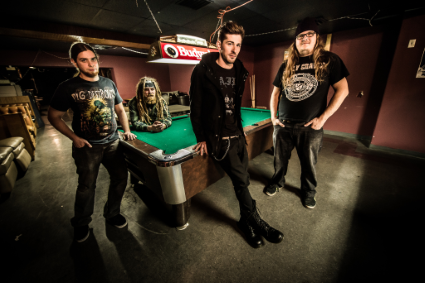
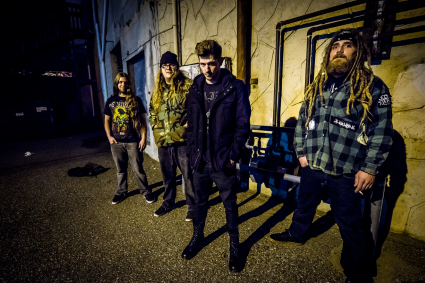
Skinfather have produced a powerhouse of a Swedish Death Metal album mixed with Crust and Hardcore influences with their début None Will Mourn. Attempting to find out more, questions were posed to the new pack leaders in town…

Tell us all about Skinfather and where you came from

We started playing in 2010. We’ve had some member changes since then, but I think Skinfather as it exists now is the band it was always meant to be.

What are your influences?

We built Skinfather on a foundation which takes a lot from the classic Swedish DM scene, but if you listen closely I think you’ll hear other influences. Bolt Thrower, Asphyx, and early Gorefest come to mind. We also come from punk/hardcore backgrounds so that influence finds its way in there as well.

What are you listening to at the moment that you would like to recommend?

As far as metal goes, the new Triptykon and Teitanblood LPs are insane. Also loving Stoic Violence “Chained”, The Flex LP and Forced Order’s demo and upcoming 7″.

How did you decide on the style of Death Metal that you wanted to play – what appeals about the Swedish Death Metal sound?

We collectively listen to a wide range of music but I think one place where we find a lot of common ground is that style. For me, I love the guitar tone, the emphasis on groove and the pounding d-beat influence.

In my review I note that you have a bit of a Crust/Hardcore influence to your sound as well – would you agree with this?

Definitely. That wasn’t a conscious influence on our part but its there. We have all played in punk/hardcore bands and some of us are heavily involved in that scene, so its just natural for that to come out in the music. We’re not trying to be something that we’re not.

Skinfather BandDo you have any goals for your album?

Our goal was just to release a mind numbingly heavy album, which would be something we’d like to listen to ourselves. We’re really proud of this record and I think we achieved that, so anything else that happens from here on out is just a nice bonus.

Is there anything on the album you’re not satisfied with?

Anytime you’re engaged in any kind of creative process, you’re never going to be 100% satisfied. At least that’s how I am. That said, I’ve never been as satisfied with any musical output I’ve ever been a part of as I am with None Will Mourn. We’re very pleased with the result.

Do you want to discuss any of the lyrics on the album and any themes/hidden meanings/etc. that might be there?

I’m going to let our singer Stephen handle that one:

“Most of the songs deal with storytelling that’s meant to display imagery of social issues that surround us. I like to read about history, and thus used it to create what I thought to be intriguing stories with underlying themes of oppression, adversity, corruption, etc. Ordeal by fire, Born of Despair, Hellish Grave, and Impaled are songs written in this manner. Drown in Black, Calloused, and Planes of Ruination are more personal songs that deal with psychological struggles. Dead Still is kind of a lone wolf as far as its theme goes. It’s a slightly fucked up twist off of an old English folk tale from the 12th century that I find fascinating.”

What’s your songwriting process?

Either Anthonie or myself (guitarists) or Taylor, our drummer, will have an idea for a song. If its Anthonie or myself, we’ll do a rough recording of the song at home with programmed drums and then bring it to the band. Most of None Will Mourn started off this way. We’ll usually learn this “first draft” as a band, jam it a few times and spend time making whatever changes need to be made. This might mean adding parts, fills, or rearranging the song. It has to sound like a Skinfather song, and not a Scott, Anthonie, or Taylor demo.

How do you see your songs/direction developing in the future?

I think that the process will only become more collaborative. I think that you’ll be able to hear a Skinfather record and think “This sounds like Skinfather” rather than “Wow this sounds just like _________”

What does the future hold for Skinfather?

We’re trying to play as much as our personal lives allow us to. We’ve got a couple festival appearances coming up, and will continue playing local shows. We’ll be making our way up the West Coast very shortly with Nails, Iron Lung and Bone Sickness we’ll be on the East Coast this fall.

Thanks!

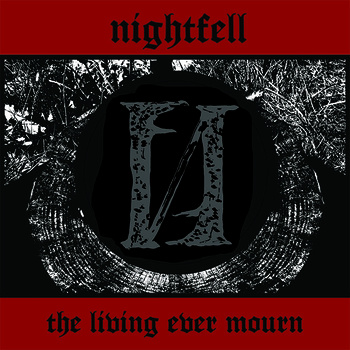
Nightfell – The Living Ever Mourn (Review)

NightfellNightfell are from the US and play Death/Doom Metal.

This is heavy, very heavy, and darkly melodic. The riffs collide and smash down, like Entombed playing a funeral dirge. A collision of Old-School Death Metal and Crusty, Sludge Doom; this is reminiscent of an older Metal landscape whilst concurrently sounding fresh and invigorating.

The music has a personality about it that recalls Old-School Death/Doom Metal from the likes of Dismember, Sentenced, Paradise Lost, Amon Amarth, My Dying Bride, etc. – bands with character that were leaders rather than followers.

The dual vocals rasp, growl and bark their way across each other and are as harsh and unforgiving as you would expect. Added to these are the odd spoken passage and semi-clean to keep things interesting. The vocals have their own personality and character and are very much in keeping with the rest of the music in this regard.

The Old-School Doom Metal riffs really pile up on each other and the feeling of having stepped back in time is strong. However, none of it comes across as nostalgic; rather Nightfell are merely treading the same ground as many of the greats from yesteryear and are looking to put this style of music back on the map once more.

The songs come with plenty of hooks; you’ll wonder how a song like Altars To Wrath isn’t a cover song, so authentically Swedish and catchy it is. Each song has been poured over with love and passion and a monster has been created.

The band make the most of their dark melodies to create a bleakly rich atmosphere dosed up on Doom and heavy on the Metal.

This is an album that demands to be heard.