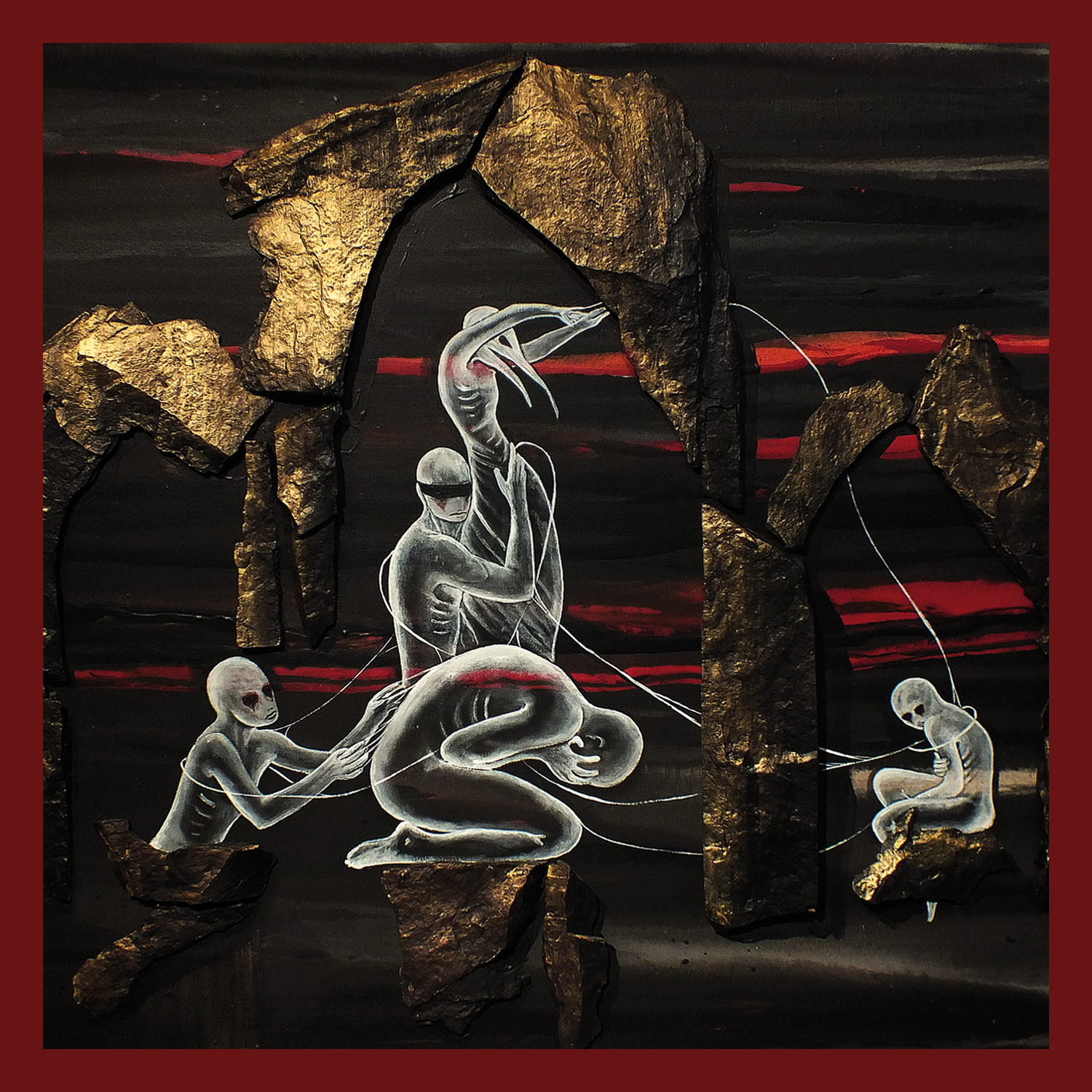
This is the latest EP from Germany’s N/ill. N/ill is a one-person project playing Ambient/Industrial/Drone/Electronica/Rock.
This is a collection of dark soundscapes that use electronics and sounds to create atmospheric pieces that are reminiscent of Shoegaze Post-Rock only from an Industrial/Electronica standpoint.
The songs are slow builders and rise and fall like the ebb and flow of the tide. Rather than sounding organic though these tracks are largely artificial sounding, but not in any bad way. They come from a place of technology and show that this is not any barrier to evoking real feelings in songs.
When vocals appear they are ragged and heartfelt, lending the tunes the feeling of a singer like Mark Lanegan set to a backdrop of Nine Inch Nails-styled proto-Industrial Rock mixed with a synthetic Earth. Or they are female and come across as a stitched together sample that permeates the music like permanent ink.
These compositions are well written and the 33 minutes of music here comes across as a bleak soundtrack to a post-modern film. Each track has its own identity and it covers a diverse range of genres and styles across the 7 songs.
Before listening to this I wasn’t sure what to expect – the cover and the name didn’t give much away, so I’ve been pleasantly surprised by the contents.
This release has the potential to transcend the usual genre limitations and make a mark for itself. With the right exposure/backing it could do well.
Black Marble Carapace is the product of a very talented individual. If you’re looking for something a little different then check this out and lend him your support.
Ghegga are a Scandinavian band and this is their début album.
Ghegga play Electronic/Industrial-influenced Alternative Rock. These influences are embedded into the core of the band’s sound; rather than just add a few keyboards to their main instruments as some bands do, Ghegga incorporate these additional noises, sounds, etc. into everything they do so that the Industrial aspect is an integral part of their approach.
Obvious references would be a band like Nine Inch Nails, although it also brings to mind lesser known acts like Sunna and Gravity Kills. Think of these, add a more Techno/Aphex Twin influence to things; then strip away everything glossy and bright and you’ll have an idea of the Ghegga sound.
There are some good beats on this release and the songs work well as a stylistic whole. This is a bit too Industrial to be overtly commercial and is more like an underground Techno band who have discovered Rock and the beauty of guitars.
The vocals add to the underground Techno feel of the album. Sometimes melodic, sometimes spoken, sometimes threatening, sometimes conspiratorial, sometimes roguish; the vocals are a bit different and wielded like any other instrument to be warped and manipulated artificially by the band.
The tracks are very inorganic; they reek of mechanisation and industrialisation whilst maintaining a techno-darkness undertone that informs the central theme of the tracks. This is the soundtrack to an urban nightmare set to the backdrop of street-level warfare.
This is an interesting release from a band who have chosen to go down the road less travelled for this style of music. It would have been so easy to inject a glossy sheen to this kind of style and have anthemic choruses covering everything like sickly-sweet sugar. Instead we have a grittier vision of the future of music, one where urban decay is rampant and mechanised grime stalks the innocent.
If you’re looking for something a bit unusual then look no further. Delve into the world of Ghegga, just make sure you bring something to protect yourself as this land is not for the unwary.
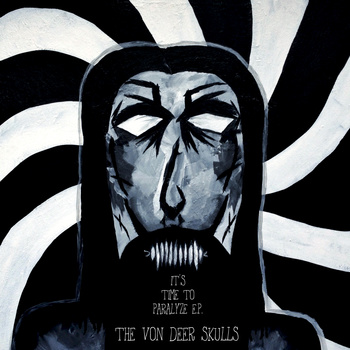
The Von Deer Skulls have their origins in many different countries and have a suitably unusual sound to boot.
I suppose the best way to describe this band is Experimental Rock with elements of Drone, Ambient and Electronica/Industrial.
The tracks here are largely laid back, relaxed affairs. Low-key riffs and sounds move the compositions forward whilst soft vocals and gentle noises punctuate the flow.
This is relatively easy listening and the overall mood is an atmospheric one. Although I wouldn’t describe them as having a dark sound per se, it’s certainly not a bright and hopeful one either. They seem to be aiming for a slightly creepy, unnerving sound and I think they’re headed in the right direction.
The guitars are largely lo-fi but the distortion is noticeable here and there. They even approach a Rocky beat in places.
This is a good release from a band who are still finding their sound and these songs give them a good base to work from. If you enjoy this kind of Experimental Post-Rock then The Von Deer Skulls should be right up your street.
Give this band some of your time and see what you think.
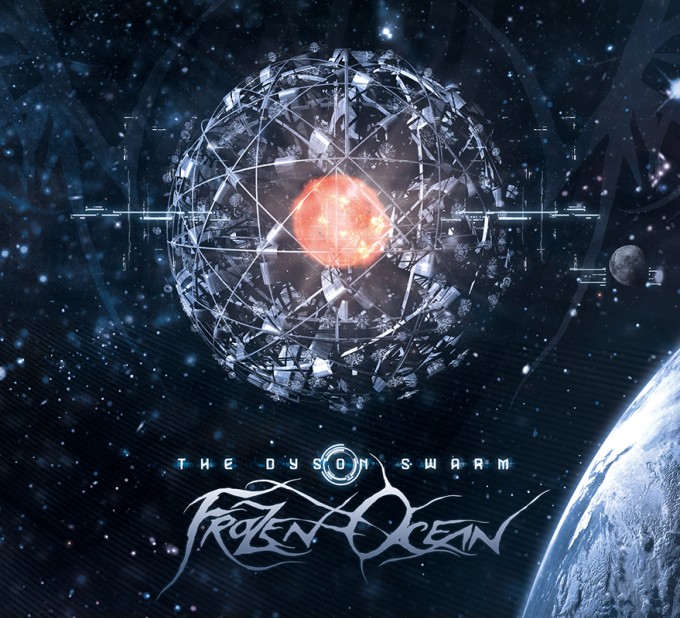
Frozen Ocean have recently released the impressive album The Dyson Swarm. It’s a surprisingly effective release that mixes Black Metal with Electronica/Industrial sounds. Finding out a bit more was the next order of business…
Give us a bit of history to Frozen Ocean.
I am afraid this history won’t be very epic. Frozen Ocean was founded in 2005 in Moscow, Russia, as a solo project of me and was intended to play black metal related stuff. After recording of the first demo “Snow is the Ash” I decided to make something different and dug into dark and drone ambient fields, in which the very first official release, “Depths of Subconscious” was produced. Later the project returned to black metal related music, but next started to bounce from style to style (or a mix of ones) from one release to next.
What are your influences?
Too hard to distinguish, because for every release they are different. In general I have always admired Ulver, how they had their versatility through artistic evolution and simultaneously kept the highest level they achieved. In particular, the musician who inspired me to start making my own works is Mikael “Vaalkoth” Baiyusik from Tearstained, Night Conquers Day, Into The Sunless Meridian and Shadowcaster.
What are you listening to at the moment that you would like to recommend?
The album that could become “release-of-the-year” in my personal charts – “Existence” by Australian progressive death metal band Aeon of Horus. Also I would like to recommend to everyone the last work of Russian industrial brutal death metal band 7 H.Target called “0.00 Apocalypse”; this album will crush you to dust.
What did you want to achieve with your new album?
At least to have a wider reception and recognition for the project worldwide. I had a hope that this kind of experiment would be something relatively fresh and original (as far as is possible nowadays) and thus attractive to a listener.
Are you happy with how it turned out?
As always, the reception and feedback could be wider, but I am quite happy with the existing one. In the modern music world nobody can predict the audience’s answer for your musical proposal. And of course things get more complicated when you present some stuff that lies outside of trends. So that is great that some people have found this album attractive and listened to it more than one time; I think that is the best approval for the musician.
What can you tell us about the concept behind the album?
“The Dyson Swarm” is devoted to close and outer space, and the place of humanity in it. It is built like a journey through the cosmos beginning on the Earth orbit and Solar system and longing to the known edge of Universe and further beyond, and each track describes some phenomenon or object you could face during that journey. Album’s title is describing one of the variant of Dyson sphere – a gigantic hypothetical astro-engineering construction the purpose of which is to utilize the radiated energy of the central star in a star system in the most efficient way. Humanity’s future, on the certain stage of its development and raising level of energy consumption, is hardly imaginable without stuff of that kind.
Give us a bit of information on the songwriting process
The whole thing begins from the conception of release, and when I have the whole picture and structure of album in my head, I start making songs for it. When all the songs are recorded, at least in some scaffold state (without some parts or instruments), I take a listen to the whole yet incomplete release, and decide what and where should be added or changed to fulfill the requirements of the general idea. Thus I get the release united under one concept, but with the distinctive songs. Speaking about the production, all the steps of the production are performed by me in my home studio.
How do you see your songs/direction developing in the future?
It will be something new, as usual, at least it will be different from things Frozen Ocean presented earlier. I will continue to shift shapes and styles, continue to experiment with merging of musical directions for the best representation of release concepts and emotional colouring of them. For instance, I will develop the usage of folk instruments started earlier (when I played mandolin on “Autumn Bridges”) and try to add them to electronics and metal in equal ratio.
What’s next for Frozen Ocean?
Soon Italian label Bylec-Tum productions will release the whole “Norse” Trilogy on one tape for true underground activists. Next plans are too loose to reveal, but they include the very first Frozen Ocean vinyl release.
We Have A Ghost are from the US and this is their début.
The band play Electronica/Industrial-laced Rock. Think Nine Inch Nails/Mogwai/Ulver and you’re on the right lines.
Other points of reference include the little-known/remembered Electronic Rock band Vitro, who released an excellent album named Distort in 1999 of a similar style, as well as the fantastic experimental Paradise Lost album Host.
This is surprisingly complex music that weaves elaborate soundscapes around itself like a cloak of static and charged beats.
Atmosphere and tone are an important part of the We Have A Ghost sound, as well as fostering a futuristic sense of mystery.
A feeling of foreboding is hidden throughout this album. Sometimes it’s hidden underneath energetic sections and other times it’s right out there in the open.
This reminds me of the build-and-release style of Post-Rock/Metal if it had been given an Electronic/Industrial overhaul and the build/release sections were chopped up, warped and separately focused down into shorter songs.
Varied and expansive, this is a great listen, especially if you’re in the mood for something a bit different. The entire thing plays out like some form of soundtrack and the album is suitably cinematic in scope in this regard.
A slow builder that impresses on first listen but nonetheless really shows its charms after repeated spins; this album is a keeper.
This is the eighth album from Russian band Frozen Swarm.
The band play atmospheric Black Metal/Ambient.
They open with Syzygy which is a wonderfully composed piece of Dark Ambient that sounds straight out of a science fiction film and is a great piece of music.
The second track CE-4 starts in a similar vein until the addition of drums and light Black Metal-esque guitars add a gentle beat to the emerging aural tapestry.
Vocals are present, very much low-key and used like another instrument.
The Sci-Fi/cosmos-themed album is powerfully atmospheric with Black Metal, Electronica and quasi-Industrial sounds merging with a cinematic soundscape to create and involving and absorbing journey into deep space and beyond.
Blut Aus Nord are France’s premier Black Metal/Avant Garde/Industrial/Dark Metal kings, and this is their split with fellow French band P.H.O.B.O.S. who play Industrial Doom.
Each band contributes three songs, with Blut Aus Nord up first. Their songs are as impressive as you would imagine and follow their standard Dark Metal template of Blackened riffs, proficient drumming, atmospheric auras and semi-industrial feelings; like watching urban decay sped up and slowed down at the same time.
Warped and haunting melodies layer these three tracks and engage the listener fully. The first track De Librio Arbitrio is so involving that it’s almost startling to hear vocals in the latter part of the song.
These three songs are bleakly emotive Black Metal and it’s once more apparent why Blut Aus Nord are in a league of their own with very few bands even coming close to a similar style of any real quality. And even though the band are better known for their atmospheres than their riffs, they still know how to kick them out when they need to; listen to that grinding mid-paced riffing in Hùbris. Quality.
And on to the second half of the split; all three tracks by P.H.O.B.O.S. are 7:00 in length, which immediately made me take notice.
This is Dark Industrial Doom that may be different from Blut Aus Nord’s Black Metal but shares the same stylistic headspace. The tracks slither and wind their way around to a backdrop of pounding drums that sound like heavy items being dropped from great height.
If Blut Aus Nord were remixed and regurgitated by Godflesh then the result might not be too far from this. The three tracks pulse nicely with automated, mechanistic darkness and I’m quite happy that I’ve now encountered P.H.O.B.O.S.
This is a premium split that showcases the exceptional talents of both bands and at 40 minutes in length it’s a darn sight longer than most splits.
This is Experimental Black Metal with an Industrial feel. The sound is a very nice one; warm and deep but tinged with a rougher, almost creepy vibe that complements what the band is doing well.
The dark and menacing guitars combine piercing, angular riffs with fuller sounding sections to have a good mix of the both. They seem to creep around the songs with nary a care in the world.
Slouching, at ease; this is Black Metal that’s unhurried and almost free form in its composition in some respects, although everything is held together by the drums on one side and the electronics/effects on the other.
Vocally we have sub-audible mutterings that, like the guitars, only loosely follow what is going on with the rest of the track. Like the guitars though, this lends things a feeling of freedom to explore the surroundings while the aforementioned percussion and noises stop things from wandering off too far.
This is the sound of a band experimenting with Black Metal; exploring the ruins at the base of the genre, collecting what remains of past travellers and using them as a basis for reanimation and a new creation.
I don’t know what they will end up with eventually but I’m quite happy to spend time with them as they build it.
Coming from the US this is Black Metal Noise of the darkest and filthiest order.
This is so not for most people it’s almost funny. Even the majority of hardened Extreme Metal fans would balk at this.
This is a compilation of sorts – we get their 2004 album Noizemongers For Goatserpent, a remix/reinterpretation version of the same from 2010 and a whole host of smaller harder-to-find releases tacked on to the end. All in all there are 79 tracks and 2.5 hours of music. Yes, that’s right. Read it again. 2.5 hours of music. And it’s not easy listening music I can tell you.
Enbilulugugal fuse the most twisted, mutated Black Metal with the harshest of Noise to create a perfect fusion of the two that’s nigh on unlistenable unless you’re in a certain mood or just want to punish yourself. This is the sound of nightmares made urban where the remorseless decay of society is mechanised and abused.
To judge a release such as this as good or bad is missing the point in some ways. It’s more of an experience, or even an endurance test, than any form of pleasurable listening as most people would recognise it.
Upon first playing this it took me a couple of minutes to acclimatise to what I was hearing and adjust myself internally to this new way of existing where I was being constantly buffeted by the capricious whims of noise terrorists via short, rusted aural jabs to the mind. They must have altered my brain chemistry somehow though because after a while I became inured to it all and started to find it strangely endearing.
When you exist in a perpetual state of torment is it common to miss it when it’s gone?
I very much doubt that you have the fortitude to survive this release intact. It is expressly designed to push people away so that only the worthy are left. For the vast majority of people this is simply not music and not worth the time to listen to. For the remaining few, this is Enbilulugugal.
In my recent review of Invertia’s second album Another Scheme for the Wicked, I wrote that it was intriguing, harsh and exciting; my viewpoint hasn’t changed. This is an interesting and novel band and they have released an album worthy of taking the time to get to know it. Questions were asked, and answers were given…
For those who are unfamiliar with your band – introduce yourself!
We are an industrial metal band from the Northeast USA who write progressive oppressive music that you should be paying attention to because your rights are being deprived from you and will soon be taken away by those who oppress you.
Give us a bit of background to Invertia
When we met we knew it was something different from the metal crowd or other genres or if it would even work…that was the second week. And here we are in week…604…
What are your influences?
Its funny you ask. You can not put us into a box full of hashtags but we are entirely influenced by Sabbat, Hank III, Celtic Frost, Slayer, Black Sabbath, Bathory, and The Misfits.
What are you listening to at the moment that you would like to recommend?
We don’t listen to music because we have been rehearsing for months. You tell us, has anything good come out?
What did you want to achieve with your new album?
We wrote and wrote and wrote and scratched and wrote more and scratched more and rewrote and ripped apart and scratched it all before we wrote this because we wanted to.
What can you tell us about the lyrics?
We write about the exposure of the daily rhetoric of our culture to provoke thought and action. So long as it is not at any of our shows. We are trying to concentrate.
Give us a bit of information on the songwriting process.
Actually we have been writing this way for years but now we have added Kurt Gluck from Submerged & Ohm Resistance our record label to help us write which will change things up in who knows what way.
Tell us about the remixes – how do you think they relate to the originals?
That’s a good question. The artists chosen are some of the best in their genres and you get to see how another artist interprets the song & how their creativity comes out of them through the music that we wrote.
Are you happy with how it all turned out?
It is a fresh take. It’s exciting.
How do you see your songs/direction developing in the future?
We want to grow and expand our sound/style and expertise as much with our next album as we did with our first and second album.

 This is the latest EP from Germany’s N/ill. N/ill is a one-person project playing Ambient/Industrial/Drone/Electronica/Rock.





 Wonderbox Metal