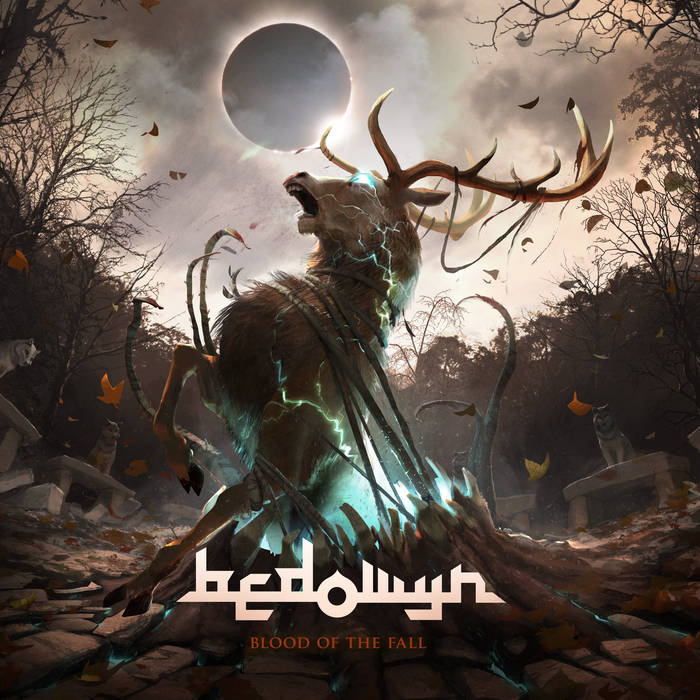
On this new release the band continue their warm, organic and massively chunky and fuzzy approach to the genre. The songs are like a friendlier, less-evil, more-welcoming version of Electric Wizard mixed with a bit of Melvins.
The band also seem bigger and better this time around, in pretty much every respect. The guitars are more in-your-face and the vocals more confident.
The riffs are big and the grooves are colossal. The guitars and charismatic vocals are frequently in perfect sync, complementing each other and creating songs that have real presence.
Occasionally the distortion fades somewhat and the band indulge in a bit of lazy, exploratory mood-setting with a casual solo over the lonesome bass, almost as an afterthought.
Very nice.
This album has personality, songs and giant riffs. What more do you want from this kind of band?
This is the third album from German Black Metallers Stellar Master Elite.
Here we have Black Metal that managers to foster an air of festering rot alongside a sophisticated malevolent darkness. It’s an intriguing combination that gives Stellar Master Elite a distincive flavour when compared to a lot of bands.
Their music has a depressive, Doom-drenched Black Metal base that’s not a million miles away from a band like Forgotten Tomb in spirit, although in reality they don’t sound too similar. The music is powerful and atmospheric without being pompous or overblown. This is very definitely epic music, but in a miserable, negativity-infused way.
The deep growling vocals consolidate the feelings of Funeral Doom/Death-gone-Black Metal. The singer’s voice is full of dark promise and has a gruff, tight character that allows it to be both brutal and compact. The screamed vocals are more typical-Black Metal, but no less effective for this. Clean vocals appear on the fourth track, adding yet another dimension to the band’s music.
Keyboards/synths/Hellsounds add a considerable amount to the already emotive Blackened dirge and it quickly becomes apparent that this is an integral aspect of the band’s music. They’re also creative and atypical in many respects, which is something I like.
This is a diverse and well-paced album, with lots to keep the listener interested and many different moods and palettes used effectively. There’s plenty of feeling thrown into the mix here, as well as a decent helping of prime-riffage. Occasionally the streamlined darkness that the band peddle brings to mind Enslaved and their sterling work in similar areas.
This is an impressive collection of long songs that successfully fuses Black Metal, Doom and all things dark and evil into 63 minutes of quality Metal.
He Whose Ox Is Gored are a Progressive Doom band from the US. This is their début album.
The band have in interesting and individual take on music, fusing elements of Doom, Progressive Rock, Shoegaze and Psychedelia, into a tight ball of Progressive Atmospheric Doom, (for lack of a better term).
This is music that uses Doom as a base and adds Progressive Rock and Shoegaze elements to it to create something a bit different and a lot special.
The music has multiple vocal styles, delivered by both male and female singers. These are diverse in delivery and used sparingly as necessary to complement the needs of the songs. Frequently understated, but always relevant, the vocals act as additional instruments used to enrich the music further.
Synths are employed to enhance the already well-textured songs and allow the eclectic music to have a firm, emotive foundation on which to build their diverse music.
This is highly textured music that plays with mood and emotions freely and easily. There’s a resplendent Post-Metal quality to the music that rubs shoulders with the grittier nature of the Doom influences and harsh male screaming, as well as the in-the-background-but-essential-anyway nature of the synths.
The Camel, the Lion, the Child is an exemplar of individualistic music done right and a shining example of a band ploughing their own path through the overburdened musical scenery. If you like music with a lot of character that isn’t afraid to be itself then I heartily recommend this album.
This is the sixth album from Finnish Doom band Dark Buddha Rising.
Dark Buddha Rising are purveyors of Psychedelic Doom/Drone. It’s a minimalistic-yet-shaded affair, with all varieties of dark catered for. It’s also bleak in a comforting, warm sort of ceremonial way.
There are only two tracks here, but these amount to 47 minutes of music. This is a slow-burning release, steeped in a lazy insistence; it will absolutely get to where it’s going, but it will not be hurried at all. Acting like the relentless tide of glacial marching, the band proceed to build and build until you almost can’t take it any longer.
There’s a definite Old-School, almost 70s vibe to parts of the music, although this is darker and heavier than anything from that era. The vocals are both hypnotic cleans and screeching wails; both add value to the musical onslaught and both provide a different emphasis for the listener as they work their way through the tracks.
Understated-yet-atmospheric keyboards add spice to the warm recording and the heavy bass sound provides enough low frequencies to crack glass.
This isn’t ultra-slow music; it’s on the slow-side of course, but it picks up the pace a bit here and there, although not enough to be described as fast.
The band this reminds me of most is Drone/Doom legends 5ive, although Inversum is more ritualistic in a way. Dark Buddha Rising are not a million miles away from this and it’s safe to say that if you’re a fan of 5ive then you’re likely to enjoy what Dark Buddha Rising do too.
As the name suggests, this is the third album from Sardonis, who are an instrumental Stoner Doom band from Belgium.
Sardonis combine elements of Stoner Metal, Doom and Sludge into their songs. There’s no vocals, so the emphasis is purely on the music itself.
The album has more variation on it than you might think too. It avoids being a one-dimensional Stoner-fest by adding in elements of these other genres so that the band take you to many different places throughout the journey. The band are obviously equally comfortable playing at all kinds of speeds, and this is another reason that they keep things interesting.
The album has an incredibly warm and textured recording, benefiting their sound by focusing the listener’s attention on what matters.
Huge riffs are a big part of their repertoire, as befitting an instrumental band of this nature. This is not all they’re capable of though, as they also know how to build atmosphere and mood across these 39 minutes.
Occasionally I have mixed feelings about bands that are entirely instrumental; sometimes I think vocals would enhance the music and other times I know it would merely detract from what they have created. With Sardonis I think it’s a mixture of the two, although favouring the latter. Maybe a few added vocals on one or two tracks in a couple of places, leaving the bulk of it instrumental? Regardless, III is a massively enjoyable release and the lack of vocals doesn’t hold it back at all.
Eye of Solitude are from the UK and Faal are from the Netherlands. They have teamed up to produce this dark, malevolent split where each band contributes one track.
Eye of Solitude are a particular favourite of mine, with a slew of quality releases, (Sui Caedere, Canto III, Dear Insanity), to their name. Here they contribute a 12 minute song – Obsequies.
The track starts off with an exotic flavour; Middle Eastern-inspired music that shortly is replaced with heavy guitars in the mournful, Doom/Death style. Eye of Solitude are very good at combining the stark heaviness of Doom with the rich melodic streaks of Doom/Death.
The vocals continue to be the pitch-black growls that we know and love so much. If anything the singer’s voice seems to be getting deeper as time passes, and his performance on Obsequies is quite monolithic. Combined with the slow pace of the accompanying funeral dirge each growl becomes akin to the passing of aeons.
The middle section of the song is comprised of a piano and violin section, amiably breaking up the crushing misery of the main composition with a textured, emotive exploration of grief.
After this, the song crawls to a natural close, all emotion spent, all energy drained.
After Eye of Solitude comes the contribution from Faal. This is a track called Shattered Hope that lasts over 13 minutes. I have not heard Faal before this, but they quickly draw me in with their atmospheric Funeral Doom.
Accompanied by subtle synths, their music is bleak and suicidal, reminding of some of the older, slower material from Forgotten Tomb, only with less Black Metal and more Doom/Death; maybe kind of Forgotten Tomb mixed with Esoteric?
Dark growling vocals appear to swim in and out of the music, adding highlights to it rather than being the main focal point. Although the band have a heavy side, Shattered Hope is more about mood and substance than heaviness for the sake of it. It’s slow, miserable and easy to become absorbed in. Before you know it, the long running time is over with and you’re left with an unsubstantiated feeling of having lost something important.
A quality split of slow, mournful Doom. Press play and lose all track of time.
Dust of Decay are a Canadian Death Metal band and this is their second album.
This is Brutal Death Metal that wastes no time on pointless intros or messing around; the album starts with a bang and is all about the aggression and violence.
Display of Decay’s brand of brutality involves nods towards the Old-School as well as worshipping at the more timeless brand of thick, groove-laden Death Metal skullduggery so beloved of bands like Deeds of Flesh, Cannibal Corpse and Suffocation.
The album has a good production; it’s raw and dry enough to fit nicely in with the underground, but strong and focused enough to have a powerful presence. I love the sound of the bass too; scratchy and omnipresent without being overpowering. It’s as if it’s saying “Yes, I’m here. I’ll be the end of you, too”.
There’s a good combination of blasting, mid-paced groove and slower sections that have a definite Doom vibe to them, akin to bands like Incantation, Zombiefication and Hooded Menace. The songs are well-written and there are plenty of decent riffs hanging around, like torture implements waiting to be used.
Dust of Existence is a really enjoyable Death Metal album that succeeds in avoiding being a faceless drone in a sea of similar bands and instead has a personality and character that’s very pleasing to see.
Blow the dust away and crank out Display of Decay at full volume.
Tyranny are a Finnish Funeral Doom band and this is their second album.
Now this is the stuff! Agonisingly slow Funeral Doom, crawling out of a long-forgotten crypt to infect the living with its venomous being.
It’s instantly enjoyable, how could it not be?
Dark atmospherics are provided through a combination of slow-warped guitar melodics and keyboard enhancements. They work together to bring the songs to a crippled, disturbed and miserable life. Bands like this are all about the atmosphere and mood, and Tyranny have bucketloads of the stuff.
There’s an almost tangible emotive veneer to the songs here. It’s like you can reach out and touch the misery. The music is so coated and soaked in despair and lost causes that it makes you wonder how the band members ever function in what we laughingly call real life at all.
The vocals are as deep and as dark as the music, with each growl seeming to stretch back in time over aeons. Perfectly matched to the music, the vocals are just another instrument, drawing out the depressive moods with cold, uncaring growls or eerie chants.
Aeons in Tectonic Interment is an exemplar of the style. Colossally crushing and hypnotically bleak, it does exactly what Funeral Doom should do; completely absorb the listener in the music and transport them to a dark, lonely place of torment and woe. Because, you know, that’s what we want from this kind of music. Oddly. But it’s true; this is an album it’s easy to lose yourself in, and I imagine that their live rituals are amazing.
This is one of the best Funeral Doom albums I’ve heard in quite a while. They know the sub-genre inside out and everything on this release is perfectly designed to attain the desired end results.
So close the doors, turn off the lights, put the music on and turn it up; Tyranny are your soundtrack to anguish, and we love it.
This is the third album from UK Doom Metal band Witchsorrow.
Witchsorrow are a Traditional Doom Metal band and No Light, Only Fire has all of the requisite ingredients that you would expect from this particular sub-genre. What sets it apart is a feeling of real darkness that infuses the songs, and the fact that the songs themselves are pretty damn good.
It’s well-recorded and packs a punch; none of this retro-worship, fake-authentic throwback sound for Witchsorrow. That’s not to say that No Light, Only Fire is over-produced or hyper-polished; it isn’t, it just has a very strong sound that allows the band to land with a thump.
The songs are, (largely), slow-to-mid-paced affairs that play the long game and really go in for some atmospheric occult misery, as well they should. The main exception to this rule is the first track There Is No Light Only Fire, which is more upbeat and traditionally Heavy Metal in its approach, before the more crushing Doom of the next song The Martyr kicks in.
The songs have character and charisma, and come across as prime Black Sabbath-esque songs, unearthed from a secret stash and recorded fresh in the present day. Witchsorrow appear to have gone to the Doom Metal source and made secret pacts with the same dark figures that gave Black Sabbath their powers.
So what if you’ve heard it all before? This is a damn good way to spend 64 minutes and Witchsorrow have made a firm fan out of me. What say you?
This is the second album from US Death Metallers Dystrophy.
Dystrophy play dissonant Progressive/Technical Death Metal that sits a little out of the normal comfort zone of Tech Death, (if there is such a thing), by incorporating a Doom influence into their songs rather than going full-blown-crazy-hyper-speed, as is the case a lot of the time for the style. Mix this with a bit of Brutal Death Metal and an Old-School flair and you have the ingredients for a crushing album.
And crush it does. Repeatedly, and often.
The most obvious reference point for Dystrophy would be Gorguts, but there’s more to the band than just their obvious influences. There’s a lot going on here and it’s good to see that they don’t hide the songs behind blurs of speed or impenetrable craziness. There are fast parts on the album, of course, but it doesn’t define them as a band. Instead this is done by the brooding malevolence and sense of menace that the songs have fostered so well by the interplay between rhythm and lead guitars. The latter do a lot of work to add tension and suspense to the atmosphere of twisted peril that Dystrophy create.
But there’s more than just menace and tension to these songs; there’s an impressive amount of atmosphere and feeling on them. Leads and solos add a lot of texture and emotive qualities, backed up with coordination and style by the heavier riffs.
The vocals are uncompromisingly harsh; deep growls that sound as if they would be quite at home in a dark, dank pit somewhere. As the complexity and nuance of the music rages around them, the vocals are brutally simple and straight to the point.
This is an ambitious release from a band who have managed to insert emotive shades of colour into their music, which is no mean feat for a Death Metal band. Wretched Host is an album to be savoured and enjoyed at length.
I would definitely recommend this one; any band attempting to do something a bit different should be supported, especially when they are doing it so well.
So yes, here’s another album to put on that perpetually expanding to-get list of yours.