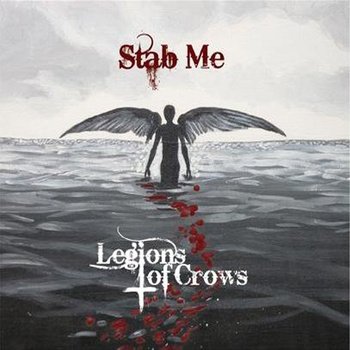
Legions of Crows – Stab Me (Review)

Legions of CrowsUK band Legions of Crows play Sludge Metal with a Blackened outer layer.

This brand of Blackened atmospheric Sludge is greatly enhanced by the presence of keyboards and other effects, which add  a layer of depth to the already thick torrent of misery peddled by Legions of Crows.

They also have an ear for a good riff, the effect of which is never to be underestimated. Second track Fellating the Lamb is a great example of this; it crawls along for the most part sounding really sinister and malevolent, with Black Metal shrieks burning over the top of it. Unexpectedly it then rises above the fog into a mid-song gallop with a guitar solo, before inevitably waning, slowing down and falling back into the murk with dying wails. Great stuff.

That’s one of the most enjoyable things about this album – they have plenty of variety and a grasp of mood and songs to envy.

The combination of Gothic keyboards/Black Metal influences and filthy Sludge may not appeal to everyone. Most bands who combine Black Metal and Doom usually do so from the point of view of the harsher, dirtier side of both genres, making the melding of sounds easier as there is less distance to traverse. Legions of Crows however choose the path less travelled and combine the filthy, dirty side of Sludge with the more Gothic side of Black Metal. The overall result of course is bound to still sound on the grim side, but the keyboards have largely avoided the corruption and the juxtaposition of both is a pleasant surprise and largely works in the album’s favour.

Interestingly Paul Di’Anno also makes an appearance on the album, which in keeping with a lot of Stab Me is an unexpected turn of events, but a good one.

The recording is functional and does the job, and I’ve certainly heard worse, but I would prefer the drum sound to be slightly more hard-hitting next time. This is only a minor quibble though, as the sound serves the album well enough.

A very interesting release with plenty of individuality and character. I’ll certainly be listening to this quite a bit more and watching what they do next.

Pyramido – Saga (Review)

PyramidoSwedish Sludge/Doom band Pyramido return with their third full-length Saga.

Slow, heavy and crushing is the way of Saga. Hulking great walls of guitar noise crash around you as tortured shouts assault your senses, topped off with lonesome melodies that seem at the same time both disconnected and essential to the music.

Haunting passages and gargantuan riffs share space in the songs and all the time the sense of utter Doom and despair is all-pervading. At least it would be all-pervading if it wasn’t for the quasi-hopeful melodic streak that adorns the album like a partially obscured crown, making appearances here and there to spread optimism only to be torn asunder again and again like the darkness eating the light.

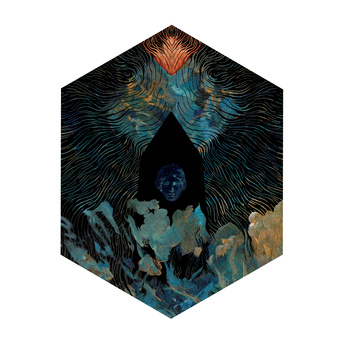
Even the album cover draws you in; a promise of a hot fire on a cold night – sanctuary from the dark. All the time the frigid, gloomy woods creep ever closer and creatures stir within, hidden from sight.

This is a release that grows on you like an infection, revealing its next bleak gift with every repeated visit. Each listen brings you closer to damnation while promising redemption. It’s insidious.

Get lost in this album if you dare. You may not return, but what sweet release awaits?

Queen Elephantine – Scarab (Review)

Queen ElephantineQueen Elephantine, from the US, treat us to their fourth album of psychedelic experimental Doom.

Straight from the off in first song Veil the band create an experience unlike most, with spaced out psychedelia paving the way. In fact the word experience is an apt one as that’s precisely what this is; a listening experience. There is a lot going on here, even when it sounds on occasion relatively minimalistic.

There is a wide range of instrumentation employed and the clear, organic sound does everything justice. In addition to the standard instruments one would expect we also get slide guitar, tanpura, additional effects/noises and two drummers, which makes for a great and varied collection of songs that have lots of individuality.

The vocals, when they appear, seem to be almost an afterthought. They appear at select points in the songs like ghostly apparitions floating in and out of reality. It all adds to the feeling of space and timelessness that the songs evoke and it’s easy to get lost in the endless hypnotic jam of Queen Elephantine.

I was not expecting to like this as much as I do. Not because I had any expectations of the band being bad or anything, (I had not heard of them before listening to this), but purely because it surprised me with the high quality on display and because it’s just so damn good.

If you’re looking for something a bit different and like to be taken out of reality then I advise you get your hands on this as soon as you can. If you’re in the mood for it then this is just excellent.

Interview with We All Die (Laughing)

We All Die (Laughing) logoIn the very near future We All Die (Laughing) will release their first album Thoughtscanning, an ambitious and absorbing début that’s sure to earn them many an accolade. I was honoured to get to ask them a few questions about this involving musical journey.

For those that are unfamiliar with We All Die (Laughing) – introduce yourself!

Déhà (all instruments, vocals) : WAD(L) is a band (not a side project) from myself & Arno Strobl, making some weird but effective mixture of progressive dark metal, with black, doom, blues & jazz influences. Don’t expect something too fancy/avant-garde (yet?), this release is dark and depressive as it should be. We’re existing since 2012, we released recently the début, “Thoughtscanning”, a 33-min piece of dark metal, through Kaotoxin Records in 2014, preorders finish soon by the way, so get it since you’re getting a bonus track, which is a cover of Amy Winehouse’s “Back to Black”. The album was recorded at my former place, in Belgium (HHStudios) – the mix & mastering was made by El Mobo from Conkrete Studios. The dream production.

As the band is a collaboration between two artists who are already involved in other bands – can you tell us a bit about the background of the band and how the project started?


D : It all started by having a normal contact with Arno concerning my German band “Maladie”. We discussed about plenty of things, musical & cooking mainly, and as Arno is one of my 5 influences with singing, I was really eager for him to listen to my stuff. I sent him the demo version of what became this album, and he was loving it so much that we finished talking by “We have to do something, asap” and voilà.

Arno (vocals) : As every single artist uses to say in every interview in the world : “It came out very naturally”. Sometimes you meet someone and click at first sight, it feels natural to launch a common project. Needless to say it’s not every other day that you feel the need to invest yourself in a new band with a person that you just met. It’s all about intuition, In that very case, my first meeting with Déhà was almost surreal. We were like “Guy, you just said what I was about to tell you”. A kind of magic, to quote that famous Genesis track (oh wait, was it The Police ?)

What was the inspiration behind Thoughtscanning?

D : As cheesy as it sounds, catharsis. Inner envies, self destruction, thoughts, philosophy, …
A : Years of mental cancer that eat you from the inside. Lack of self confidence, guilt, fear… Basically, the main disease of our era, along with back suffering of course. Both of us have a very different way of shouting out this kind of feelings to the world. But we tried to express it together; and here’s the result.

What influences did you draw on when creating this album?

We All Die (Laughing) band

D : We’ve been destroying plenty of limits we had. We released ourselves for this album, for lyrics but also for our ways of singing. Arno & I are what I could call “polyvalent vocalists” and we used it for the better on this album. But I can’t say it brought only good stuff, since it’s quite hard to listen to this album without going down with it.
A : Thoughtscanning has been quite a challenge to both of us. We felt we had to spit out the best of our artistic skills while at the same time being true to the initial purpose of the album, which was the lyrical bottomline around disease. It’s a tough thing to stay true to yourself while trying to create something that doesn’t sound too 1) miserable 2) childish 3) exaggerated 4) no 4, sorry. It’s been my constant fear while recording the album not to sound like a parody of depressive metal. Looking back upon what we achieved, I feel relieved, because it definitely sounds like what I/we wanted.

How did you go about writing this album? What was the process involved?

D : I started it in the beginning of 2012, wanting to make something different from what I’m used to do, a bit more complex music but still affordable / digestible (since I’m a huge fan of chaotic music). I took 6 months to make it. Then, like I told you, meeting with Arno, we made the first demo with voices. Then I unfortunately lost my backup harddisk, so I had to re-track everything (which I did in one week in 2013), then one week of cooking / recording voices, sending all that to El Mobo and voilà. We had a lot of funny moments, as well as unfunny moments (hence the music), but we were not stressed about anything (time, deadlines, etc) so this is an amazing memory.

Why did you decide to produce one very long track instead of a selection of shorter ones?

A : This was no choice nor any of a decision. We had this long track that was begging for us to play it and dress it up with sincere words. Therefore we just had to focus on it and give it all our best.
D : I believe that for any length of music, a trip has to be settled. Which means simply that if you feel, as an artist, that this trip shouldn’t be finished in several minutes, you should let it go and vary it. This song, Thoughtscan, is long because the concept demands it. You have to feel the slight variations throughout the album, and the same riffs coming up again sometimes but different, so you can just… feel it.

The album takes the listener on a musical journey through different moods and feelings – how important was this to you when creating the song?

D : That goes perfectly with the previous question : the trip I was talking about, that’s the reason. Plenty of moods, from sad complaints to harsh primal violence, to philosophical questions, to inner wars…
A : Once again this may sound very cheesy but the track is the exact Xerox of life itself, at least the harder moments of it. It’s a succession of sadness, anger, introspection… Depression is a complicated matter. The end of the album that sounds like a light of hope could well be also like the new start of the cycle, and a new dive into darkness. Because that how it goes.

What plans do you have for We All Die (Laughing) in the future?

D : We all will make more music (or die trying). Believe me, this is just a beginning.
A : That’s for sure : we’ll soon have more work on the slab together. I just hope we’ll come out with an album that won’t be as painful to record. I’m not talking about our relationship that’s been great from both ends, but because we had to come out with personal things there that were hard to handle.

Thanks for your time!

Pogrom – This Is What I’ve Always Wanted (Review)

PogromFrom the darkest reaches of Canada, Pogrom appears like a moving shadow on the horizon.

This Is What I’ve Always Wanted contains one track of the same name that lasts 32 minutes and envelops the listener in a bleak landscape of futility and despair. This is Drone Doom designed to unnerve and disturb through the application of aural stress.

It starts off with a basis of tension and preserves this throughout, adding noises and effects as the track creeps along. The feeling is one of electrified pressure being applied and the corresponding mood evoked is surprisingly effective.

I’m not a massive fan of Drone as usually it just doesn’t do it for me, but I did enjoy this as I like the fraught atmosphere that is both created and sustained. This is like an extended soundtrack to a film scene intent on raising the tension levels and then keeping them there throughout.

It all builds to a head where the release comes through a bass-heavy fuzzed out Black Metal vocal assault to end the track, successfully dissipating the mood and allowing the horror you’ve been expecting to finally appear.

If you’re a fan of Drone then you should love this. If however you’re not usually a fan, then check this out anyway as it’s done well and is all about the atmosphere.

Unexpectedly good.

Temple of Baal – Verses of Fire (Review)

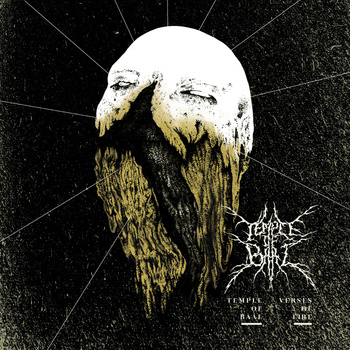
Temple of BaalFrench veterans Temple of Baal offer up their fourth album to the sacrificial gods of Blackened Death Metal.

Having not heard Temple of Baal since their 2003 debut Servants of the Beast, it is an interesting transformation that the band’s sound has undergone. Originally Black Metal; now they give us a combination of both Death and Black Metal with some quite varied sub-styles and influences apparent throughout the 60 minutes on Verses of Fire.

Sometimes brutal, sometimes more laid back, always dark; songs are played at all speeds and tempos, mainly in an attempt to create a gloomy atmosphere for the listener to get absorbed in. For this release the band have emphasised the importance of a good atmosphere and have created one via rich textures of overlapping genres of Extreme Metal.

Moments of Old-School Death Metal are toyed with; elements of discordant Black Metal; Thrash riffs; Doom sections; full-on blasting – a wide sample of extremity is taken and fused into the songs on this album.

Vocals are mainly in a darkened Death Metal style, although screams and yells are used on occasion to add a splash of colour to the sinister emanations of the singer.

Verses of Fire boasts a very well produced sound that shows off everything very organically and gives a very satisfying listen. You could place this next to pretty much any band and not have it sound weak or inferior in quality.

Temple of Baal have taken a risk by changing their style from their Black Metal beginnings, and with risk comes either reward or failure. I think the risk has paid off and they have been rewarded with a much richer and more ambitious sound that will serve them well moving forward from here.

If you weren’t sure about Temple of Baal in the past, or have just been unfamiliar with them, then this is the album for you. An hour long of top quality Extreme Metal.

Upyr – Altars/Tunnels (Review)

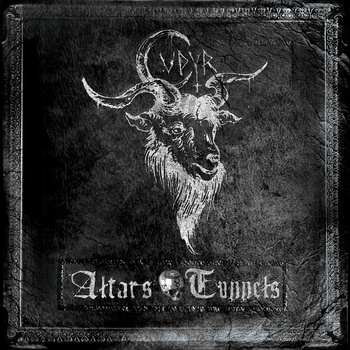
UpyrThis is the first release from Bulgarian band Upyr.

They play Blackened Doom and do this extremely well. The first track Before the Altars of Necrotic Karma starts with towering slow riffing and alternates this with a more mid-paced attack that evokes murky landscapes and a blackness to get lost in.

Vocals alternate between high shrieks a la Black Metal, and deeper growling and vocalisations. These are quality vocals as the deeper ones sound really menacing and the shrieks, (the predominant style), are savage and as sharp as black ice. Neurosis-style clean vocals are also used sparingly and contribute to the grim whole.

I really like the mood that these songs set for the listener. Although it may describe a bleak and inhospitable environment for the average person, for the connoisseur this is the sweetest of delicacies. The combination of monolithic Doom guitars with a scything Black Metal sheen to them is a dark pleasure to savour.

Taking the blueprint of Doom and infecting it with the corrupting influence of Black Metal is yielding great results for bands like Usnea and Battle Path; now we have another name to add to this glowing list of honors – Upyr.

A top quality first release and may there be many more in the future.

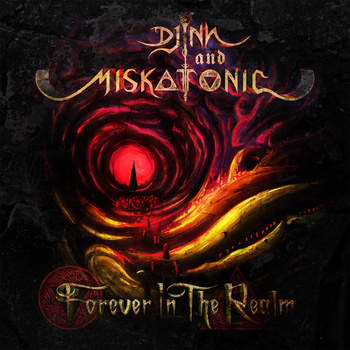
Djinn and Miskatonic – Forever in the Realm (Review)

Djinn and MiskatonicStylish Doom with a real funeral feel; you can almost touch the misery in every sorrowful chord.

Vocals alternate between mournful, doleful cleans and coarser, Old-School Death Metal-style rough barks.

The music is Doom through and through, but quite varied in that it takes elements of Doom’s various sub-genres, (Doom Metal, Sludge, Death Doom, Stoner, etc.), and packages them neatly into 43 minutes. They’re not afraid to unleash a big box of groove now and again either; Book of the Fallen in particular sports a riff to rock out to that any Black Sabbath fan would be happy to hear.

Vulcan’s Forge appears to be all about alcohol; not only does this successfully recreate a really boozy atmosphere but it also boasts a great bass line and sound.

The crowning glory of the album has to be the final song Weird Tales which is a 17 minute enthralling epic. It starts with a lonely bass line that Reverend Bizarre would be proud to have written, and builds up from there; adding drums first and slowly bringing in everything else.

Forever in the Realm makes its mark on the listener in both the short term and the long term. There are parts of these songs that are instantly memorable, and others that seep into your consciousness over time.

As a début album this is certainly an impressive release and one that holds many treasures for even a seasoned Doom fan.

Get drunk and play loud.