Dea Marica – Curse of the Haunted (Review)

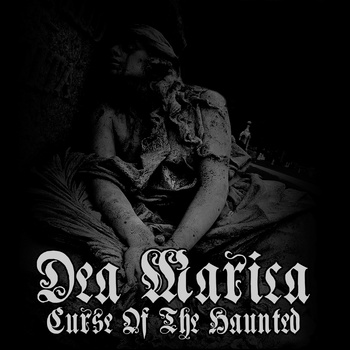
Dea MaricaThis is the second release from UK Doom merchants Dea Marica.

They play sorrow-filled down-beat Doom Metal with a maudlin pace and sombre melodies. If you use a band such as My Dying Bride as a starting point you’ll be in the right area stylistically, but Dea Marica don’t sound like cheap knock-offs as the melodies and structures of their songs are not the same.

Vocally they have extremely brutal growls that are deeper than the blackest pits of Hades, but they mainly use clean, almost operatic vocals that are impressively realised and contribute a lot to the depth of the songs.

The album sweeps you along in its emotional embrace and forces you to come face to face with all of those small, dark things you’ve been avoiding thinking about for years. The epic melodies and exquisite vocal harmonies rub shoulders with the guttural vocals and heavier riffs and the band switch between the two seamlessly; sometimes it’s a sudden change and sometimes it’s a gradual build up, but either way the general mood is retained and the song is a winner.

It should also be mentioned that this is also a very catchy album full of hooks to grab the listener, albeit in a down-tempo Doom Metal way. You’ll be wanting to play these epic songs again almost as soon as the last chord has faded.

This is a haunting, dark and memorable album. Highly recommended.

The Wounded Kings – Consolamentum (Review)

The Wounded KingsThis is the fourth album of Doom Metal from UK band The Wounded Kings.

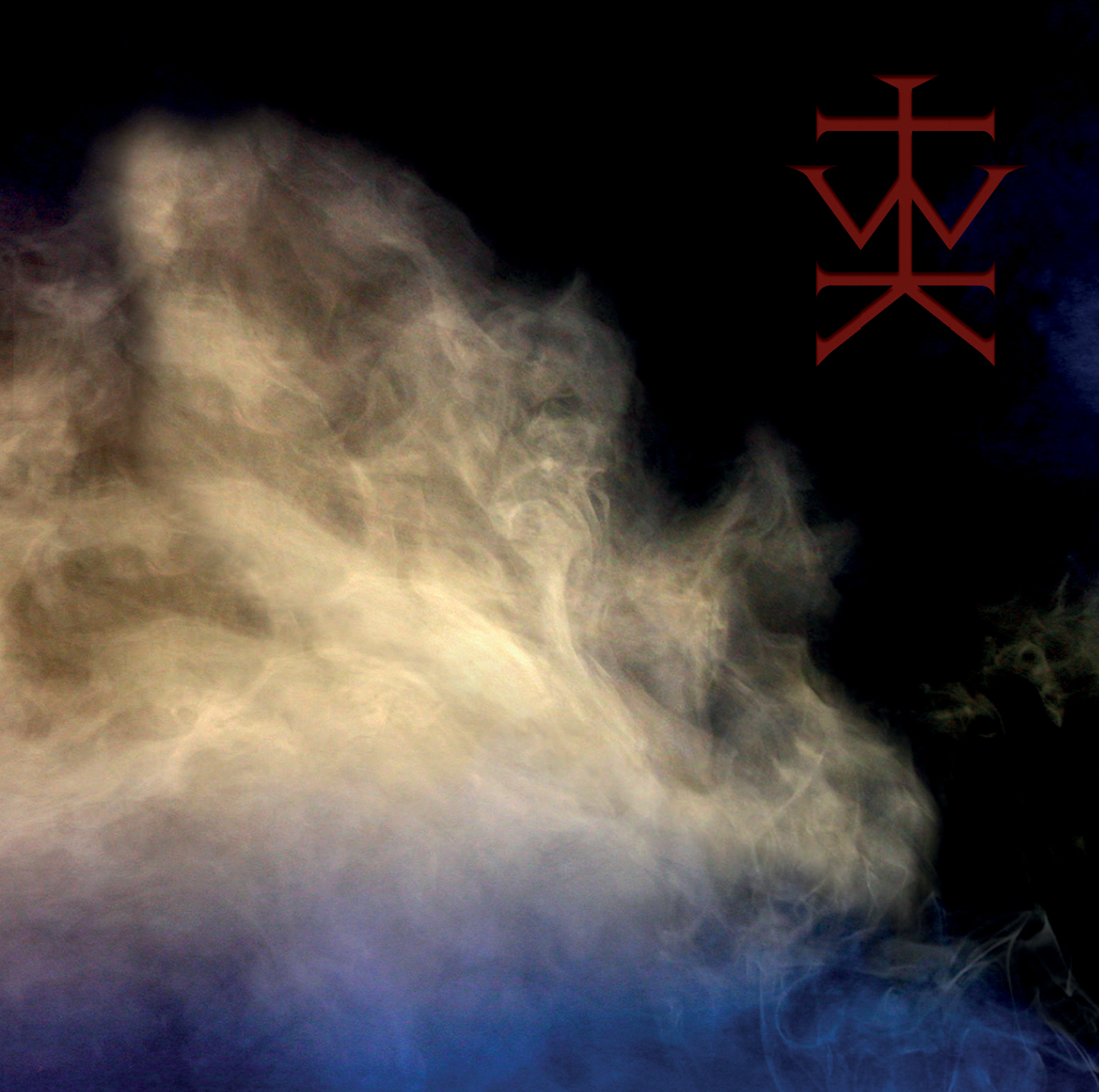
The Wounded Kings specialise in slow, meandering Traditional Doom Metal with towering guitars and backing sounds. The album cover sets the mood; blackness, smoke and obscure symbols. When the vocals kick in they sound like they are coming from somewhere behind this protective layer of fog, tempting the listener into the blackness beyond. But don’t go. Oh no. You don’t want to step into their world. Her vocals entice and chill, echo and fade. Drawing you in and leading you away.

The album has the feeling of the occult, and the music has a ritualistic, droning quality to it that’s entirely disarming. You could listen to the thick, weighty guitars for an age, until it’s entirely too late. For everything.

It’s with feelings of oppression, foreboding and mystical expectations that the songs develop. They do this naturally; unhurried and unforced. There is, after all, no rush. No rush at all. What else do you possibly have in your miserable, worthless life that’s worth doing? No-one is waiting for you, no-one wants anything from you; simply surrender to the siren calls and give in. You want to see what’s in the dark, behind the smoke, right?

Music to be afraid to, and to be afraid of.

Hear The Silence here.

Forlorn Path – Man’s Last Portrait (Review)

Forlorn PathThis is the début album from US Melodic Doom/Black/Death Metallers Forlorn Path.

For a début this is well-written, ambitious and implemented with a skill a lot of bands would envy.

Melodic and orchastrated, yet still having an intensity born of pure Metal this is more aggressive and outright better than I was expecting. From the name and album cover I thought I would be hearing a second-rate Gothic Death Metal Paradise Lost clone, but thankfully my hasty pre-judgement was incorrect, and instead we get epic, expansive, symphonic and melodic Blackened Doom of the highest quality.

At just over an hour in length a lot of passion and work has gone into this album to create a journey that you can get your teeth into.

The vocals alternate between a Black Metal rasp and an ultra-deep growl that is just a pure pleasure to experience.

The forlorn atmosphere and rich melodic melancholy combined with an more aggressive assault than a lot of bands of this genre attempt means that the album always entertains and for me is up there with recent melodic Metal greats like Amiensus.

A refreshing and surprising album; I’ve had my expectations completely surpassed and it’s an abject lesson to me that you can’t judge a band by their name or their artwork. What matters, all that matters, is what they sound like, and Forlorn Path sound very good indeed. Highly recommended.

Descend Into Despair – The Bearer Of All Storms (Review)

Descend Into DespairRomanian band Descend Into Despair have released an epic album in every sense of the word – there is 92 minutes of music here, all piled into 7 songs.

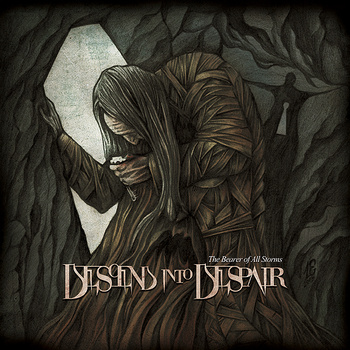
I love a good piece of album artwork, and this one is great. It’s not necessarily any reflection of the music of course, but it did make me excited to listen to this band.

The songs are long and based around slow, atmospheric funeral Doom; each track winding and rolling further down into misery. The singer espouses his existence of suffering and gloom through deep growls and haunted clean vocals.

The guitar-based melodies and riffs are slow and moving, but for me it’s the added keys and effects that are the real emotional drivers. They weave in and around the songs like ghostly dancers swaying to their own tune, adding depth and longevity to music already full of mood and feeling.

Feelings of fragile mortality and heartache infuse this album and every second is spent pulling at the heart-strings and introducing melancholy and sorrow.

This album can hold its head up high and rub shoulders with the best of them; with bands like Eye of Solitude and Descend Into Despair releasing high quality music like this the depressive funeral Doom scene will not want for leaders for some time.

Culted – Oblique To All Paths (Review)

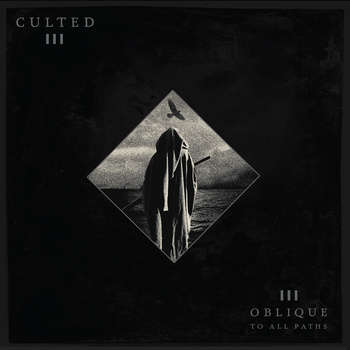
CultedCulted comprise of members in both Sweden and Canada, (who apparently have never met), and this is their second album of Blackened Doom Metal.

This is an hour of haunting depression and wandering desolation.

This album combines aspects of Doom, Black Metal and Sludge to create a bleak atmosphere and feeling of slow decay. An aural description akin to a gradual slipping away into who knows where; a place of fear to never return from.

You know a band means business when a 19 minute monolith of a song, (Brooding Hex), is their opener. It also works as an abstract for the album as a whole as it surmises all areas that the full album travels to within its forbidding boundaries.

There is no clinical, sterile recording on this release; instead we have a dark and foetid sound, full of shadows that hold spawning grounds for unspeakable strains of mutant bacteria and other unpleasantness.

The rasping vocals are rooted in Black Metal, and they sail the seas of Blackness on the good ship Doom. Continuing the nautical theme, (for no good reason really), this is music to drown to.

The wide range of sounds and instruments used on this album means that this is a diverse and experimental release. It’s an interesting path that the disparate band members have collectively chosen to tread, one which carries great risk but which promises great reward in turn. I heartily invite you to sample the dark delights on offer here. But be warned – there’s a danger you might not come back.

Demon Lung – The Hundredth Name (Review)

Demon LungThis is US Doom Metal band Demon Lung with their début album The Hundredth Name.

The band play Traditional Doom with good harmonies, inventive riffing and strong songs.

The first song Binding of the Witch eases us in slowly with gradually-building waves of towering guitars, while Hellish noises play in the background picking at your sanity with needle-like claws. Once the song starts to begin “properly” it’s with a monolithic winding, driving riff that instantly makes me like what’s happening. Indeed there are a plethora of quality Doom riffs on this album.

Showcasing good musicianship and recording; the backbone of the album is in place and then the emphasis is on the songs and the powerful vocals, both of which are no disappointment.

The singer has a generally deep, powerful voice that has both a dreamy and gritty quality, almost like she’s not quite here and instead exists in two worlds – the real and the unreal, where the monsters and witches roam. She shows good range across these songs though and doesn’t suffer from getting stuck in a vocal rut. Her vocals bring the songs to (un)life and add a flicker of unholy fire to the proceedings that elevate this album above a lot of their peers.

The album flows and caresses with its dark touches and is the Doom Metal equivalent of easy listening in some ways; tracks feel natural and unforced, all the while channelling that special black magic that lovers of this genre always want more of.

A very strong first release. If they can keep this up there is a bright future ahead of them. Purely looking at The Hundredth Name however, they have already put out a record to be proud of.

Interview with Upyr

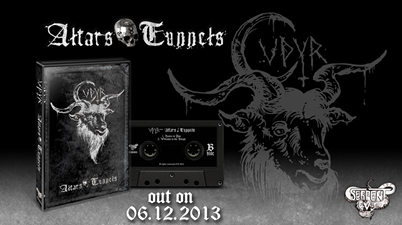
Upyr3Bulgarian Blackened Doom band Upyr have recently released their very impressive first offering Altars/Tunnels, which is gathering them positive reviews all over the place. I was privileged to be able to grill them on the subject…

For those who are unfamiliar with the band – introduce yourself!

Brodnik: We are five mates who share the same need for expressing ourselves in the most grotesque and depressing ways the music allows.

V.B.: We are what represents the blackest of doom metal in the Bulgarian underground.

What are your influences?

Brodnik: The landscapes of our musical influences are quite vast and the borders kind of fade. If we begin with the ugliest of primitive black metal howls of Hellhammer, Bathory and the first releases of Sodom for example, pass through the mournful mists of Evoken, My Dying Bride and Tiamat, explore the psychedelic dimensions of Sleep and Neurosis and then take it south for a swamp ride with a blast of sludge to break it’s bones – that’s Upyr. The hardest part is to have all that in the bag and still make it sound simple and clear in form.

V.B.: In the cauldron we have mixed the legacy of Black Sabbath and Saint Vitus with the dirtiness of Electric Wizard and Eyehategod. Outside of music we are inspired and provoked by life itself with all its philosophical and everyday aspects.
upyr4What are you listening to at the moment that you would like to recommend?

Brodnik: From the recently produced albums I really appreciate Alkerdeel, Cough and Windhand. The Autopsy new album is a must! That’s what metal should be for me. Also tons of neofolk and post punk.

V.B.: Watch out! A Bulgarian band – Obsidian Sea with their debut album. Venomous Maximous, early Danzig stuff and the everyday dose of Johnny Cash.

What is the Bulgarian Metal scene like? How do you feel you fit in?

Brodnik: To talk about a strong metal scene in Bulgaria is a bit harsh. There are acts of class and original ideas but they are rather sporadic and they don’t lead to one strong core. We were welcomed very well by now. All our shows were well attended and we found bands that we share the same ideas of creating music with. That’s more than we expected. We will continue with the same passion to try and built those foundations of a scene because the audience here is very well educated, demanding and most of all deserving.

V.B.: Ok, Bulgaria is a former “communist” country and the iron curtain was no shit. The metal and the whole rock scene as a whole were almost forbidden and rather marginal till the early 90’s. That has had it’s effects on the forming of any kind of scene unfortunately. There is enthusiasm but it’s still hard for a Bulgarian band to expand its fanbase outside of the country.

What were your motivations to create this release, and why this style of music?

Brodnik: I’ve dig in almost every extreme and provoking genre of music and I had my share of playing in different bands but since I was a kid I was looking for something specific and with each next album and knowledge I’ve got, it was becoming clearer what it holds. You know that feeling. When I found doom metal, and especially depressive doom metal I felt like home.

V.B.: That’s the genre that unites us in this band, no matter of our different backgrounds. The right moment had come and we recorded, mixed and released the demo in the most natural way.

Brodnik: We released our first songs quite early in our time as a band because we needed a kickstart. Also I believe that releasing music no matter on what format is the most important part of the life of a band. That’s what remains in time, that’s the evidence of what you felt together in a certain period of time.

Altars/Tunnels is an extremely strong first release – how did the songs come about?

Brodnik: They came out almost by themselves, just after a few sessions of playing together. There are no newbies in the band and that also helps to achieve exactly what’s inside you.

V.B.: We never start with the idea of creating a certain type of song. It all begins in the rehearsal room with a riff or idea, then it turns into a jam, till we get the right pulsation of the upcoming song. We let our souls do it instead of our brains.

Upyr1What can you share about the meanings behind the songs?

V.B.: The lyrics are all written by Brodnik and they are deeply emotional. ”Hymn to Pan” is inspired by the original text of Crowley and I don’t think that’s a big surprise when you listen to our music.

Brodnik: They are profoundly emotional and true to my being. It’s an enormous amount of suffering implemented in the lyrics and the way I express myself through various vocal techniques. I try to create a world within the world, but the epicenter of it is the really messed up mind that I own. “Before the Altars of Necrotic Karma” is about the never-ending feeling that we’re doomed and we’re not meant to reach happiness, freedom or any kind of a conclusion or meaning for our existence. “The tunnels of my Sleep” is about my expanding problems with sleeping, I have insomnia that can last 4/5 days and cycle every second week, It’s really a different state of mind that you get into…

How did the recording process go?

Brodnik: The others recorded the first two songs live in a cheap studio for about a few hours, after that I recorded the vocals and we spent some time in the mixing room so we can get exactly what we wanted from the sound. The bonus song that’s only on the cassette release is a rehearsal jam of the dirtiest kind and sounds more like a demo.

V.B.: We should not forget that it’s a demo release. A friend of the band helped us with the mixing with great dedication and that brought the raw live material to another level without killing its punch.

Are you pleased with the end result of Altars/Tunnels? Would you do anything differently next time?

Brodnik: I’m pleased that we put out the songs in a release quite fast because that’s what matters. I believe that the magic of it is you can’t touch it when it’s out. I’m not a fan of reissues or remastered albums.

V.B.: I’m completely satisfied with the end product. There’s a lot of atmosphere. Nobody knows what it’s going to be next time but for sure the production will serve the music.

What does the future hold for Upyr?

V.B.: 2014 started more than well for us. The cassette release by Serpent Eve Recs. is already sold out in just a month and the guys from the label are working on a second edition due to the big interest. The reviews were really flattering for us and we will give our hearts to have a great 2014 year together.

Brodnik: We have two shows in February with KYLESA (USA) and TURBOCHARGED (SWEDEN), then we will take a short break and we will come back in April with a surprise. We plan some shows outside of the country too. Thank you for your interest!

Thanks!

Upyr2

Legions of Crows – Stab Me (Review)

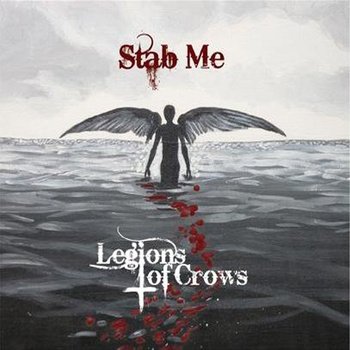
Legions of CrowsUK band Legions of Crows play Sludge Metal with a Blackened outer layer.

This brand of Blackened atmospheric Sludge is greatly enhanced by the presence of keyboards and other effects, which add  a layer of depth to the already thick torrent of misery peddled by Legions of Crows.

They also have an ear for a good riff, the effect of which is never to be underestimated. Second track Fellating the Lamb is a great example of this; it crawls along for the most part sounding really sinister and malevolent, with Black Metal shrieks burning over the top of it. Unexpectedly it then rises above the fog into a mid-song gallop with a guitar solo, before inevitably waning, slowing down and falling back into the murk with dying wails. Great stuff.

That’s one of the most enjoyable things about this album – they have plenty of variety and a grasp of mood and songs to envy.

The combination of Gothic keyboards/Black Metal influences and filthy Sludge may not appeal to everyone. Most bands who combine Black Metal and Doom usually do so from the point of view of the harsher, dirtier side of both genres, making the melding of sounds easier as there is less distance to traverse. Legions of Crows however choose the path less travelled and combine the filthy, dirty side of Sludge with the more Gothic side of Black Metal. The overall result of course is bound to still sound on the grim side, but the keyboards have largely avoided the corruption and the juxtaposition of both is a pleasant surprise and largely works in the album’s favour.

Interestingly Paul Di’Anno also makes an appearance on the album, which in keeping with a lot of Stab Me is an unexpected turn of events, but a good one.

The recording is functional and does the job, and I’ve certainly heard worse, but I would prefer the drum sound to be slightly more hard-hitting next time. This is only a minor quibble though, as the sound serves the album well enough.

A very interesting release with plenty of individuality and character. I’ll certainly be listening to this quite a bit more and watching what they do next.

Pyramido – Saga (Review)

PyramidoSwedish Sludge/Doom band Pyramido return with their third full-length Saga.

Slow, heavy and crushing is the way of Saga. Hulking great walls of guitar noise crash around you as tortured shouts assault your senses, topped off with lonesome melodies that seem at the same time both disconnected and essential to the music.

Haunting passages and gargantuan riffs share space in the songs and all the time the sense of utter Doom and despair is all-pervading. At least it would be all-pervading if it wasn’t for the quasi-hopeful melodic streak that adorns the album like a partially obscured crown, making appearances here and there to spread optimism only to be torn asunder again and again like the darkness eating the light.

Even the album cover draws you in; a promise of a hot fire on a cold night – sanctuary from the dark. All the time the frigid, gloomy woods creep ever closer and creatures stir within, hidden from sight.

This is a release that grows on you like an infection, revealing its next bleak gift with every repeated visit. Each listen brings you closer to damnation while promising redemption. It’s insidious.

Get lost in this album if you dare. You may not return, but what sweet release awaits?

Interview with We All Die (Laughing)

We All Die (Laughing) logoIn the very near future We All Die (Laughing) will release their first album Thoughtscanning, an ambitious and absorbing début that’s sure to earn them many an accolade. I was honoured to get to ask them a few questions about this involving musical journey.

For those that are unfamiliar with We All Die (Laughing) – introduce yourself!

Déhà (all instruments, vocals) : WAD(L) is a band (not a side project) from myself & Arno Strobl, making some weird but effective mixture of progressive dark metal, with black, doom, blues & jazz influences. Don’t expect something too fancy/avant-garde (yet?), this release is dark and depressive as it should be. We’re existing since 2012, we released recently the début, “Thoughtscanning”, a 33-min piece of dark metal, through Kaotoxin Records in 2014, preorders finish soon by the way, so get it since you’re getting a bonus track, which is a cover of Amy Winehouse’s “Back to Black”. The album was recorded at my former place, in Belgium (HHStudios) – the mix & mastering was made by El Mobo from Conkrete Studios. The dream production.

As the band is a collaboration between two artists who are already involved in other bands – can you tell us a bit about the background of the band and how the project started?


D : It all started by having a normal contact with Arno concerning my German band “Maladie”. We discussed about plenty of things, musical & cooking mainly, and as Arno is one of my 5 influences with singing, I was really eager for him to listen to my stuff. I sent him the demo version of what became this album, and he was loving it so much that we finished talking by “We have to do something, asap” and voilà.

Arno (vocals) : As every single artist uses to say in every interview in the world : “It came out very naturally”. Sometimes you meet someone and click at first sight, it feels natural to launch a common project. Needless to say it’s not every other day that you feel the need to invest yourself in a new band with a person that you just met. It’s all about intuition, In that very case, my first meeting with Déhà was almost surreal. We were like “Guy, you just said what I was about to tell you”. A kind of magic, to quote that famous Genesis track (oh wait, was it The Police ?)

What was the inspiration behind Thoughtscanning?

D : As cheesy as it sounds, catharsis. Inner envies, self destruction, thoughts, philosophy, …
A : Years of mental cancer that eat you from the inside. Lack of self confidence, guilt, fear… Basically, the main disease of our era, along with back suffering of course. Both of us have a very different way of shouting out this kind of feelings to the world. But we tried to express it together; and here’s the result.

What influences did you draw on when creating this album?

We All Die (Laughing) band

D : We’ve been destroying plenty of limits we had. We released ourselves for this album, for lyrics but also for our ways of singing. Arno & I are what I could call “polyvalent vocalists” and we used it for the better on this album. But I can’t say it brought only good stuff, since it’s quite hard to listen to this album without going down with it.
A : Thoughtscanning has been quite a challenge to both of us. We felt we had to spit out the best of our artistic skills while at the same time being true to the initial purpose of the album, which was the lyrical bottomline around disease. It’s a tough thing to stay true to yourself while trying to create something that doesn’t sound too 1) miserable 2) childish 3) exaggerated 4) no 4, sorry. It’s been my constant fear while recording the album not to sound like a parody of depressive metal. Looking back upon what we achieved, I feel relieved, because it definitely sounds like what I/we wanted.

How did you go about writing this album? What was the process involved?

D : I started it in the beginning of 2012, wanting to make something different from what I’m used to do, a bit more complex music but still affordable / digestible (since I’m a huge fan of chaotic music). I took 6 months to make it. Then, like I told you, meeting with Arno, we made the first demo with voices. Then I unfortunately lost my backup harddisk, so I had to re-track everything (which I did in one week in 2013), then one week of cooking / recording voices, sending all that to El Mobo and voilà. We had a lot of funny moments, as well as unfunny moments (hence the music), but we were not stressed about anything (time, deadlines, etc) so this is an amazing memory.

Why did you decide to produce one very long track instead of a selection of shorter ones?

A : This was no choice nor any of a decision. We had this long track that was begging for us to play it and dress it up with sincere words. Therefore we just had to focus on it and give it all our best.
D : I believe that for any length of music, a trip has to be settled. Which means simply that if you feel, as an artist, that this trip shouldn’t be finished in several minutes, you should let it go and vary it. This song, Thoughtscan, is long because the concept demands it. You have to feel the slight variations throughout the album, and the same riffs coming up again sometimes but different, so you can just… feel it.

The album takes the listener on a musical journey through different moods and feelings – how important was this to you when creating the song?

D : That goes perfectly with the previous question : the trip I was talking about, that’s the reason. Plenty of moods, from sad complaints to harsh primal violence, to philosophical questions, to inner wars…
A : Once again this may sound very cheesy but the track is the exact Xerox of life itself, at least the harder moments of it. It’s a succession of sadness, anger, introspection… Depression is a complicated matter. The end of the album that sounds like a light of hope could well be also like the new start of the cycle, and a new dive into darkness. Because that how it goes.

What plans do you have for We All Die (Laughing) in the future?

D : We all will make more music (or die trying). Believe me, this is just a beginning.
A : That’s for sure : we’ll soon have more work on the slab together. I just hope we’ll come out with an album that won’t be as painful to record. I’m not talking about our relationship that’s been great from both ends, but because we had to come out with personal things there that were hard to handle.

Thanks for your time!