The Unravelling – Tear a Hole in the Collective Vision (Review)

The UnravellingThis is the second album from Canadian Progressive/Industrial Rock band The Unravelling.

The Unravelling’s music is modern, Progressive Rock with Industrial elements. It’s layered with emotive content and depth of songwriting.

Recalling elements of bands such as Filter, Nine Inch Nails, Sunna, Gravity Kills, Tool and Katatonia, Tear a Hole in the Collective Vision is 44 minutes of music that draws you in with its dark edge and personal themes.

This is a diverse collection of songs with a great variety in mood, pace and dynamics across the 10 tracks. It’s easy to view a band such as this as providing the listener with a musical journey to go on, travelling down the various routes and paths with the band as they explore the moods and atmospheres of their self-created landscape.

Strong vocals provide a focal point for the music and the singer’s slightly atypical voice fits the atypical music to a tee.

This is an impressive album and should definitely be checked out by anyone who enjoys this electronic approach to atmospheric Rock.

Give it a try.

Embassy of Silence – Verisimilitude (Review)

Embassy of SilenceEmbassy of Silence are from Finland and this is their third album. They play Progressive Rock.

This is bright, upbeat and cheery Progressive Rock with Gothic elements and just a tinge of Metal. Good songwriting and the abundant energy that the band pour into the tracks mean that Verisimilitude is a winner.

Although there are Gothic elements, these are only added in for extra colour as the main base of the band is a Progressive one. This is good, as Gothic Rock/Metal has been so thoroughly done to death over the years that it’s a style that’s usually simpler and duller in many ways than what we find on this album.

As the band’s songwriting is based mainly on Progressive Rock rather than the Gothic variety, this allows them to avoid the obvious pitfalls of the Gothic Rock/Metal style. On this album the band have the mix just right, concentrating mainly on the Progressive and just adding a bit of the Gothic in here and there.

Verisimilitude is a well-done and enjoyable listen, with each of the songs having character and presence. The Progressive Rock influence is evident in the guitars and the keyboards, as well as the overall feel and style of the songs.

There’s a rich tapestry of orchestration and added layers of atmosphere to the songs and a good amount of diversity and variety of feeling and moods on the album. This is also true of the singer’s voice, which is used to great effect throughout. She has a top quality voice with a good range that’s more than capable of dealing with whatever is thrown at it.

Impressive and professional; Embassy of Silence have created a cohesive and compelling album that’s based around energetic and impassioned songs with bright hooks, catchy melodies and music with substance and depth. Who can ask for more?

Highly recommended.


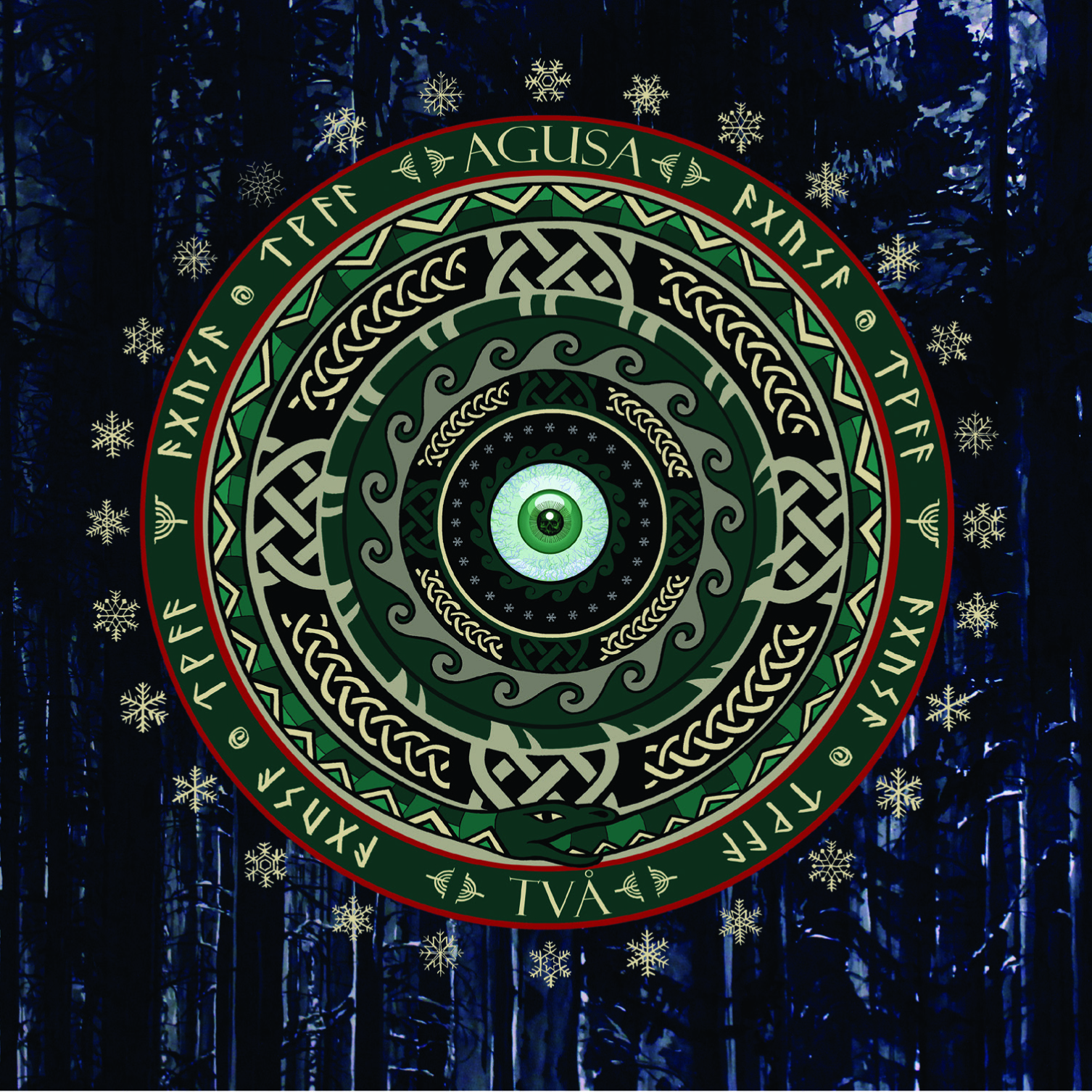
Agusa – Agusa 2 (Två) (Review)

AgusaAgusa are from Sweden and play Psychedelic/Progressive Rock. This is their second album.

The majority of the things you need to know about this album can be summed up in the follwing three words – 70s Progressive Rock. It’s definitely of the era and the inclusion of organ and flute only reinforce the idea.

There are only two tracks on this release but with the first one being 20 minutes in length and the second 18 minutes, there’s a full album’s worth of content here.

Apart from some low-key and ethereal backing vocals, this is almost entirely instrumental; the main focus is on the music itself. The intricate complexity and warm exploratory nature of the songs mean that these two tracks have a lot to offer in a non-threatening way. If you like the 70s style then it’s undoubtedly an impressive display of it.

Agusa 2 is richly textured and has a seemingly loose structure that’s probably actually quite tightly controlled. It twists, turns and winds its way through the playing time in a calm and informal manner.

This offers some real drugged-out psychedelic bliss for connoisseurs of the style. It’s a reflective response to a time that may have passed but is being kept alive by people who share a passion for an era that musically gave so much to what came after.

Although Agusa won’t be a band that appeals to everyone, they do what they do extremely well and if you want to kick back and relax to music that’s both mellow and challenging then this is the album for you.

Effa Lente – The Effa Lente Configuration- Parts 1-4 (Review)

Effa LenteEffa Lente is a one-man Irish project that plays Instrumental Progressive Rock. This is his first release.

Apparently inspired by watching a Quentin Tarantino film, this is noticeably cinematic music that has a lot of different moods and themes throughout its 45 minute playing time

Did I mention that it’s just one 45 minute track? Well it is.

Various moods, emotions and feelings play out during this extended playing time and the impression is very much one of a Progressive Rock film score.

It’s as if Steven Wilson, Anathema, Opeth, Queen, King Crimson, Glorie and The Monroe Transfer all got together to score a film. It’s a very impressive listen that manages to fully engage and hold the attention despite not having any vocals to act as a focal point.

The music jumps around all over the place in a seemingly natural way, rather akin to how the different scenes in a film move from one to the next. It never seems jarring and almost has a narrative feel to it as different themes are taken, explored and then left until we meet up with them again at a later point for either a resolution or a cliffhanger.

70s moods and contemporary Rock sounds merge together in a cinematic melange that is very impressive. Considering this is the brains behind the outfit’s first attempt at doing something of this nature it’s a huge success.

Not just a listen, but an experience.

Ecstatic Vision – Sonic Praise (Review)

Ecstatic VisionEcstatic Vision are from the US and play Psychedelic Rock. This is their début album.

Ecstatic Vision play music that combines elements of Stoner Rock with 70s Psychedelia and Progressive influences.

The music has the drugged-out aura of an older time, where music seemed purer and bands experimented in more than one way.

This is a guitar-oriented release with lots of riffs, solos and leads. In addition to this we get dreamy organ, throbbing bass and understated-yet-crucial drums.

A decent enough description would be somewhere between Hawkwind and Acid Mothers Temple. The songs easily take on a life of their own during their exploratory ramblings. It remains cohesive though and although you wouldn’t necessarily be in the mood to listen to this type of thing every day, when you are it really, really hits the spot.

Listen and absorb; open the doors of perception and visit other layers of consciousness.

Slug Comparison – Slug Comparison (Review)

Slug ComparisonThis is the début album of Slug Comparison, a Canadian Progressive Rock band.

Actually a solo album with guest/session musicians, Slug Comparison contains 41 minutes of modern Progressive Rock.

This reminds me of early 00s band Sunna mixed with elements of Radiohead, Nine Inch Nails and something like Steven Wilson. It’s extremely accomplished and very well realised.

The songs on this album are diverse and professional, with dark themes and a quasi-Industrial/Electronica feel to them on occasion; synths and electronic effects are frequent accompaniments to the standard instruments. These are used well to add extra flavour to an already tasty feast.

The singer’s voice has a contemporary feel to it and has a raw presence and charisma that money couldn’t buy. He has good range and deals with all of the challenges the material offers him with zeal and skill.

There’s a lot to be absorbed here, and repeated spins reveal the depth of nuance that these songs have to offer. It’s clear that a lot of work and effort has gone into this album, and it pays off spectacularly.

I have no qualms at all about highly recommending this album for your aural delectation. There’s a wealth of talent and expertise on display here, and it’s well worth the taking the time to explore it.

Winter Calling – As Darkness Falls (Review)

Winter CallingWinter Calling are a Progressive Rock band from the US. This is their début album.

Winter Calling play polished and professional Progressive Rock that sounds perfectly modern in many ways but realistically has probably missed its era; I can easily imagine this band selling out huge arenas in the past.

Stylistically, the closest reference point is probably Threshold meets Evergrey.

The songs are well-written with plenty of hooks, catchiness and memorable choruses. The singer has an excellent voice that sometimes has a slight grainy quality to it on occasion, lending it an earthy quality that feels natural and unforced; other  times it’s as soft as silk.

There’s a confidence and assurance to these songs. It stops just short of cockiness, but the band certainly know what they’re doing and are not shy of showing it off. Not that they should be, of course. Progressive Rock is not a style known for its shyness, and Winter Calling have enough talent and skill to be justified in their obvious self-belief.

The songs that span this hour of music, (including an Iron Maiden cover, or rather a reinterpretation), are all expertly played and benefit from not just the normal core instruments but also keyboards that add a plethora of little touches and extra levels to the already full music.

The album feels like it’s taking you on a journey, although you never get to quite find out where as the journey is what’s important, not the destination. I find that the best albums feel like this and I’m looking forward to exploring this release even more over the next few years.

Mature and emotive, this is an album that’s worth spending some time with.

Kingcrow – Eidos (Review)

KingcrowKingcrow are an Italian Progressive Rock band and this is their sixth album.

This is Progressive Rock that sounds to these ears not too far removed from a modern version of 70’s Progressive Rock with a bit more of a distorted guitar. The music has a similar feeling and immersive quality, only updated for the present day.

The songs are easily assimilated, with honey-dipped melodies and top quality Progressive riffing seemingly on-demand.

The playing is exquisite and their songwriting skills are highly developed and advanced, as would be expected for a band of their pedigree.

After six albums Kingcrow have nothing to prove and this is an album that’s put together extremely well. The interplay between the vocals and the guitars is well-judged and everything fits together flawlessly.

Modern Progressive Rock doesn’t always sound this professional, slick and polished, but there’s still an edge here and a hunger and depth to the songs. Kingcrow still feel what they’re doing, and this comes out in the music.

This is a really enjoyable album.

The Meads of Asphodel/Tjolgtjar – Taste the Divine Wrath – Split (Review)

The Meads of Asphodel/TjolgtjarThe Meads of Asphodel are from the UK and play a very individual brand of Black Metal. Here they team up with US one-man Black Metal project Tjolgtjar, who you may remember from 2012’s Kjal Tjormejn.

As such, this is an interesting and exciting split release from two atypical Black Metal bands that succeeds in putting two very individual and different spins on this well-worn genre.

The Meads of Asphodel are up first and contribute 16 minutes to this release.

The Meads of Asphodel always manage to imbue their songs with such personality and character, due in no small part to their charismatic singer Metatron. On this release he’s as expressive as ever and has his performance aided by other vocal styles such as croaking screams, ghostly chants and female vocals.

The music manages to be underground, extreme and catchy all at the same time. Classic Blackened blasting and experimental pseudo-Pop share space on this impressive collection of tracks and whether they’re playing fuzzed-up, dirty Black Metal or synth-heavy atmospheric sections, The Meads of Asphodel are at the forefront of Experimental/Progressive Black Metal.

Oh, and track three is a cover/re-imagining of Candi Staton’s You’ve Got the Love, retitled You’ve Got the Hate. It works.

After this it’s on to Tjolgtjar, supplying 18 minutes of music. It’s an odd, atypical expression of Black Metal, with a more garage, underground feeling than the more flamboyant tendencies of The Meads of Asphodel.

In some ways Tjolgtjar remind more of a conventional raw Black Metal band, but this is only superficially true. Upon closer inspection, the riffs and general composition of the music is unusual. Even when the blast beats are flowing swiftly, the guitars are playing Blackened rhythms and melodies that are almost like semi-distorted Country/Folk acoustics. Almost. It’s as if this music came from decades ago and is a Black Metal version of 70s Progressive Rock.

The vocals are screamed croaks but also benefit from cleaner accompaniments. It’s an added extra that, when combined with the music, reinforces the 70s music connection, at least to my mind.

Black Metal, Classic Rock and Progressive Rock, combined. Nice.

But this is what Tjolgtjar do so well; their music is not your average Black Metal and their contribution to this split is superbly delivered and realised.

This is a very impressive release from two impressive bands. If you’re looking for Black Metal that’s challenging and different from the norm then this should be your first stop.

Very highly recommended.

Obsolete – Riven (Review)

ObsoleteObsolete are from the US and play Progressive Rock. This is their latest EP.

This is a band who play melodic music that has a good energy to it.

The melodic vocals have a dark edge to them, somewhere between System of a Down, Autumnblaze, Breed 77 and Ignite. Musically this doesn’t fall too far from the mark either, actually.

It’s an interesting combination that sees the band delivering upbeat rockers and acoustic ballads with ease.

The band have largely good songwriting skills and clearly have ambitions for themselves, as well they should. Although some of the compositions are a little rough around the edges, this is nothing that a bit of practice and time won’t solve as all of the essential components are present and correct; a little polish here and there is all that’s required.

Riven suffers from not having the best recording, which primarily manifests itself when the distorted guitars kick in. It’s not an awful sound by any means, but it’s just something to be improved on for the future.

This EP shows great promise for the band. A few recording improvements and a little bit of tightening up and I think they could be a force to be reckoned with.

Give them a listen and see what you think.