
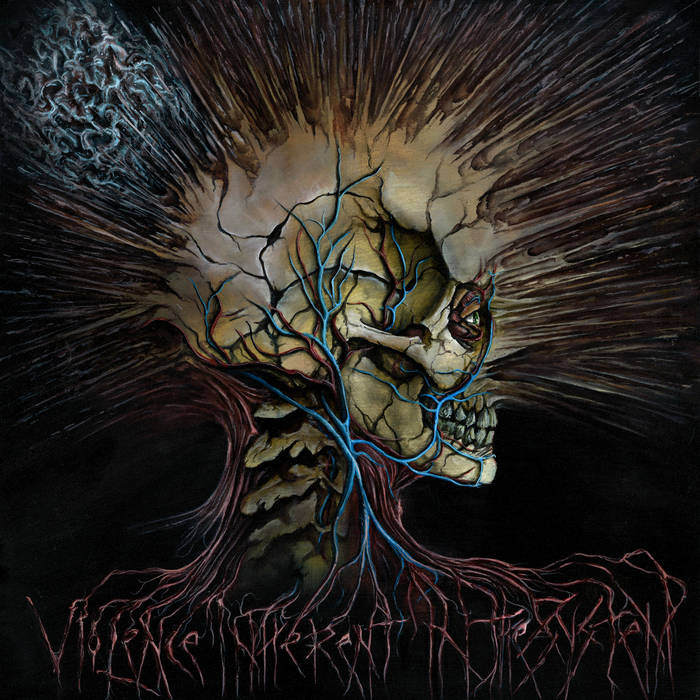
 Noxis are a death metal band from the US and this is their debut album.
Violence Inherent in the System contains 49 minutes, (with the bonus track), of mayhem. While it’s on the longer side for a death metal album, the quantity is backed up by the quality.
Pack together choice aspects of Immolation, Cryptopsy, Death, Defeated Sanity, Demilich, and Suffocation, and you have a decent starting point for Noxis’ uncommon brand of death metal carnage.
Noxis don’t stop moving. They’re constantly changing and evolving, somehow combining technical depth with a pulsing organic energy. Violence Inherent in the System sounds both mechanised and alive. There is no conflict in this duality. These songs are serpentine entities that slither and contort through their running times with lethal grace. This flow is somehow enhanced though, rather than counteracted, by the jagged, angular qualities that the music also has. Complex technicality, intricate riffs, and precision time changes all manage to sound natural and malleable, like a shapeshifting entity that’s incapable of staying the same for too long.
Noxis are creatively brutal and inventively savage. Violence Inherent in the System holds your attention throughout its duration, partially because you never know where it’s going to go next. However, there’s longevity here too; once this unpredictability begins to fall away as you get to know these labyrinthine emanations, you instead lap up the true scope and scale of the atypical ride that Noxis take you on.
The songs are detailed and full of nuances and layers, despite the bone-breaking brutality on display. Noxis write songs that have a lot going on and a lot to take in, yet for all this are also just really enjoyable to listen to. All of the musicians are clearly very talented, but the drums in particular captivate me; I can easily just lose myself in the drummer’s performance alone.
This is a great death metal album. Noxis have really impressed. You won’t want to miss this monster of an album.
 Wonderbox Metal
One thought on “Noxis – Violence Inherent in the System (Review)”