
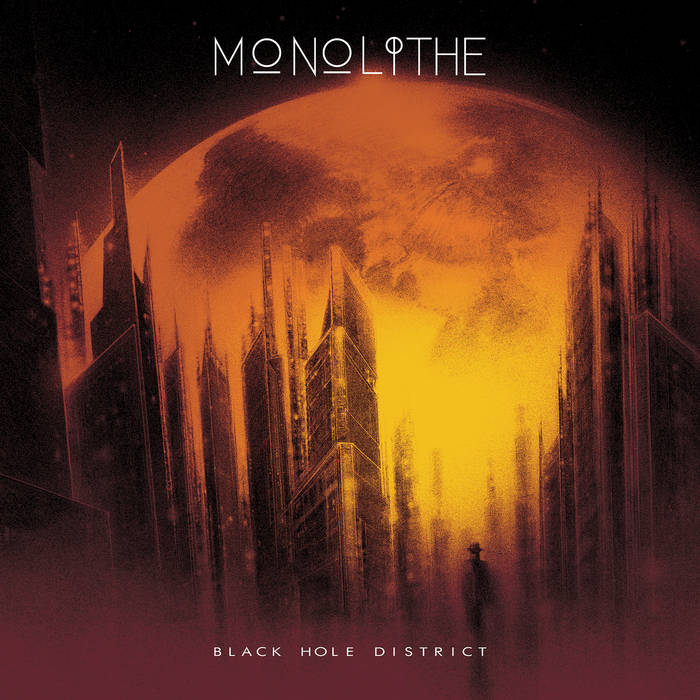
 This is the tenth album from French doom band Monolithe.
Following on from 2022’s Kosmodrom, Monolithe return, with 55 minutes of new material in the brooding shape of Black Hole District. Monolithe have a strong track record, and their latest release is a continuation of their high quality output.
Black Hole District is a sci-fi tale as told via Monolithe’s engaging progressive doom framework. This latest incarnation of the band develops their previous direction further, and has even more of a 70s progressive rock influence, which ties in nicely to the sci-fi themes and influences. Alongside this, Monolithe have a new lineup too.
Structurally Black Hole District has ten tracks, but only five actual songs. All five are ten minutes in length, with the remaining five tracks consisting of one-minute intros to each song. Of these intros, all are well-realised and add value to the album’s narrative, but I can’t help but always wonder with this sort of thing – if they’re so vital, why not just include them with the rest of the songs themselves, rather than as superfluous separate tracks? A minor point really, as they’re short and actually pretty decent, surprisingly.
Black Hole District has a cinematic soundtrack flavour, one which merges Monolithe’s progressive doom-based approach with the sci-fi prog rock epics of old. This has resulted in an album that has learned from multiple teachers to hone its art.
Monolithe’s accomplished progressive doom is immediately recognisable, and it’s a welcome presence once more. It’s a layered and textured expression of multifaceted doom and atmospheric depth. All of the instruments work well together, forging a whole greater than its constituent components. I’ll mention the vocals, guitars, and keyboards/synths below, as all three are notable, (the bass and drums don’t let the side down though, and provide a more than capable foundation for the rest of the music to be built upon).
The vocals are provided by two singers, one who provides growls, and one who provides clean singing. The vocalist that growls has a deep, gruff voice that has a more guttural approach than we’re used to with Monolithe, and I have to say that his raw, monstrous performance juxtaposes nicely against the polished sci-fi-edged music. The clean singer has a voice that’s instantly arresting and drips with emotive power. His performance reminds me of a cross between some of Borknagar and Arcturus‘ work, at least in places. (There’s also someone else too who provides spoken a word narrative in key places. Despite my intense dislike of spoken word, this is actually a good example of it used well, and, importantly, sparingly).
The guitars are expressive and heavy, without losing nuance or depth of performance. Whether it is via thick riffs, dynamic shifts in direction, or bright melodic weight, they deliver a sound that’s satisfying and eloquent.
The keyboards and synths are captivating and utterly immersive. They draw you into the world that Monolithe have crafted, integrating with everything else until all you can see around you is a virtual reality landscape that the band have populated with narrative structures. Black Hole District is a richly atmospheric album, and the keyboards and synths contribute greatly to its mood-heavy presence.
If you click on the link to the Kosmodrom review, you’ll see I’ve reviewed as many Monolithe albums as I can, as the band are just really, really good at what they do. With this in mind, I’d argue that Black Hole District is one of Monolithe’s stronger albums overall. It’s an experiential journey that’s absorbing in its well-rounded immersive atmospheric qualities, but also remembers that it’s a metal album, and has more than enough killer riffs to satisfy. Black Hole District is an essential listen, for sure.
 Wonderbox Metal
3 thoughts on “Monolithe – Black Hole District (Review)”